Historical Map
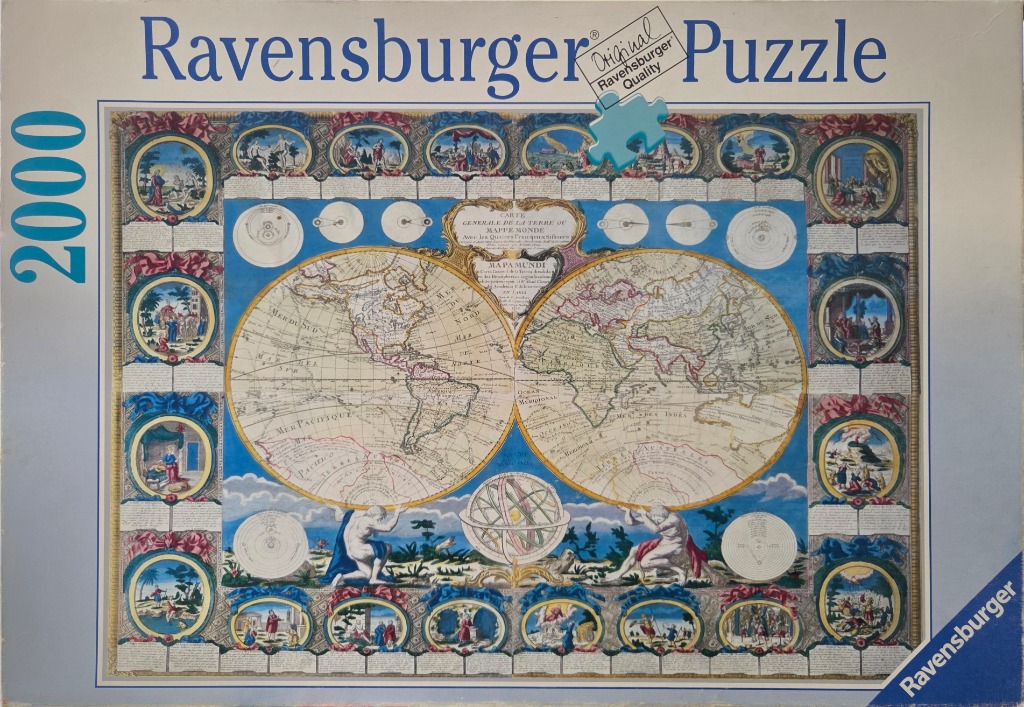
This artwork features a classic 17th-century style world map rendered in a dual-hemisphere projection. The two large circular maps display the continents as understood during that era, with antique typography labeling the oceans and landmasses in French. The map background has a muted, parchment-like tone, contrasting against a vibrant, deep blue maritime-themed border.
The central map is framed by an elaborate decorative border consisting of smaller circular vignettes. Each of these twenty vignettes depicts allegorical scenes, historical figures, or pastoral landscapes. Below the main hemispheres, two muscular, classically styled figures kneel on a shoreline, appearing to support the weight of the globes. Between them sits a detailed celestial armillary sphere, adding to the scientific and exploratory theme of the composition.
The overall aesthetic is that of a historical cartographic engraving, characterized by fine line work and sophisticated color blocking. Interspersed among the vignettes are diagrams of solar systems and planetary orbits. The composition is highly symmetrical and formal, reflecting the enlightenment-era fascination with geography, astronomy, and classical art.


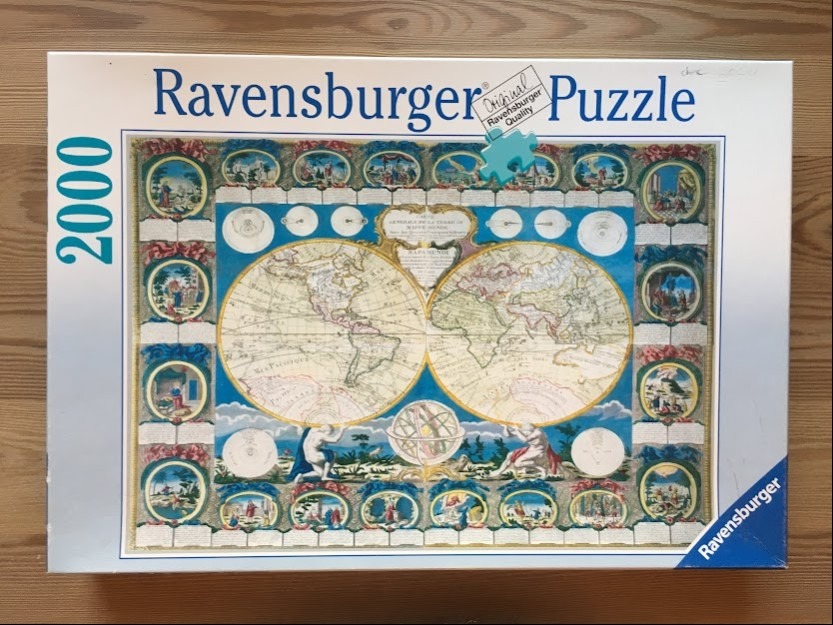
The central focus is an antique-style double-hemisphere world map, presented in warm, parchment-toned hues that contrast against a deep, vibrant blue rectangular background. The map features historical geographical renderings of the continents, surrounded by delicate line work indicating longitude and latitude. Below the map, two classical figures—one kneeling and one seated—hold up the bottom of the globes, flanking a central armillary sphere, creating a sense of mythic grandeur.
The entire composition is enclosed by an ornate, decorative border made up of numerous small, circular vignettes. Each vignette illustrates a different scene, likely depicting biblical or mythological allegories, framed in intricate gold and floral motifs. The gaps between these circles contain blocks of descriptive text, adding to the appearance of an early modern scientific chart or celestial atlas. Smaller, circular astronomical or navigational diagrams are nestled in the corners and between the hemispheres, reinforcing the scholarly theme.
The overall aesthetic is that of a seventeenth-century copperplate engraving, characterized by fine, precise lines and a soft, muted color palette. The interplay between the rich, oceanic blue of the background and the aged, sepia tones of the paper-like map gives the artwork a timeless, historical quality. The composition is highly symmetrical and formal, evocative of a vintage educational or navigational plate meant for study and display.