Still Life with Royal Silver
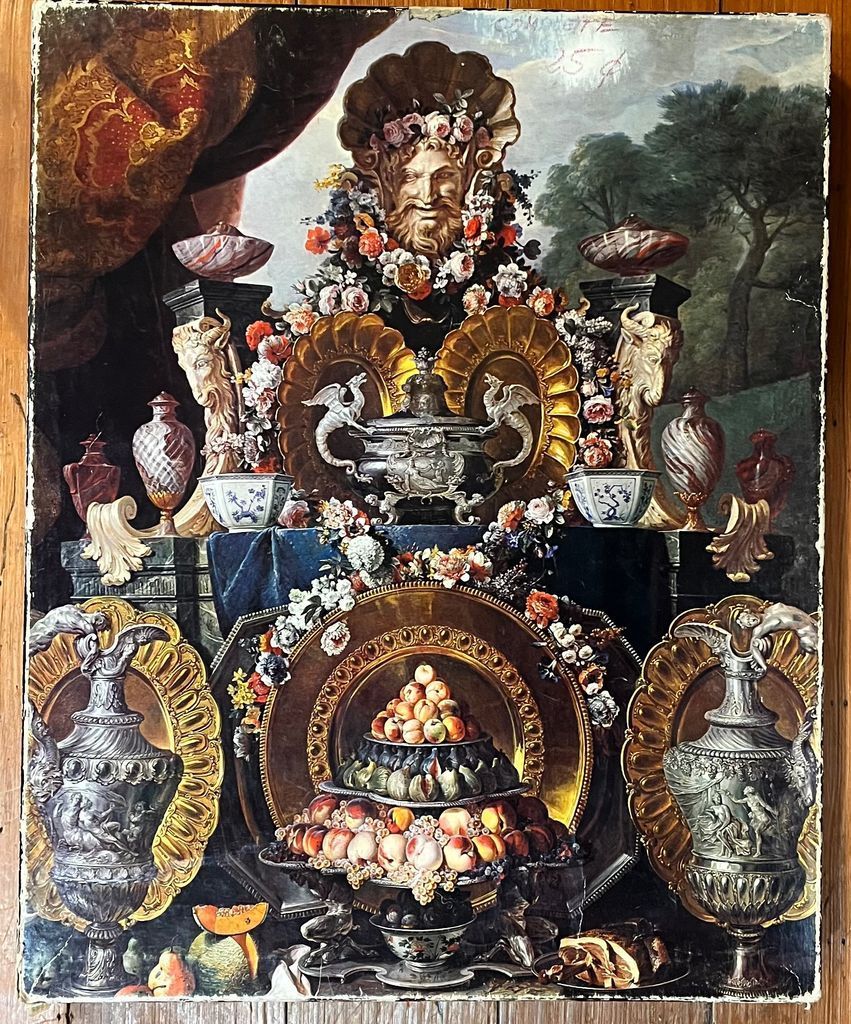
This elaborate Baroque-style painting displays a grand, symmetrical still life arrangement rich with opulent objects and textures. At the central focus, a stone mask of a bearded man, resembling a woodland god, sits atop a pedestal, framed by thick swags of colorful flowers. Beneath this mask sits an intricate silver tureen flanked by goat-headed statuettes, all resting upon a dark, draped table.
The foreground is dominated by a tiered platter overflowing with an abundance of fresh fruit, including peaches, grapes, and figs, nestled within a large, polished golden dish. This centerpiece is balanced on either side by two tall, ornate silver ewers set against large, scalloped gold plates. The entire arrangement is framed by heavy, draped red curtains on the upper left, while a soft, hazy landscape featuring tall, slender trees provides a distant, shadowy backdrop.
The composition is defined by deep, dramatic shadows and warm highlights, typical of the chiaroscuro technique. The color palette centers on burnished golds, shimmering silvers, and rich floral hues of pink, red, and white, all contrasted against a deep, moody background. The style is classic European still life, focusing on highly detailed textures—from the metallic sheen of the vessels to the velvet-like skins of the fruit—creating an overall atmosphere of wealth, abundance, and refined elegance.
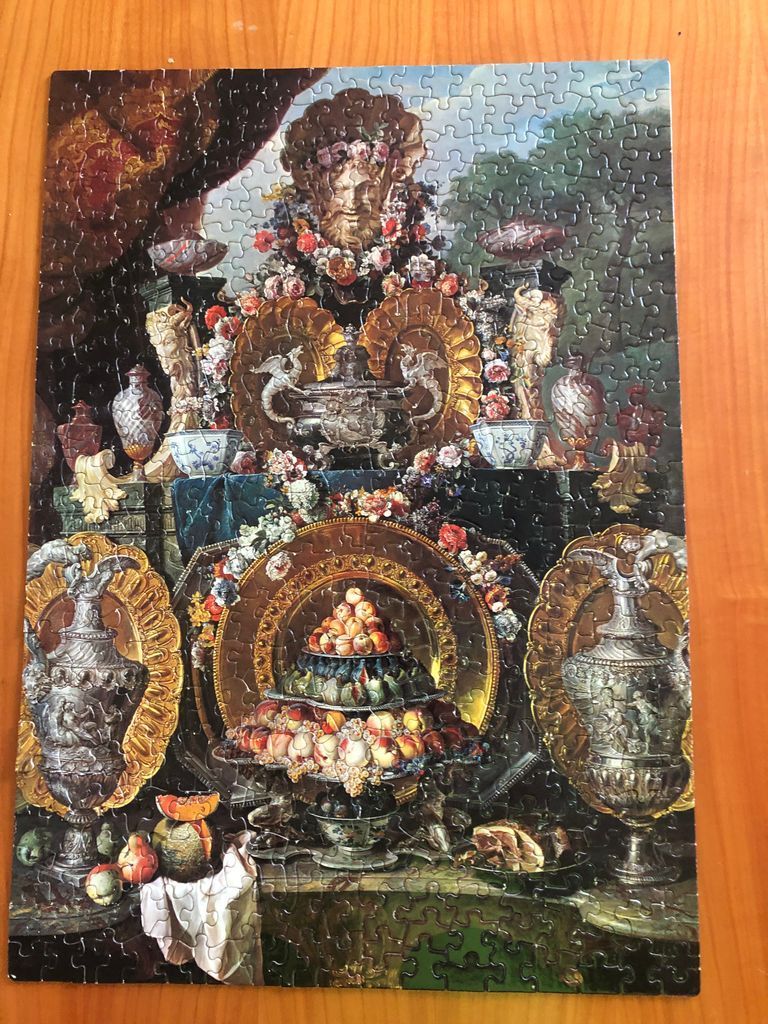
This ornate still life captures an atmosphere of classical decadence, showcasing a collection of decorative objects arranged on tiered surfaces. The focal point is a pyramid of assorted fruits—likely peaches, grapes, and figs—piled high on a central metallic pedestal. This arrangement is flanked by two large, intricately detailed silver urns and framed by oversized, golden, scalloped platters that gleam with metallic highlights. In the background, an enigmatic, stone-carved mask wreathed in vibrant flowers gazes out from amidst a lush, shadowy landscape of trees.
The composition is layered and dense, emphasizing luxury and abundance. To the left, a dark, heavy drapery suggests an indoor or sheltered setting, providing a deep contrast to the glowing golden and silver elements. The lower foreground features scattered pieces of fruit and a draped white cloth, anchoring the scene. The overall style is reminiscent of 17th-century Dutch or Flemish oil painting, characterized by dramatic chiaroscuro lighting, where bright, warm highlights on the gold and fruit contrast sharply against the dark, moody greens and earthy tones of the shadows.
The colour palette is rich and sophisticated, blending burnished golds, cool silvers, and deep browns with the vibrant reds, oranges, and purples of the fruit and floral garlands. The artist’s attention to texture—from the cold, polished metal and smooth fruit skins to the rough, carved stone of the mask—creates a tangible sense of opulent materiality, typical of the fine art still life tradition.

by Larry Hostetter 2024-08-07