Instruments of the Orchestra
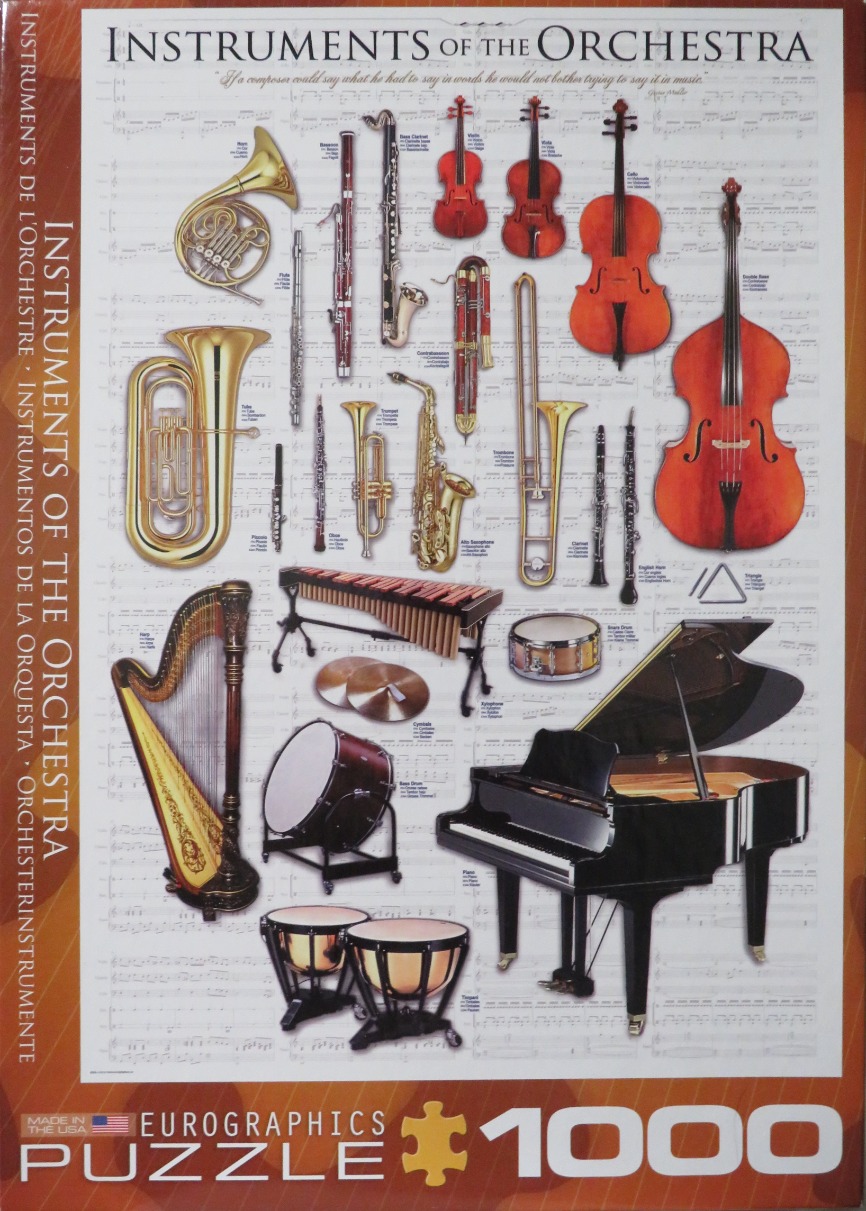
This instructional image displays a variety of classical orchestral instruments floating against a faint, light-grey background of printed musical notation. The instruments are arranged in a grid-like layout, spanning strings, woodwinds, brass, and percussion. Included are items such as a grand piano, a harp, a double bass, a cello, a French horn, a tuba, a saxophone, and various drums, cymbals, and xylophones. Small, unobtrusive labels identifying each instrument are placed near each item.
The overall aesthetic is clean and educational, reminiscent of a music conservatory poster. The instruments are rendered with realistic detail and shading, providing a clear visual contrast against the muted, pale sheet music backdrop. The gold, brass, and deep wood tones of the instruments provide warmth, while the monochrome staff lines maintain a sense of order and academic structure.
The layout is balanced but dense, with larger items like the piano and harp anchored in the lower portion, while smaller wind and brass instruments are suspended in the upper sections. The title 'Instruments of the Orchestra' appears in a bold, dark serif font at the top, accompanied by a small quote in italics, contributing to the formal, informational tone of the design.
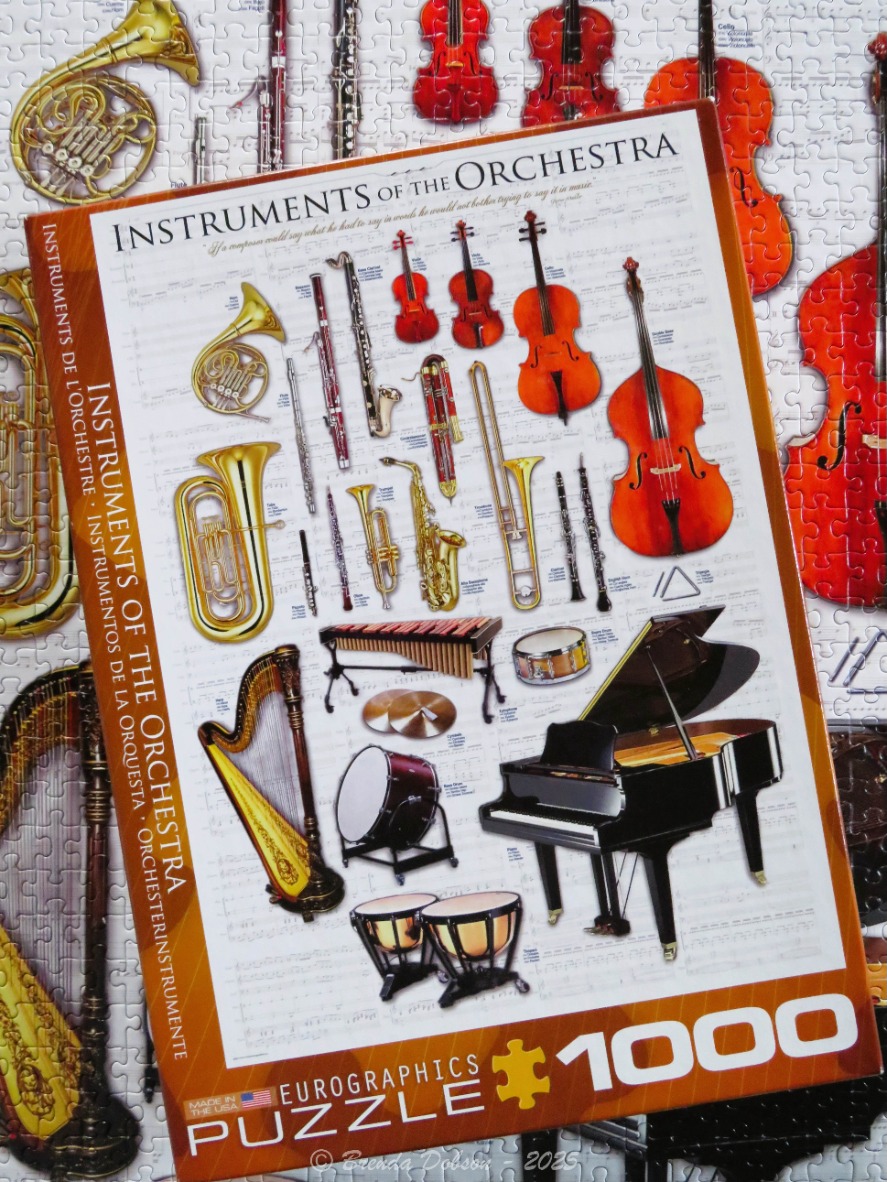
This educational illustration showcases an array of orchestral musical instruments arranged against a pale, faded backdrop of musical notation. The instruments are depicted with realistic detail, floating in a white space that highlights their individual shapes, textures, and metallic finishes.
Included in the composition are members of the brass, woodwind, string, and percussion families. Prominent items include a grand piano, a harp, various tubas and horns, a collection of violins and cellos, and smaller percussion pieces like cymbals, a triangle, and timpani drums. Each instrument is positioned with ample breathing room, creating a clean, organized, and catalog-like layout that is easy to visually navigate.
The colour palette is primarily neutral and warm, dominated by the soft greys and whites of the sheet music background, which contrasts with the rich golds of the brass, the deep woody browns of the string instruments, and the sleek black of the piano. The lighting is uniform and bright, suggesting an archival or reference-book style of photography or high-quality illustration. The overall aesthetic is formal and informative, designed to clearly display the diversity of sound-making tools found within a symphonic orchestra.
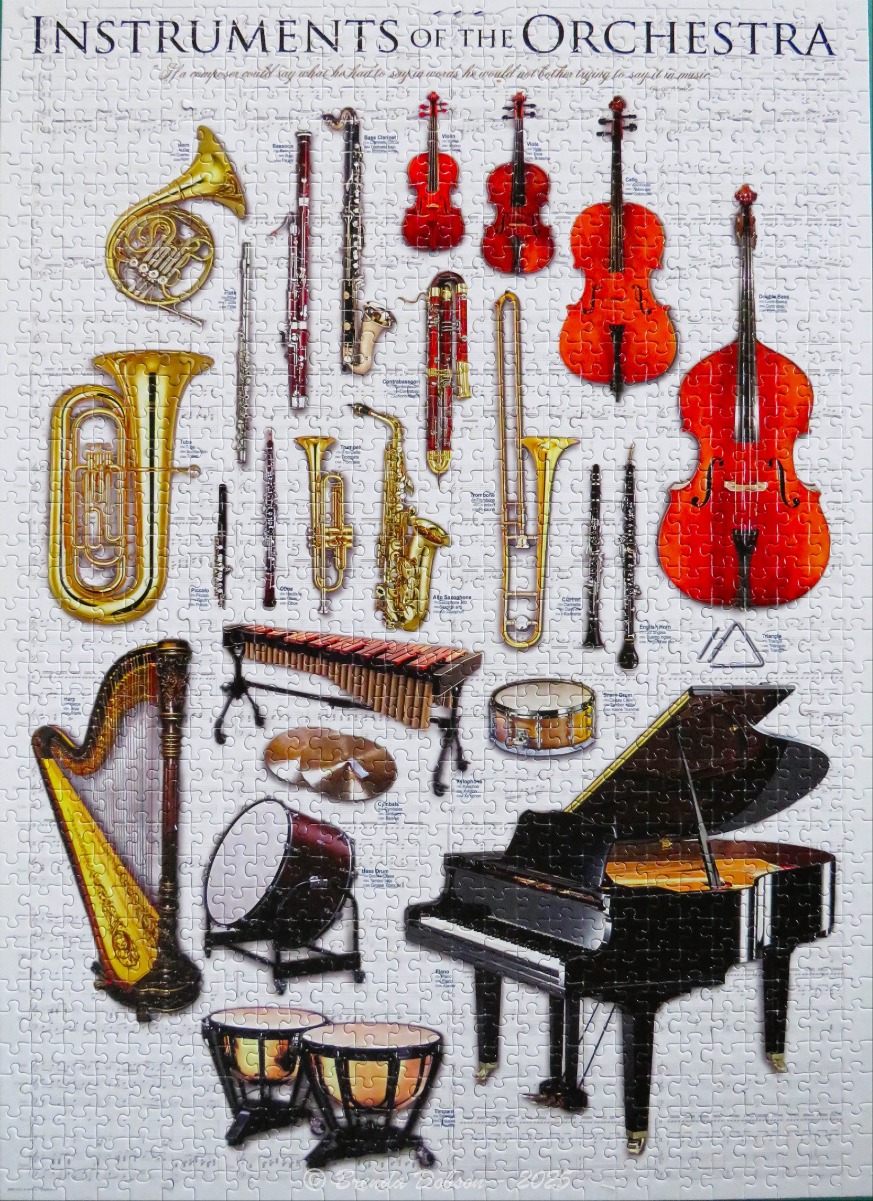
This educational illustration, titled "Instruments of the Orchestra," features a curated collection of orchestral instruments arranged against a light, off-white background filled with faint, ghosted musical notation. The top of the image includes a quote in elegant script. The composition acts as a reference chart, with each instrument presented individually or in small clusters, creating a clean, organized layout that fills the frame from top to bottom.
Technically, the artwork uses realistic, high-detail illustrations of various instruments. In the upper sections, brass and woodwind instruments like the French horn, tuba, flute, bassoon, clarinet, saxophone, and trombone are depicted in bright, gleaming metallic tones of gold, brass, and dark polished woods. String instruments, including violins, a cello, a double bass, and a golden-framed harp, display warm, rich orange and reddish-brown varnish, highlighting the natural wood grain.
The lower section of the chart transitions into percussion and keyboard instruments. A grand piano in deep, glossy black sits prominently in the bottom right corner, balanced by a large harp on the left. In between are various percussion instruments, including a xylophone, snare drum, cymbals, bass drum, and a pair of timpani. Each instrument is accompanied by its name in small, clear text, creating a comprehensive and informative visual guide for music enthusiasts.
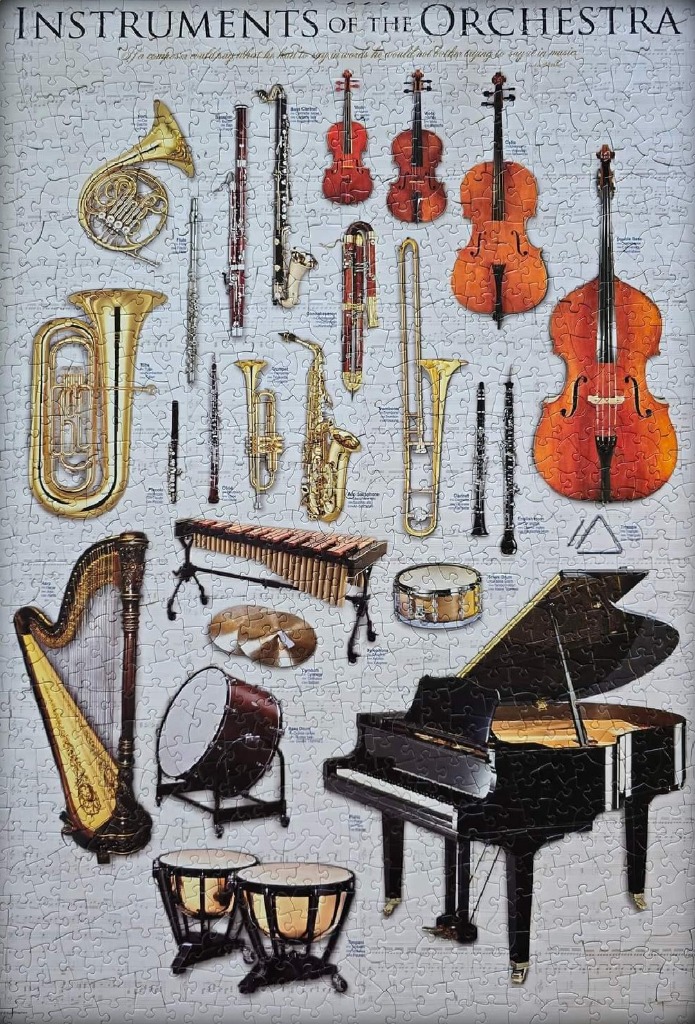
This illustration depicts a wide array of orchestral instruments arranged neatly against a pale, parchment-like background featuring faint, ghosted musical staff lines. At the top, the title "INSTRUMENTS OF THE ORCHESTRA" is printed in clear, dark lettering, accompanied by a small quote. The instruments are displayed individually, showcasing a variety of brass, woodwind, percussion, and stringed instruments. Each item is identified with its specific name in small, clear text placed near the instrument.
Prominent items include a large black grand piano in the lower right, a golden harp in the lower left, and a large double bass on the right side. The central area contains various wind instruments, including saxophones, trombones, trumpets, flutes, and clarinets, alongside percussion pieces like cymbals, a xylophone, and timpani drums. The arrangement is clean and educational, providing a comprehensive visual guide to symphonic components.
The color palette is dominated by warm metallic tones—shimmering golds and brass yellows—contrasting against the rich brown wooden textures of the stringed instruments and the deep black finish of the piano. The background is a cool, neutral grey-white, ensuring that the details of each instrument stand out clearly. The overall style is that of a scientific or reference-style poster, focusing on anatomical clarity and accurate depiction of each musical tool.
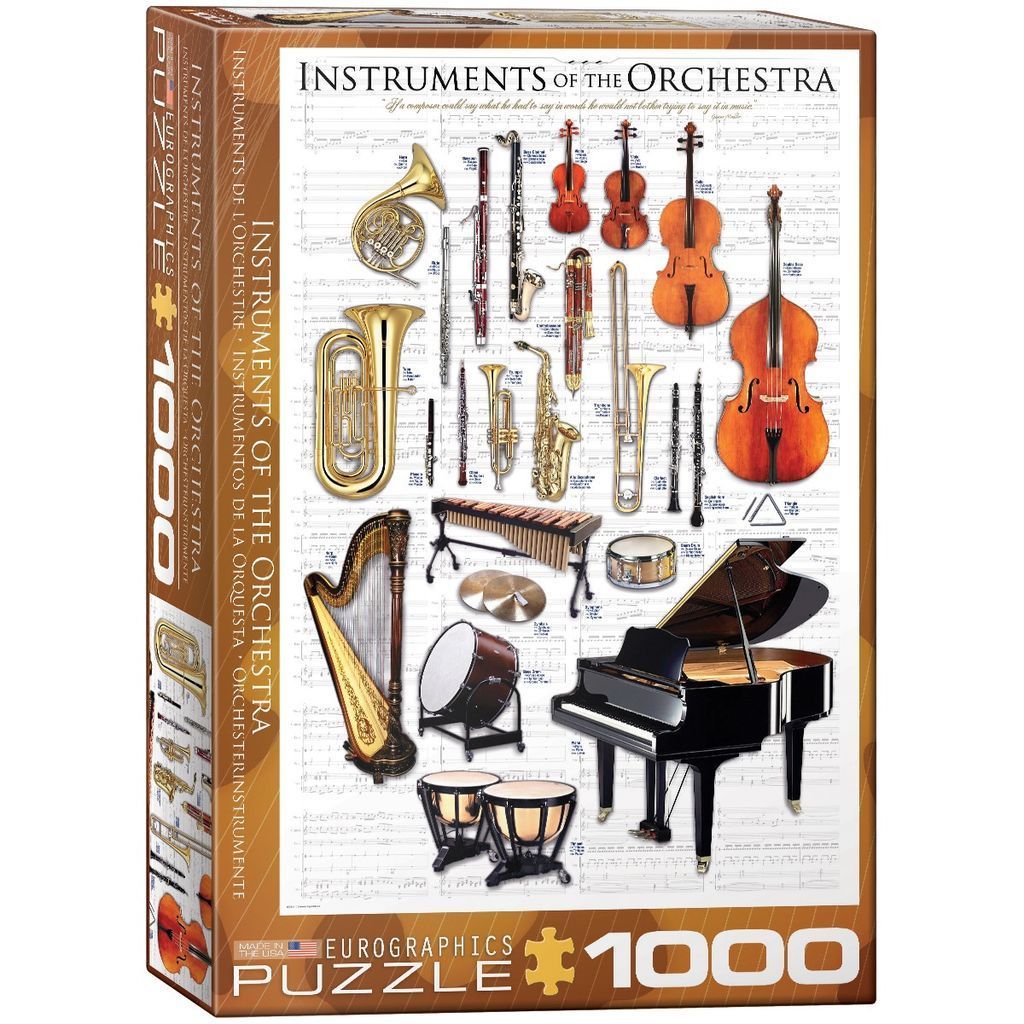
This educational illustration showcases a variety of musical instruments commonly found in an orchestra. The instruments are arranged against a light, off-white background filled with faint, repeating musical staff lines and notation. At the top, the title "Instruments of the Orchestra" is displayed in an elegant serif font, accompanied by a small quote.
The layout features a mix of brass, woodwind, string, and percussion instruments rendered with photographic realism. The upper section includes a French horn, violin, viola, cello, and a large double bass, alongside slender instruments like flutes, clarinets, and a bassoon. Below these, a golden saxophone, trombone, and trumpet are positioned alongside a marimba, cymbals, a snare drum, and a bass drum. In the lower-left corner stands a tall, ornate harp, while the lower-right area is dominated by a polished black grand piano and a set of two large timpani drums.
The colour palette is soft and neutral, dominated by cream tones from the background, which makes the warm wood grains of the string instruments, the shimmering polished brass of the wind section, and the deep, glossy black of the piano stand out clearly. The lighting is clean and even, suggesting a studio-style presentation meant for study and identification. Each instrument is presented as a distinct, isolated object, contributing to an organized and academic appearance.
by Brenda Dobson 2025-08-12