Gladiators
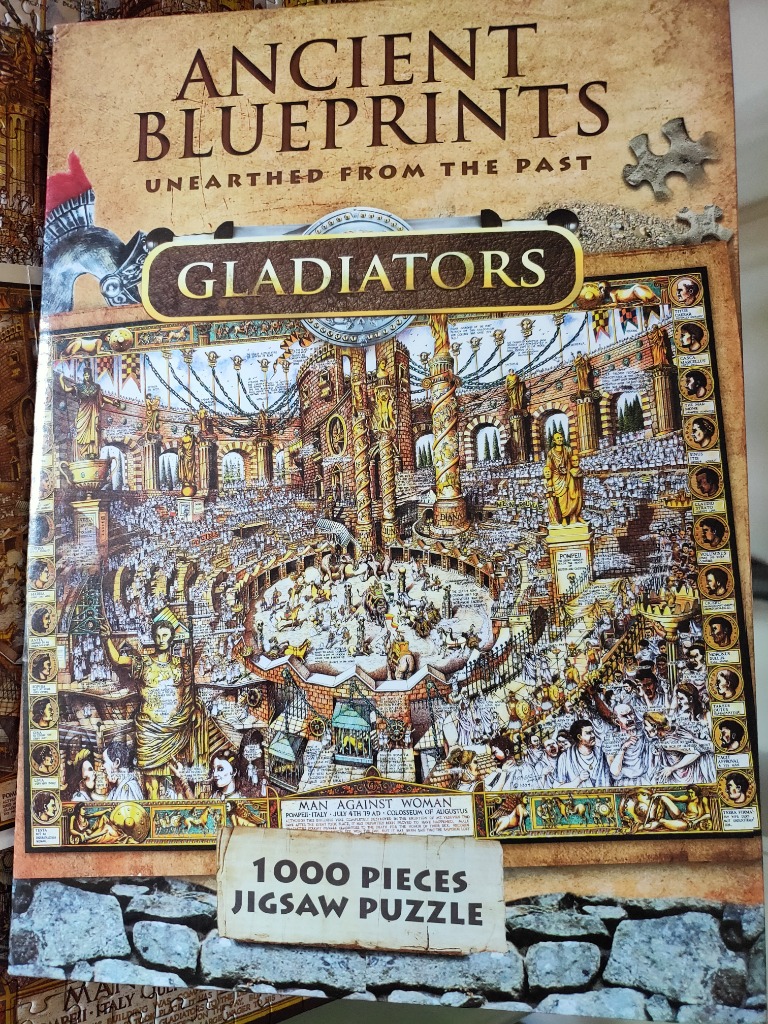
This illustration depicts a sprawling, chaotic scene set within an ancient Roman colosseum. The center of the composition shows a circular arena filled with gladiators and wild animals mid-combat. Surrounding the arena are tiers of densely packed spectators, with ornate architectural elements like statues, tall columns, and draped banners visible throughout the stadium. The image is rendered in a vintage, sketch-like style with intricate ink-work reminiscent of an old engraving or historical blueprint.
The layout is structured with a central panoramic view of the colosseum flanked by side borders. These borders contain individual circular portraits of historical figures, each labeled with a name. At the bottom of the main illustration, a rectangular text block provides details about a specific gladiatorial match. The perspective is slightly elevated, allowing the viewer to peer over the walls of the arena at the action taking place on the sandy floor below.
The colour palette is sepia-toned, utilizing shades of beige, tan, and faded parchment, which enhances the appearance of an aged document or historical artifact. Sharp, black ink lines define the characters and structures, providing high contrast against the muted background. Faint hints of blue and red are occasionally used for accents on banners and decorative trim, giving the image a nostalgic, antique quality.
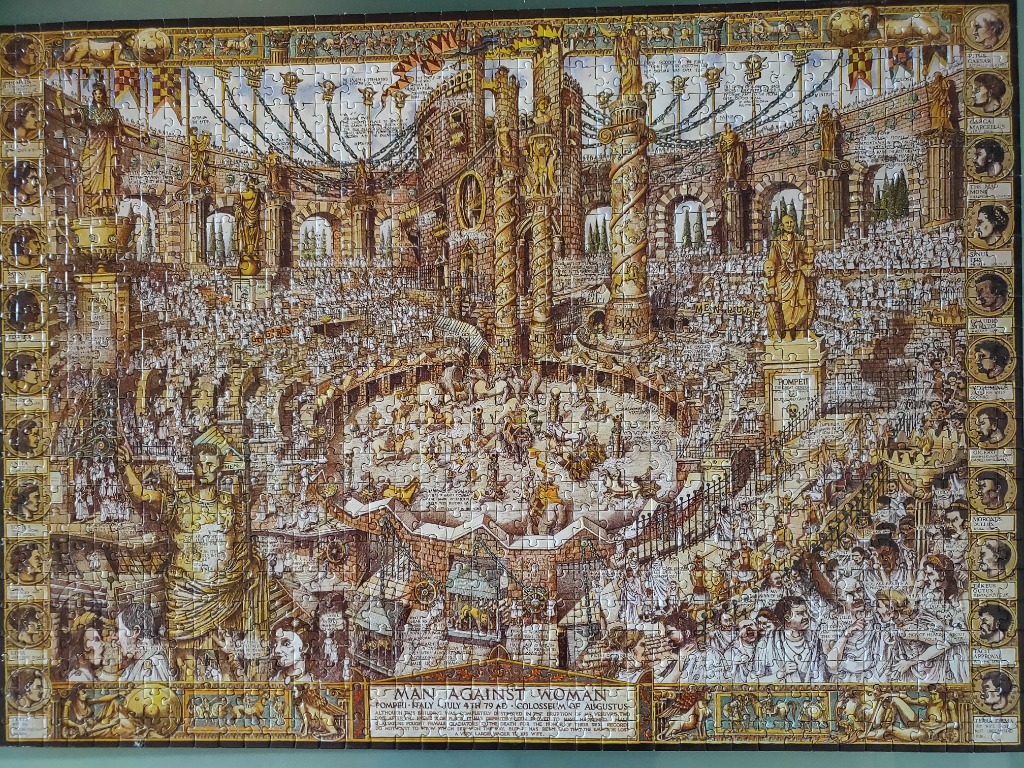
This highly detailed illustration depicts a vibrant scene inside an ancient Roman amphitheater, specifically titled 'Man Against Woman' at the base. The central focus is an arena where figures are engaged in combat, surrounded by a massive, multi-tiered crowd of spectators filling the tiered stone seating. Ornate architectural elements, including towering columns, archways, and classical statues, define the structure of the arena, creating a sense of historical grandeur.
Perspective is wide and sweeping, looking out over the arena floor from an elevated position. The border is composed of a series of small, circular portrait medallions featuring various Roman figures, framed by decorative stonework. The composition is packed with micro-details, including banners draped between columns, intricate carvings on the pillars, and handwritten-style text annotations scattered throughout the scene that provide context or dialogue for the depicted individuals.
The colour palette is dominated by warm, antique sepia tones, ochre, and muted browns, evoking the feel of aged parchment or historical ruins. The artistic style is reminiscent of a detailed etching or ink-and-wash drawing, characterized by fine cross-hatching and deliberate linework. Lighting appears uniform across the scene, highlighting the architectural geometry and the dense crowd, while the aged, papery aesthetic gives the entire image a nostalgic and educational atmosphere.
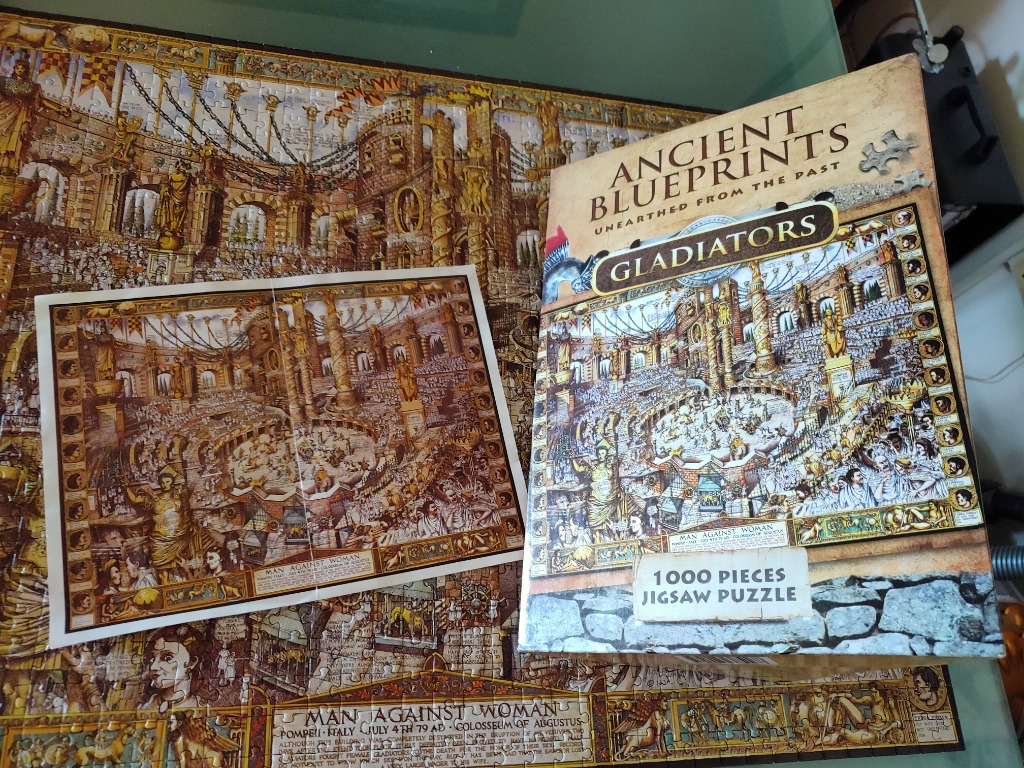
The central image depicts a sprawling, high-angle view of an ancient Roman amphitheater during a gladiatorial event. The arena floor is crowded with active combatants, including figures on horseback and fighters in various stances, surrounded by tiered seating packed with dense crowds of spectators. The architecture features classical arches, monumental pillars topped with statues, and decorative drapery, evoking a sense of imperial grandeur and historical spectacle.
The composition is highly intricate, utilizing a warm, sepia-toned color palette that mimics aged parchment or an ancient document. A border of small, circular portrait medallions frames the main scene on the right side, while the bottom of the composition contains stylized narrative text blocks and additional artistic vignettes. The lines are fine and detailed, characteristic of an etching or classical ink illustration, providing a rich, textured appearance that emphasizes the complexity of the arena's construction.
The overall mood is chaotic and cinematic, capturing the intense energy of a public performance in antiquity. The perspective pulls the eye deep into the center of the arena floor, while the surrounding structural elements and peripheral details anchor the scene in a specific historical context. Light appears diffuse, highlighting the density of the figures and the repetitive architectural motifs that define this elaborate, ancient setting.