Traditional Mexican Skulls
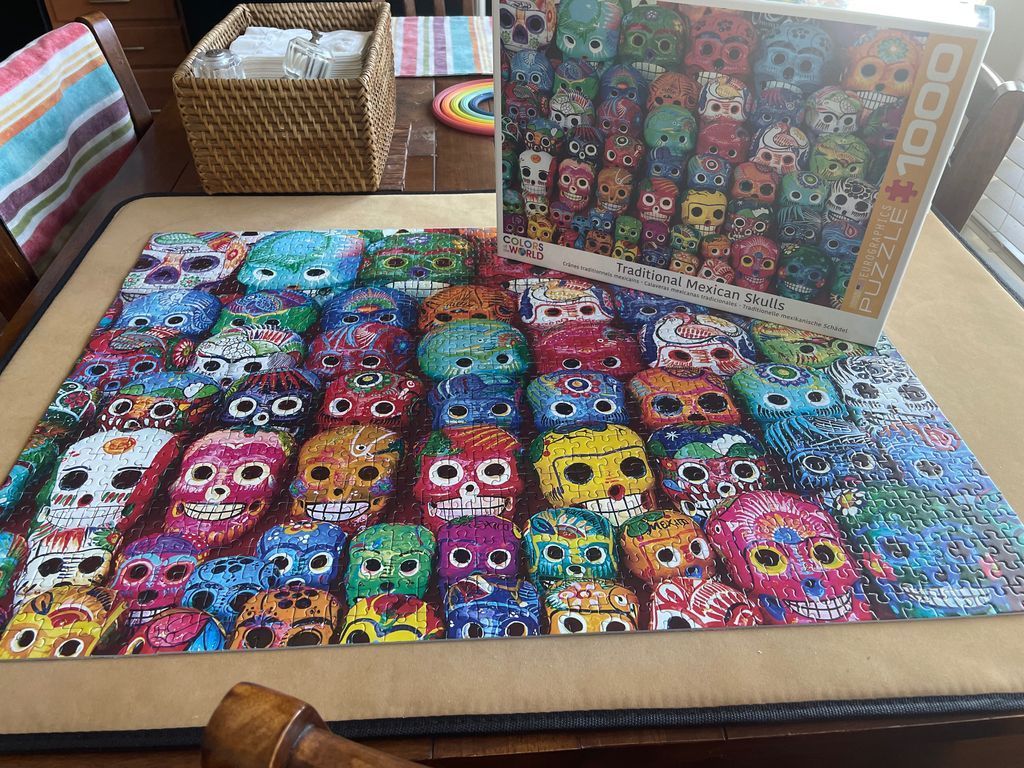
The image features a dense, rhythmic arrangement of numerous calaveras, or traditional Mexican sugar skulls, filling the entire frame. The skulls are depicted in a grid-like composition, each uniquely decorated with intricate patterns, bold lines, and expressive facial features. Some possess wide, toothy grins, while others have simpler, hollow expressions, creating a tapestry of cultural artistry.
Every skull is rendered in a different, highly saturated colour palette, ranging from brilliant magentas, cobalt blues, and sunny yellows to deep forest greens and fiery oranges. The contrast between the stark white outlines of the skulls and the vivid, multi-coloured decorative motifs creates a visually dynamic effect. The lighting is even and flat, emphasizing the bright, cheerful hues typical of folk art aesthetics.
This is a highly stylized illustration rather than a photograph, characterized by clean graphic outlines and intentional, repetitive design elements. The overall mood is festive and celebratory, drawing inspiration from the imagery associated with Dia de los Muertos, with a focus on symmetry, vibrant colour blocking, and folkloric detail.
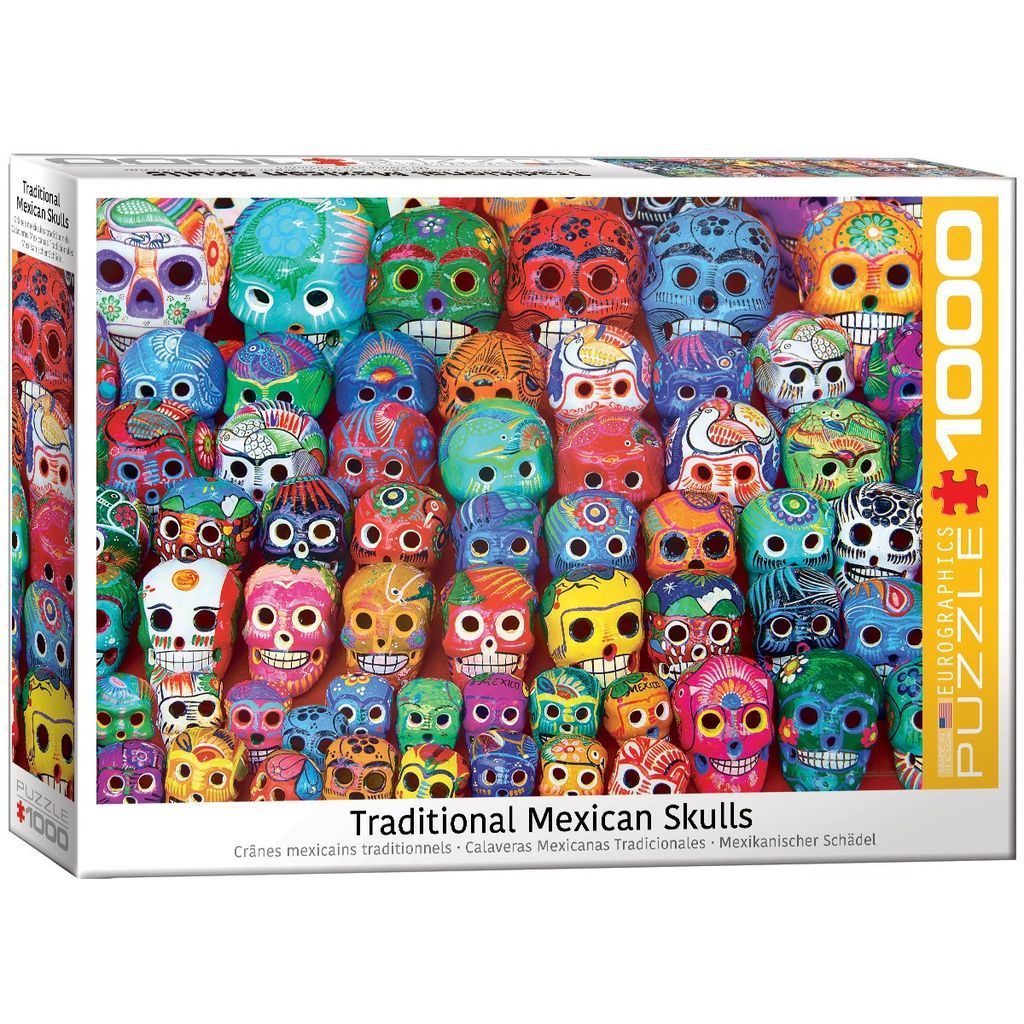
This image displays a dense, orderly arrangement of numerous small, decorative sugar skulls, or calaveras, used in Mexican Day of the Dead traditions. The skulls are positioned in a tight grid pattern, filling the entire frame from edge to edge. Each skull is unique, featuring distinct hand-painted patterns, ranging from floral motifs and swirls to geometric shapes, all rendered in vibrant, saturated colours.
The colour palette is incredibly diverse, incorporating almost every hue of the rainbow, including bright blues, hot pinks, sunny yellows, deep reds, and forest greens. The high-gloss finish on the figurines causes small, bright white glints of light to reflect off their rounded surfaces, enhancing their three-dimensional appearance and making the colors pop against the warm, reddish-toned background visible in the small gaps between the skulls.
The skulls vary slightly in size and style, with some displaying wider, more stylized teeth or larger eye sockets than others. Many are adorned with intricate line work that traces the cheekbones, jawlines, and forehead areas, creating a festive and ornate aesthetic. The composition creates a repeating, textured effect that is both playful and culturally significant, with the repetition of the skull motif providing a sense of unity to the wide variety of artistic designs.