Birds of Prey and Owls
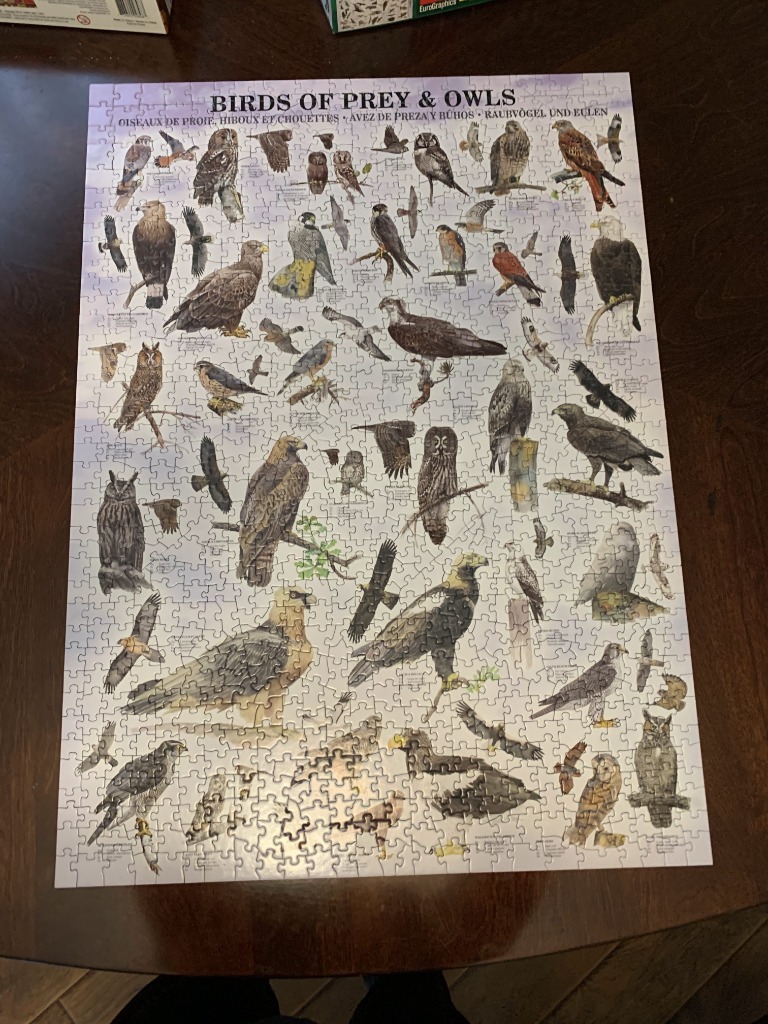
This scientific illustration showcases a wide variety of birds of prey and owls arranged in a grid-like composition across a plain white background. At the very top, large text reads "BIRDS OF PREY & OWLS" followed by translations in several languages. The imagery is meticulously detailed, presenting each species in a realistic, naturalistic style consistent with traditional field guide illustrations.
The layout is densely packed, featuring numerous species of eagles, hawks, falcons, and owls positioned throughout the space. Some birds are depicted perched on branches, while others are shown in flight with wings spread wide. The arrangement provides a comprehensive overview of these raptors, varying in size, pose, and plumage patterns, with small identifying text labels underneath most of the subjects.
The colour palette is dominated by earthy, muted tones typical of these birds, including shades of brown, grey, cream, black, and white, with occasional pops of rust or yellow on talons and beaks. The lighting is neutral and flat, typical of an educational poster, which helps emphasize the distinct markings and silhouettes of each bird. The overall aesthetic is one of academic observation and naturalist study, emphasizing biological accuracy over artistic interpretation.
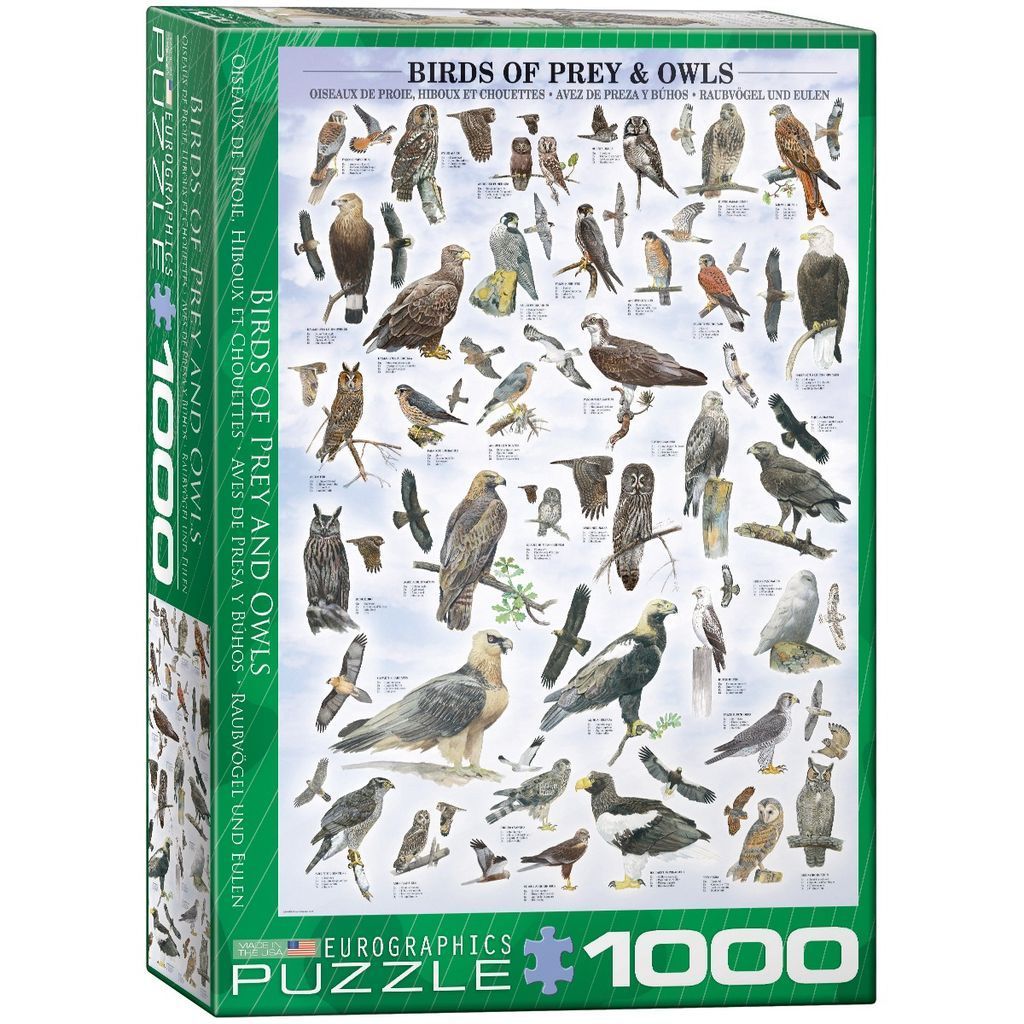
This educational illustration features a large collection of birds of prey and owls depicted in a classic field guide style. The birds are arranged across a clean, white background, filling the space with various species of eagles, hawks, falcons, and owls. Each bird is rendered with high detail, showcasing their distinct plumage, wing spans, and talons, often perched on branches or depicted in flight.
The composition is dense and organized, allowing viewers to compare different species through clear, realistic renderings. The title "BIRDS OF PREY & OWLS" appears in bold lettering at the top, accompanied by translations in several other languages. Below each individual bird, there is a small, faint caption identifying the species in multiple languages, adding to the informative, scientific nature of the artwork.
The color palette is dominated by natural, earthy tones including shades of brown, slate gray, cream, and white, accurately reflecting the plumage of raptors found in nature. Accents of yellow, seen in some of the beaks and talons, provide subtle contrast. The lighting is soft and even, typical of a scientific plate or botanical-style print, ensuring that the features of every bird remain visible and distinct without heavy shadows. The overall aesthetic is clean, academic, and highly illustrative.