The Butterfly Collector
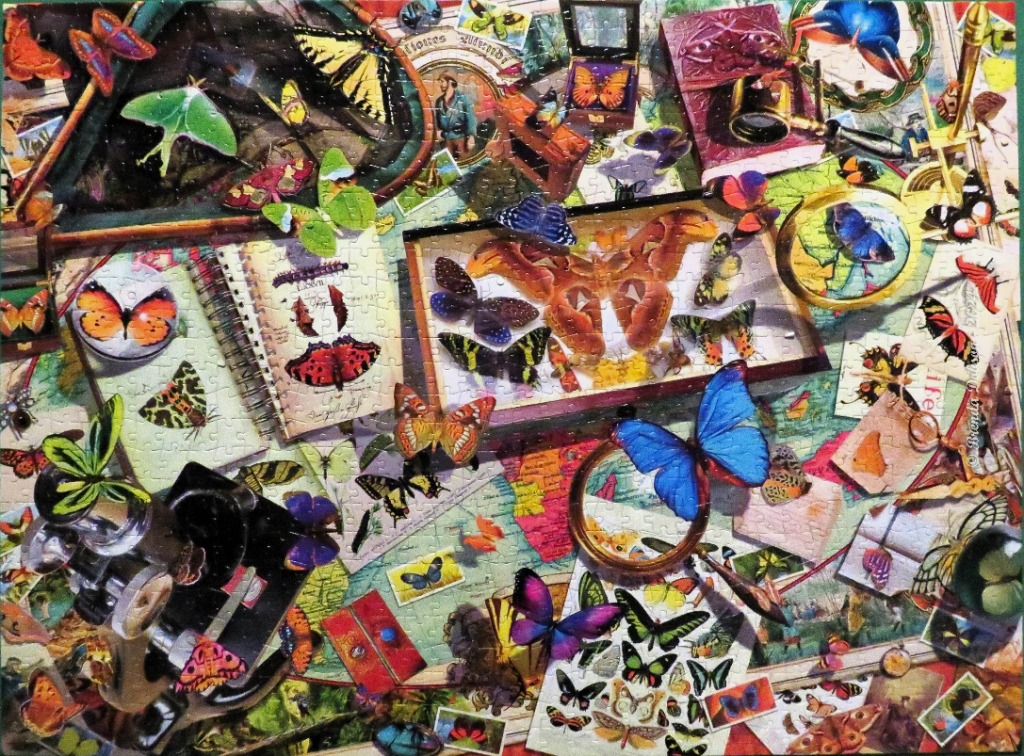
This image is a rich, complex collage focused on the study and collection of butterflies and moths. The scene is densely layered with vintage scientific instruments, including a black microscope in the lower-left corner and several brass-rimmed magnifying glasses positioned over maps and specimen sketches. Numerous butterflies and moths of varying sizes, colours, and species are scattered across the composition, some resting on open notebooks, others appearing as if they are pinned inside display boxes, and several others flying across the background.
The layout is chaotic yet balanced, with the elements layered in a way that suggests a cluttered naturalist's workbench. Fragments of old maps, vintage postcards, and hand-drawn biological illustrations act as the backdrop for the specimens. The composition creates depth through overlapping objects, with items like open books and framed specimens providing structured shapes amidst the scattered wings.
The colour palette is incredibly vibrant, highlighting the natural iridescence and patterns of the insects. Brilliant blues, fiery oranges, deep purples, and soft greens contrast against the muted, sepia-toned papers and the dark, utilitarian tones of the optical equipment. The lighting is soft and even, emphasizing the intricate textures of the butterfly wings and the reflective surfaces of the glass lenses. The overall aesthetic is that of a scientific tableau, combining the meticulous beauty of lepidoptery with the history of exploration and discovery.
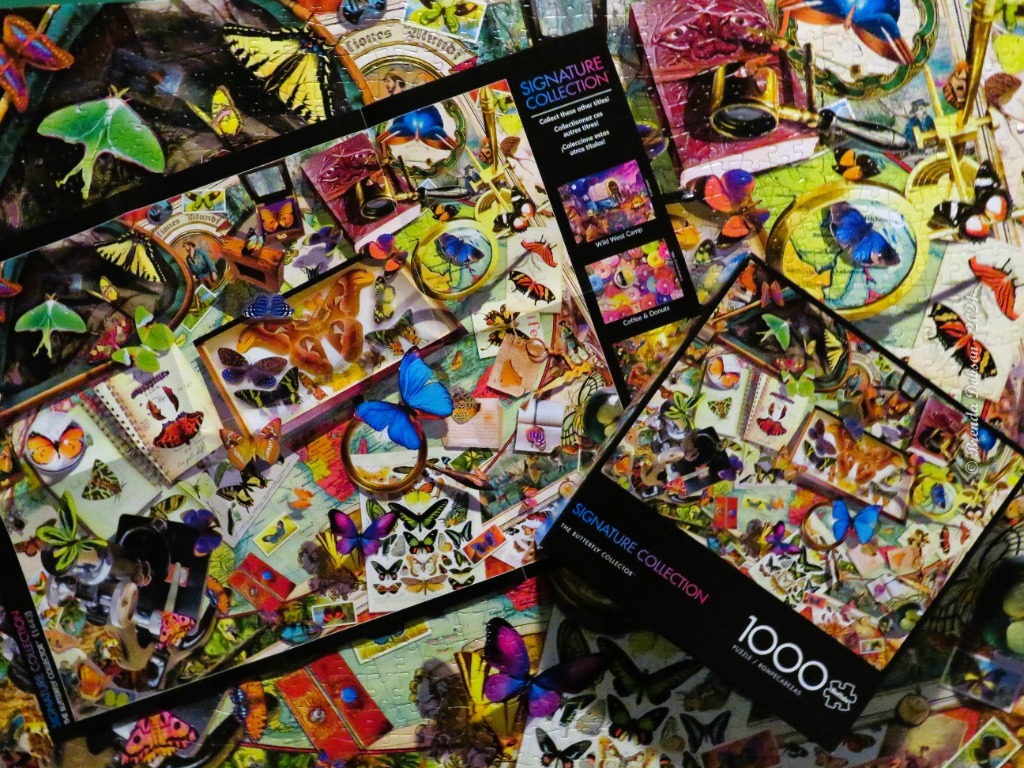
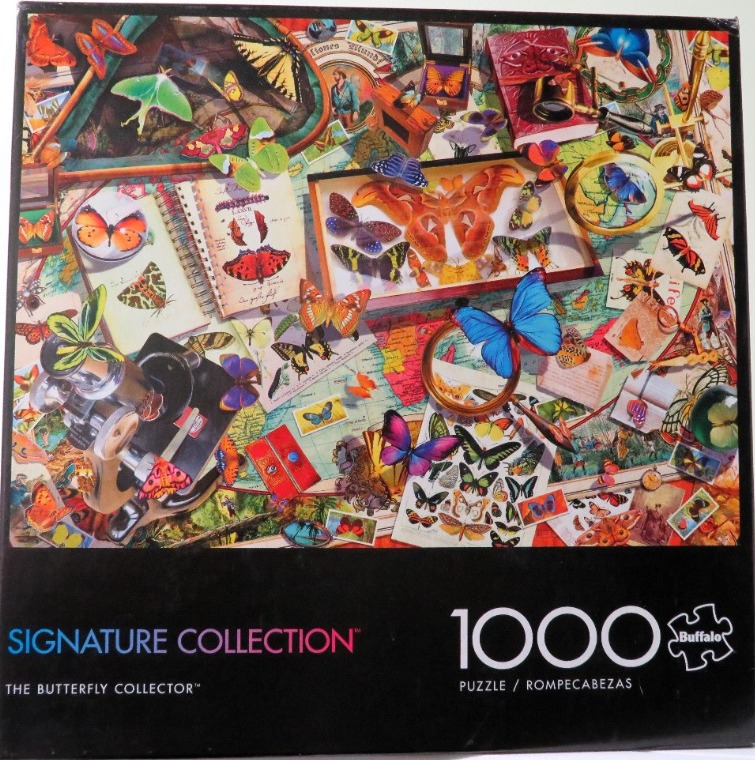
A detailed collage depicts the work of a naturalist, centered on an abundance of colorful butterflies scattered across an antique world map. The scene is cluttered with study materials, including a classic black microscope, various open specimen boxes displaying preserved moths and butterflies, and handwritten field notes featuring sketches and annotations. A gold magnifying glass and several vintage books add to the scholarly, exploratory atmosphere of the collection.
The composition is dense and layered, creating a sense of organized chaos typical of a researcher's desk. The butterflies range from vibrant blue morphos and bright orange monarchs to pale green luna moths and intricate, dark-patterned varieties. They are positioned both as physical specimens resting on surfaces and as illustrations within the books and papers, seamlessly blending reality with scientific documentation.
The artwork uses a rich, warm palette dominated by earth tones from the map, contrasted by the saturated, iridescent colors of the butterflies. The lighting is soft and natural, emphasizing the textures of paper, aged wood, and the delicate, dusty wings of the insects. The style is that of a highly detailed, realistic illustration that feels like a nostalgic tribute to 19th-century entomology and exploration.
by Brenda Dobson 2024-03-24