Sea Anemones
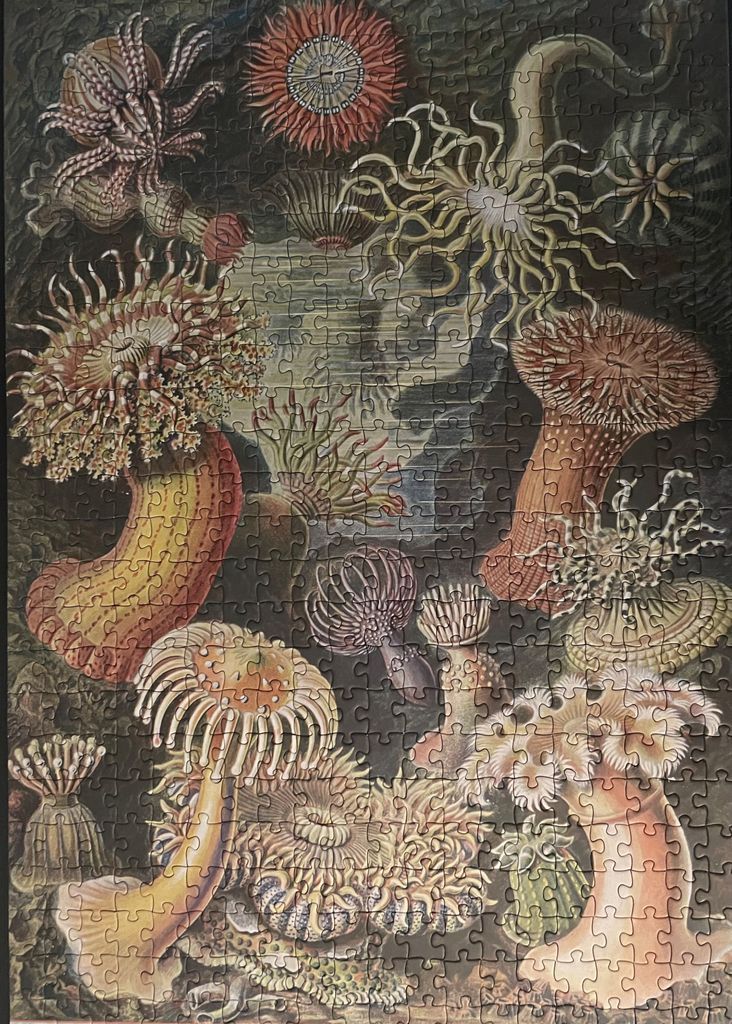
This illustration depicts an underwater scene dense with various species of sea anemones. The composition is packed with diverse forms, ranging from tall, tubular stalks topped with flared, tentacled crowns to flatter, radiating shapes that resemble blooming flowers. The anemones vary in structure, with some featuring delicate, thread-like filaments while others possess thick, fleshy petals, all captured in a precise, scientific, and slightly ornamental style reminiscent of nineteenth-century biological plates.
Set against a deep, dark, and murky backdrop that suggests the depths of the ocean, the organisms stand out through their warm, earthy palette. The colours include burnt oranges, muted ochres, pale pinks, and soft creams, providing a stark contrast to the shadowy environment. The lighting is subtle and even, highlighting the intricate texture of each creature's surface, from the bumpy, pockmarked skin of the stalks to the translucent and layered quality of the tentacles.
The image is a detailed, classical biological illustration, likely rendered in fine line work and layered watercolour or ink. The layout is somewhat crowded, with the anemones overlapping and filling the vertical frame from top to bottom, creating a lush, immersive, and slightly mysterious depiction of marine biodiversity. The style is classic and academic, focusing on the morphological accuracy of the specimens while maintaining an artistic, decorative appeal.
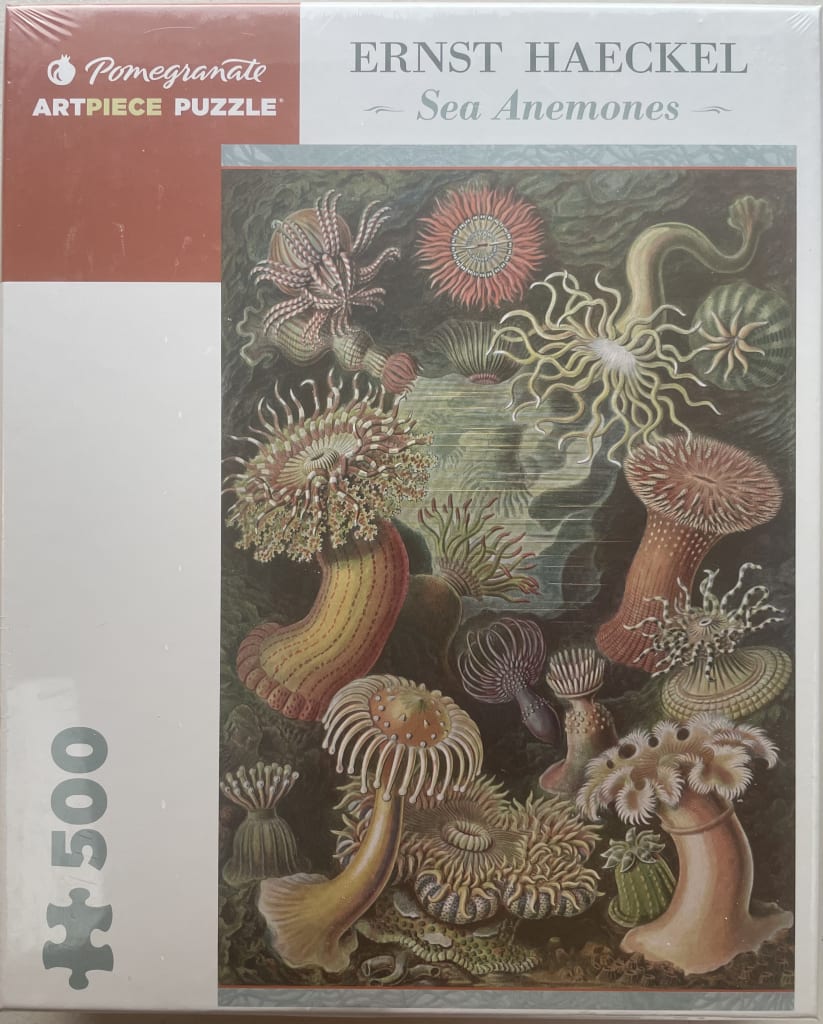
This scientific illustration depicts a diverse collection of sea anemones. The composition is dense and layered, showcasing various species of anemones with differing tentacle structures, body shapes, and vibrant color palettes. Some are tall and cylindrical, while others are low-profile and ruffled, creating a complex, organic tapestry that mimics the appearance of a seafloor habitat.
The artwork is rendered in the characteristic style of Ernst Haeckel, known for intricate line work and precise, observational detail. The color scheme is dominated by deep, murky greens and browns that serve as a dark, watery background, allowing the anemones to stand out in shades of sunset orange, coral pink, muted yellow, and olive green. Fine hatching and stippling are used to define the textures of the tentacles and the bulbous bodies of the creatures.
The lighting is subtle, with highlights on the curved surfaces of the anemones giving them a sense of volume and depth. The arrangement is artistic rather than strictly ecological, with creatures overlapping and floating in a dark, oceanic void. The overall mood is one of quiet, scientific wonder, capturing the symmetrical beauty and biological variety of marine life as observed in historical natural history records.