Dinosaurs

This illustration is an educational reference chart showcasing dozens of different dinosaur species arranged across a vintage-style, parchment-coloured background. The composition is densely packed, featuring a wide variety of prehistoric creatures in diverse poses, sizes, and orientations. Large sauropods dominate the left and center sections, while various theropods, ceratopsians, and smaller species are scattered throughout the composition, creating an overlapping, mosaic-like effect.
The artwork uses a naturalist illustration style, employing muted, earthy tones such as olive greens, ochres, muted browns, and sandy yellows to render the skin textures of the dinosaurs. Each animal is accompanied by a small skeleton icon and a block of text providing scientific details, measurements, and classification. The overall colour palette is warm and aged, evoking the appearance of an old natural history field guide or museum plaque.
Fine black lines delineate the boundaries of the text boxes and the silhouettes of the skeletal diagrams. The title "DINOSAURS" is printed in a bold, classic serif typeface at the top center, flanked by smaller text and graphic elements. The layout is systematic yet cluttered, designed for educational study rather than a scenic narrative, resulting in a cohesive yet highly detailed visual density that covers every available inch of the parchment backdrop.
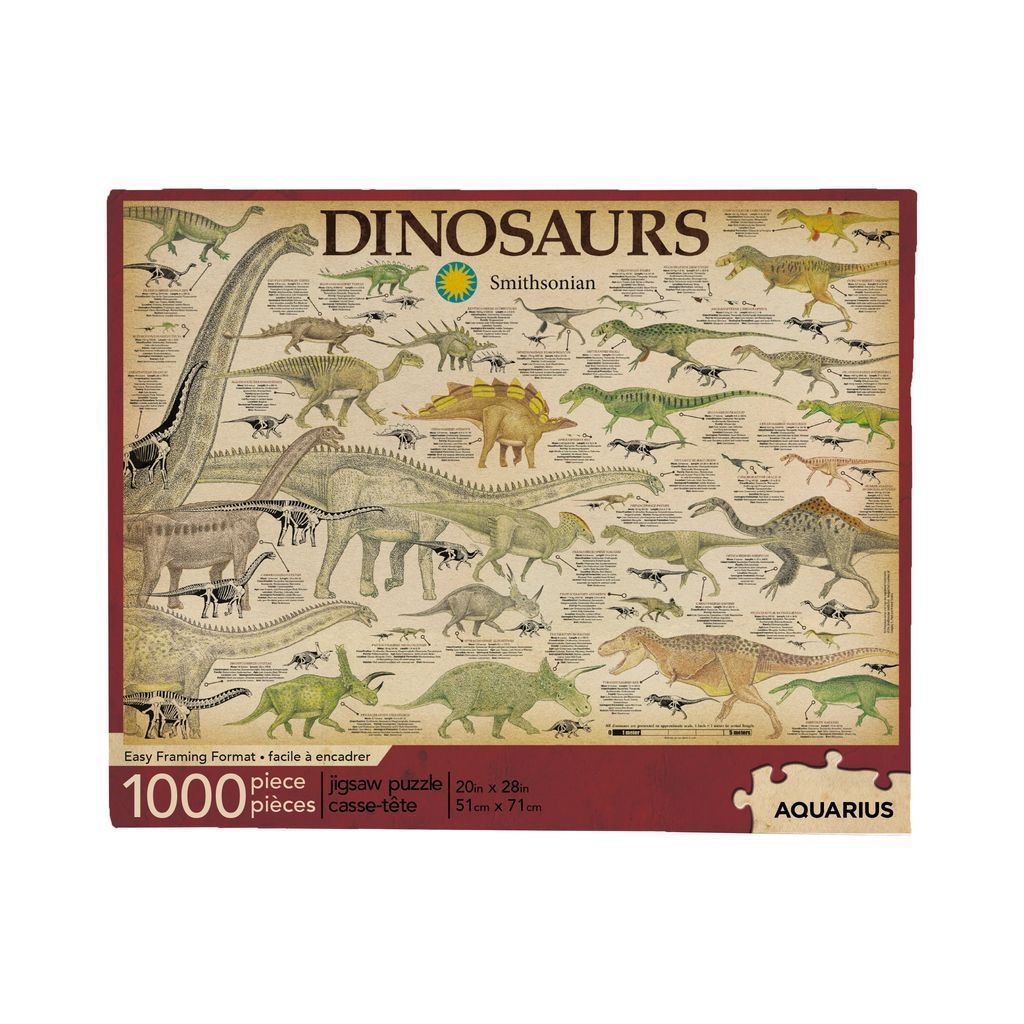
This educational illustration features a wide array of various dinosaurs arranged across a vintage-style, tan-coloured background. The central subject is a comprehensive study of prehistoric reptiles, with large, detailed illustrations of iconic species like the Triceratops, Stegosaurus, and various long-necked sauropods interspersed with smaller, detailed diagrams.
The composition mimics a natural history museum chart or a textbook plate, with figures organized to fill the space dynamically. Each dinosaur is accompanied by scientific labels and text, offering details on their characteristics and classification. The layout is dense, balancing large silhouettes with smaller line-drawn skeletons and skeletal structures to provide a sense of comparative anatomy.
The colour palette is intentionally muted and academic, leaning heavily on earthy tones of sepia, olive green, ochre, and charcoal grey to evoke the feel of an aged scientific document. The artistic style is reminiscent of classic botanical or zoological prints, using clean, illustrative lines and soft shading to define the contours of each creature against the textured paper background.
Key focal points include the massive sauropod necks extending from the lower left to the upper left and a prominent, textured Spinosaurus-like figure on the right. The text is printed in a clean, serif font, ensuring readability despite the busy composition. The overall mood is informative and nostalgic, presenting a rigorous, scholarly look at dinosaur paleontology.