The Game of Chess
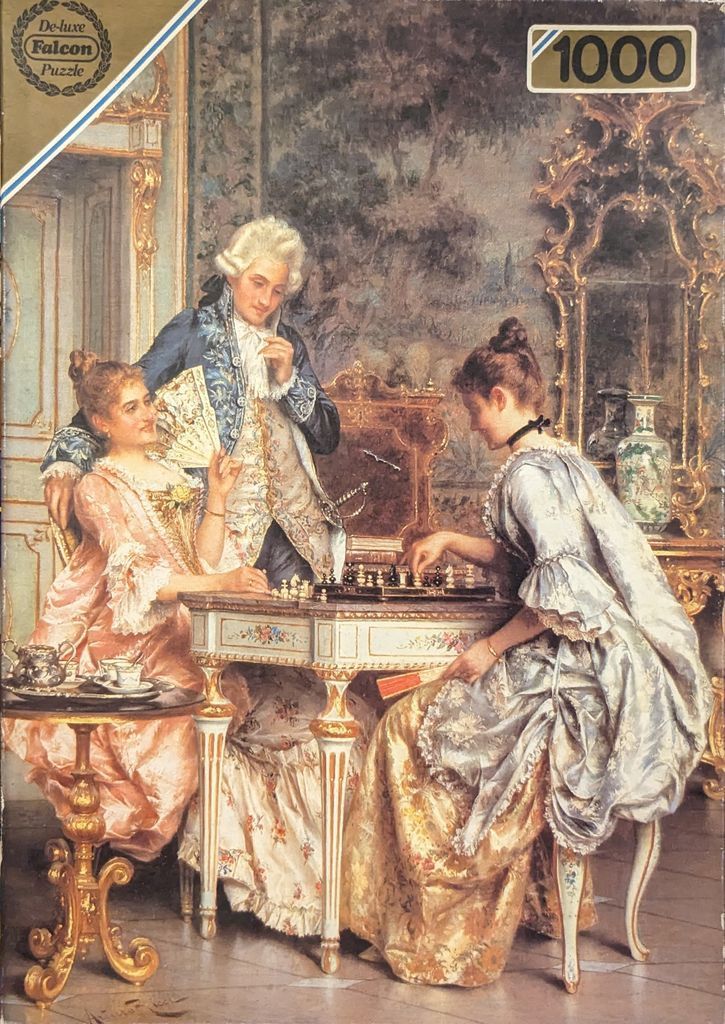
The central focus is a group of three figures in 18th-century attire gathered around a small, ornate table to play chess. A woman seated on the left wears a pale pink gown and holds a folding fan, looking toward the man standing beside her. The man is dressed in a blue frock coat with a white cravat and a powdered wig. To the right, another woman in a shimmering, pale blue dress with ruffled sleeves sits at the table, her hand poised to move a chess piece.
The setting is an opulent, classical drawing room. To the left sits a small tea table with an ornate metal teapot and cups. To the right, an elaborate, gilded, and carved mirror hangs on the wall, partially reflecting a decorative vase. The room features high ceilings and soft, muted tones that suggest a sense of intimacy and historical refinement.
The colour palette is soft and pastel-toned, dominated by pale pinks, creams, and cool blues. The lighting is gentle and diffused, casting soft highlights on the intricate textures of the silk dresses and the polished wood of the furniture. The artwork is a fine-art style oil painting, characterized by detailed brushwork that emphasizes the luxurious fabrics and the delicate, aristocratic atmosphere of the era.
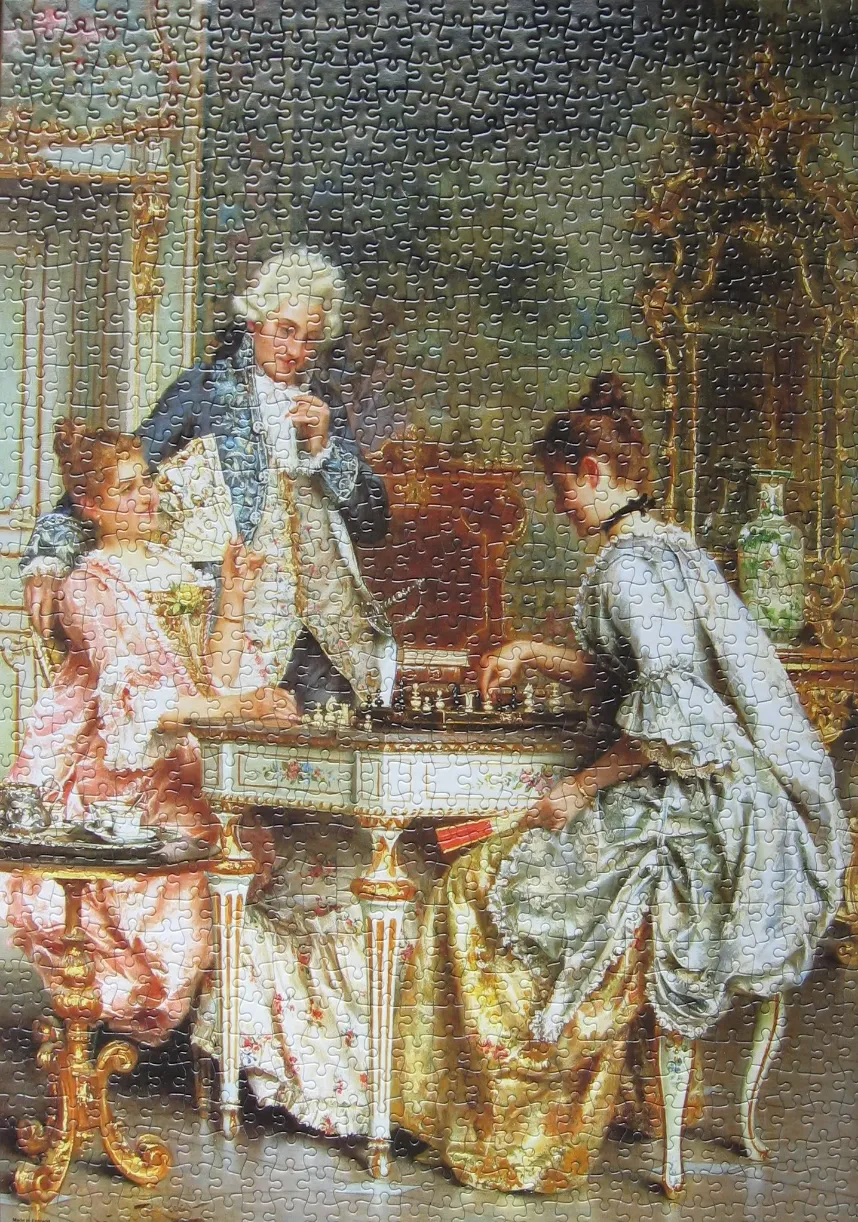
This painting depicts an 18th-century interior scene featuring three figures engaged in a game of chess. Seated at a decorated table in the center, two women and a man are caught in a moment of social leisure. The woman on the left wears a pale pink gown and holds a delicate fan, while the woman on the right, dressed in a voluminous gown with blue and gold tones, leans over to move a piece on the chessboard. A man stands between them, wearing a formal coat and a powdered wig, observing the game with a thoughtful expression.
The setting is opulent, characterized by rococo-style furniture and elegant decor. A small, ornate side table sits to the left, holding a tea service, while a gilded stand or mirror frame rises in the background. The atmosphere is quiet and refined, suggesting a private parlor. The composition is balanced, drawing the eye toward the chessboard at the heart of the table.
The style of the image is classical oil painting, marked by rich textures and soft, atmospheric lighting that highlights the intricate embroidery on the costumes and the gilded edges of the furniture. The color palette is composed of muted pastels, including dusty pinks, creams, and cool blues, contrasted by the warm, golden hues of the surrounding decor. The play of light and shadow adds depth to the figures and the environment, creating a graceful, historical narrative.