Da Vinci's World
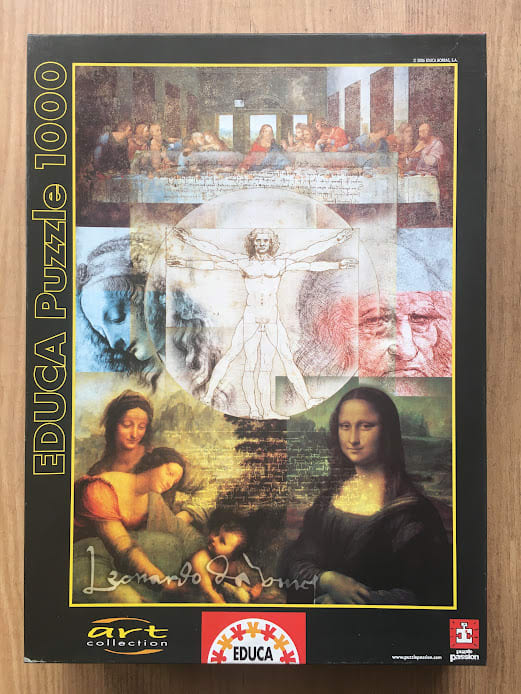
This collage features a collection of iconic artworks by Leonardo da Vinci, arranged in a layered composition. At the top, a horizontal band depicts The Last Supper, showing figures gathered around a long table. In the center, the Vitruvian Man is prominently featured, with his arms and legs extended within a circular and square frame, overlaid across the other images. Below this, the composition includes a profile of a woman’s head, a sketch of an older man's face, and a scene of the Virgin and Child with Saint Anne.
At the bottom right, the Mona Lisa gazes forward with her signature enigmatic smile, anchoring the lower section of the image. The layout uses translucent layering to blend these distinct masterworks into a unified artistic tribute. The overall mood is classical, intellectual, and reverent, highlighting the breadth of the artist's historical influence.
The color palette is dominated by warm, sepia-toned parchment shades, earthy browns, and muted reds, punctuated by the cooler blue tones found in the rendering of the woman's profile. The style remains faithful to the original oil paintings and ink sketches, maintaining the detailed linework, sfumato shading, and historical textures characteristic of Renaissance art. The image serves as a grand visual anthology of some of the most recognized works in human history.
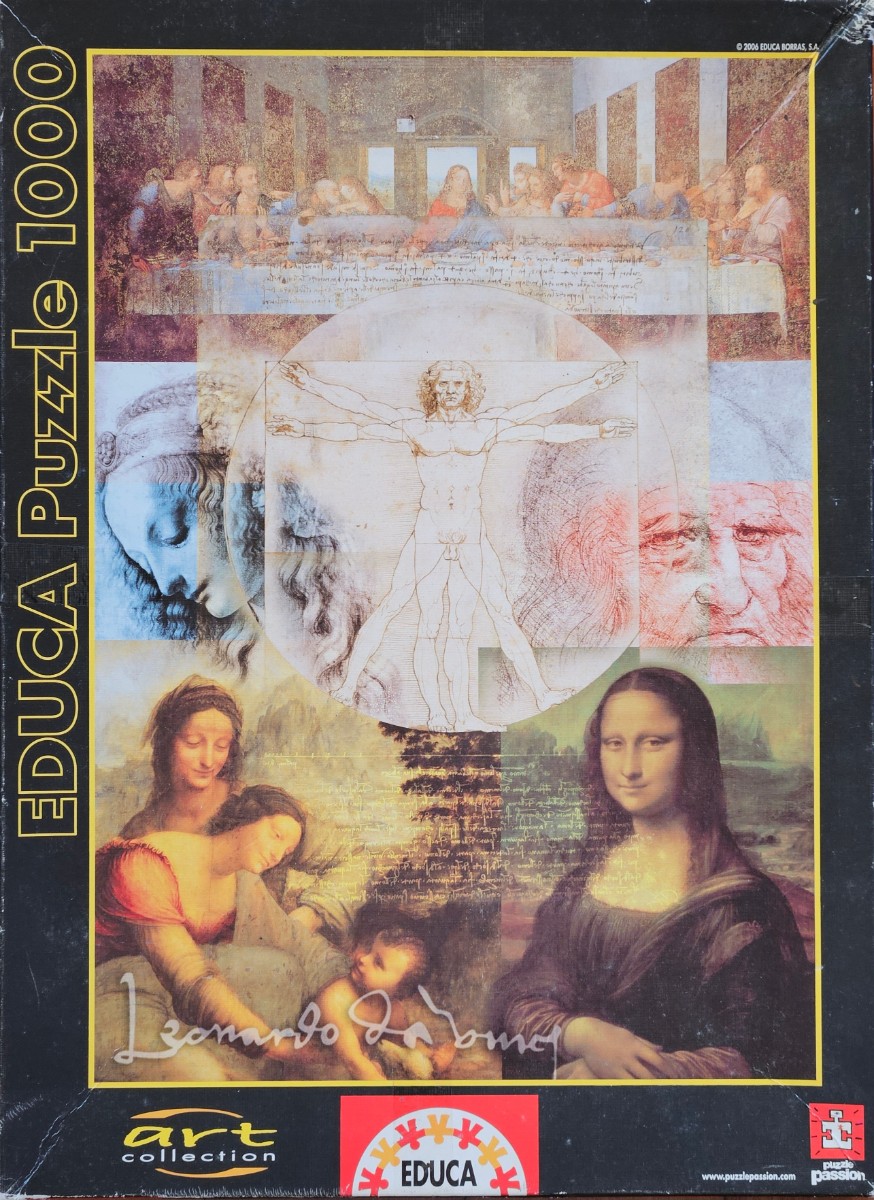
This image is a composite collage featuring the iconic works of Leonardo da Vinci. Dominating the center is the Vitruvian Man, a sketch of a male figure superimposed within a circle and square, rendered in ink and parchment tones. Surrounding this central figure are various segments of his most famous masterpieces, layered in a structured, multi-panel arrangement.
At the top, a section of The Last Supper spans the width, showing the apostles gathered around a long table. To the left of the central sketch is a close-up detail of a woman's face, likely from The Virgin of the Rocks, rendered in cool, soft tones. To the right, a reddish-toned sketch of an elderly man’s face balances the composition. The bottom section includes The Virgin and Child with Saint Anne on the left and the legendary Mona Lisa on the right, her iconic smile and dark attire clearly visible.
The overall colour palette is muted and historical, dominated by sepia, parchment, earthy browns, and soft blues. The artwork uses a blend of illustrative sketches and oil painting techniques. The composition is artistic and scholarly, layering these Renaissance masterpieces to create a tribute to the artist's immense creative output. Faint, cursive handwritten text overlays sections of the lower half, mimicking the artist’s famous mirror-script notes.