Bridge on the Saône River at Mâcon, 1834
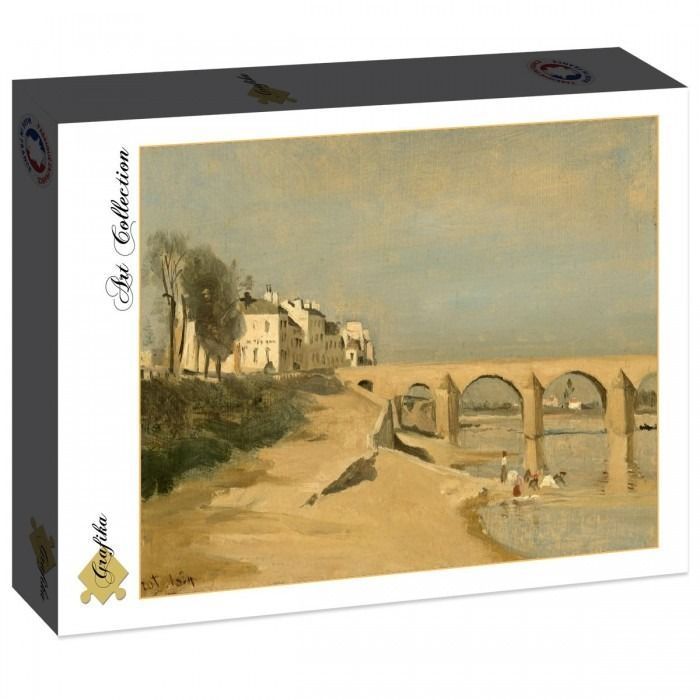
The scene depicts a calm, impressionistic oil painting of a town situated along a riverbank. A long, multi-arched stone bridge stretches across the water, connecting the foreground shore to the distant bank. On the left side of the composition, a cluster of light-coloured, multi-story buildings sits atop a rise, partially obscured by a group of dark, tall trees. The riverbank in the foreground is a wide, sandy slope that leads down to the water’s edge.
Small, indistinct figures are gathered near the water's edge on the right, suggesting local activity along the river. The composition is balanced horizontally, with the heavy architecture and trees on the left counteracted by the expanse of the bridge and water extending to the right. The perspective draws the viewer’s eye along the gentle curve of the bank toward the arches of the bridge.
The colour palette is soft and muted, dominated by earth tones, warm beiges, and pale ochres. The sky is a flat, hazy wash of light blue-grey, suggesting a quiet, overcast day. The brushwork is loose and painterly, characteristic of 19th-century landscape art, which gives the entire scene a dreamy, tranquil atmosphere. The light is diffused, casting soft shadows that enhance the peaceful, rustic quality of the riverfront setting.
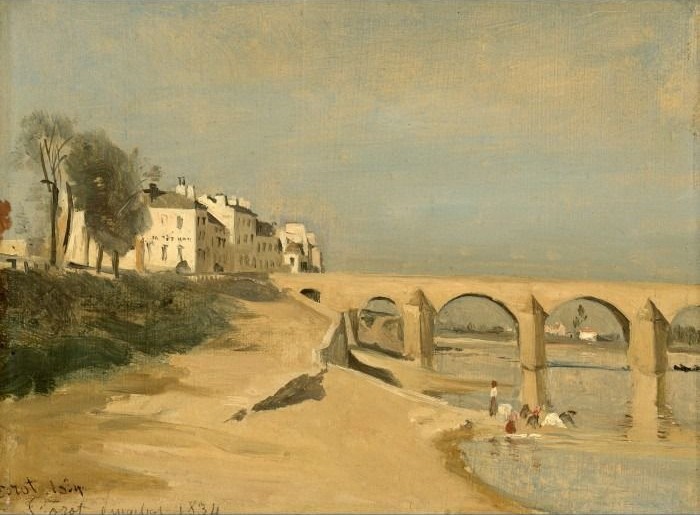
This oil painting depicts a tranquil riverbank scene dominated by a large, multi-arched stone bridge spanning across the right side of the composition. To the left, a cluster of pale, historic buildings sits atop a gentle rise, nestled among a few thin, wispy trees that lean slightly against the soft sky. The architecture appears modest and rustic, reflecting a quiet, provincial European town.
The foreground is occupied by a vast, sandy bank that stretches toward the water's edge. At the point where the land meets the river, a small group of figures—likely washerwomen—is clustered near the water, adding a sense of everyday human activity to the pastoral environment. The light is diffused and soft, suggesting either the early morning or late afternoon, which casts gentle shadows across the sand and beneath the bridge arches.
The colour palette is muted, consisting primarily of warm ochres, sandy beiges, and soft greys. These earthy tones harmonize with the cool, pale blue of the river and the overcast sky, creating a peaceful, contemplative atmosphere. The artist's brushwork is visible, giving the surface a textured quality that enhances the gentle, impressionistic feeling of the scene. In the bottom left corner, there is a faint inscription and date, indicating the work was completed in 1834.