The Temptation of Saint Anthony
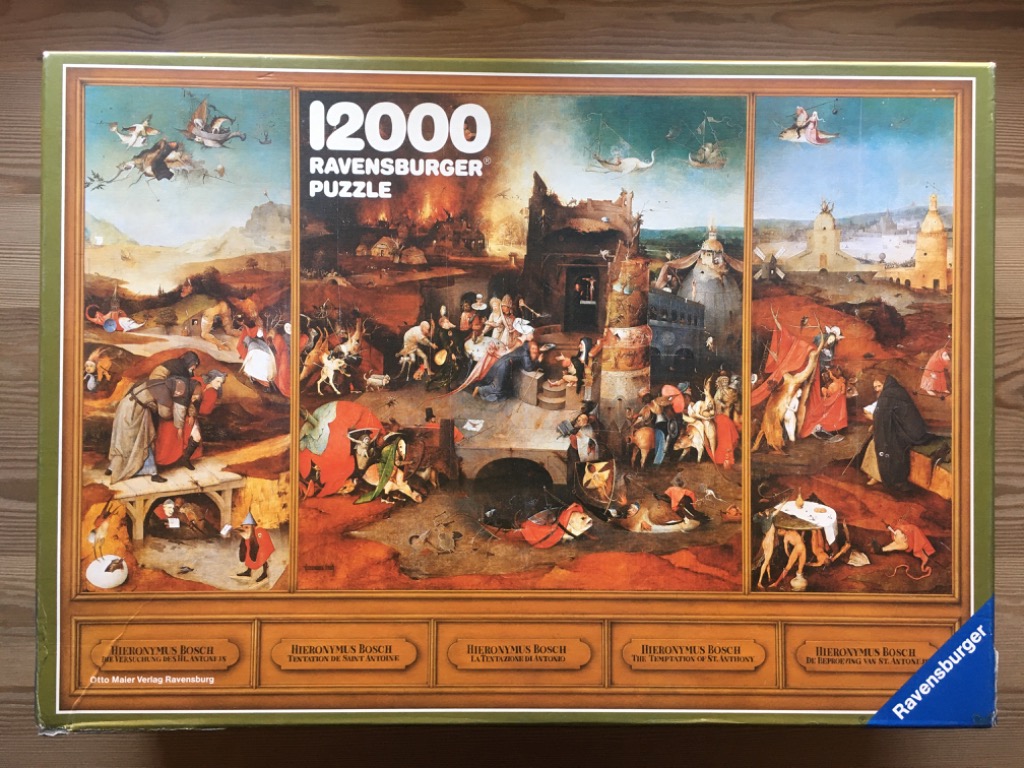
The artwork is a complex, multi-panel oil painting by Hieronymus Bosch depicting The Temptation of St. Anthony. The scene is densely populated with surreal, nightmarish creatures, hybrid demons, and fantastical architecture scattered across a bleak, fiery landscape. The central panel serves as the primary focal point, showing St. Anthony surrounded by chaotic, macabre figures and structures that blend organic and mechanical forms, while the side panels expand on this theme of spiritual ordeal.
The composition is arranged as a triptych, framed by simulated wood borders that give the work an altar-like appearance. The layout is sprawling and non-linear, with tiny vignettes of torment and absurdity occurring in every corner. In the background, burning buildings and distant, hazy horizons suggest a world in collapse. The sky shifts from pale, ethereal blues in the upper corners to deep, smoky oranges and glowing embers near the horizon line, creating a dramatic sense of depth.
Technically, the painting utilizes a warm, earth-toned palette dominated by rusted reds, muddy browns, and scorched oranges, punctuated by the cooler blues of the distant sky and specific garment highlights. The style is classic Renaissance surrealism, characterized by meticulous detail, thin brushwork, and an imaginative, often grotesque visual vocabulary. The mood is one of intense spiritual anxiety and frantic, nightmarish energy, typical of the artist's elaborate moral narratives.
by Julia at Karori Puzzle Library 2024-08-01