The Starry Night - Showpiece Calendar
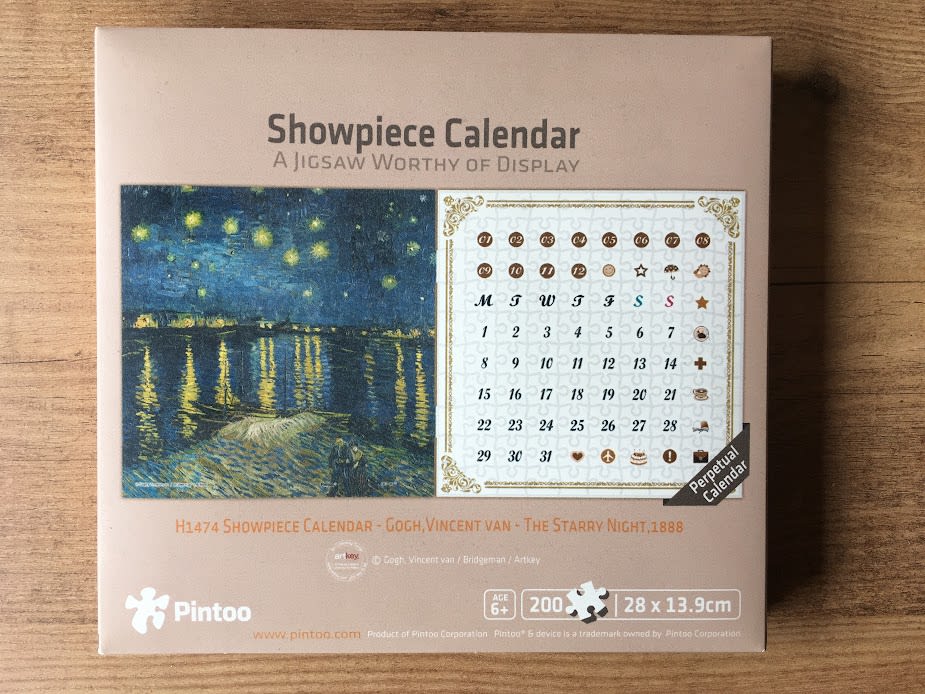
The artwork is divided into two distinct sections. On the left is an iconic post-impressionist painting by Vincent van Gogh, Starry Night Over the Rhone. This scene depicts a dark, deep blue night sky filled with glowing yellow stars, reflecting across the rippling surface of the river below. The bank in the foreground is rendered in dark, thick brushstrokes, with two silhouetted figures walking near the water's edge.
On the right side is a clean, white grid designed as a perpetual calendar. The header features circular icons labeled C1 through C8, followed by a secondary row of small, whimsical icons including a star, umbrella, coffee cup, and briefcase. Below this, a standard calendar grid displays the days of the week, dates 1 through 31, and additional small symbols scattered throughout the grid to mark special occasions. The entire grid is framed by an elegant, gold-toned scrollwork border.
The overall aesthetic creates a contrast between the expressive, textured impasto of the nineteenth-century masterpiece and the structured, minimalist design of the functional calendar grid. The colour palette is dominated by intense navy and cerulean blues, punctuated by bright, warm yellows from the stars and their reflections, while the calendar section maintains a neutral, clean appearance using black text on an off-white background with subtle gold accents.
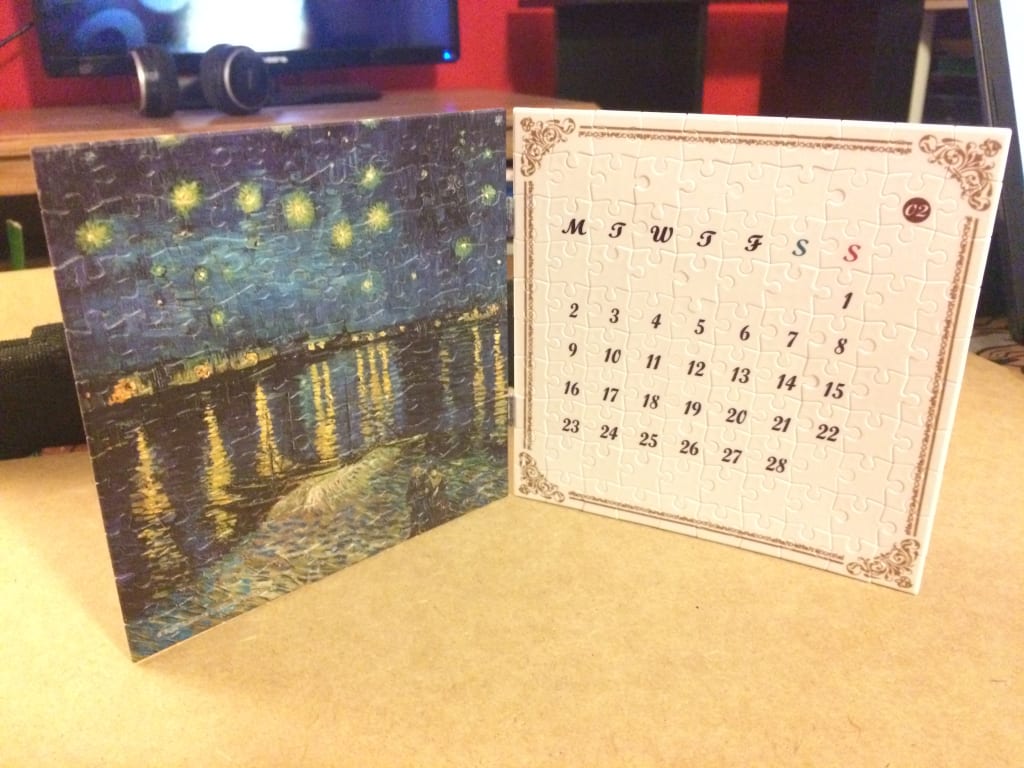
This image features two square panels displayed side-by-side on a flat surface. The panel on the left displays a reproduction of Vincent van Gogh's painting, Starry Night Over the Rhone. This scene depicts a dark blue night sky filled with glowing yellow stars, reflecting brightly onto the surface of a river. The water dominates the lower portion of the image with thick, rhythmic brushstrokes capturing the shimmer of gas lamps from the distant shore, creating a moody, evocative atmosphere typical of Impressionist art.
The panel on the right is a white, minimalist perpetual calendar. It features a clean, black-ink grid displaying the days of the week labeled as M, T, W, T, F, S, S across the top, followed by a numerical sequence from 1 through 28. The calendar is framed by simple, elegant decorative filigree flourishes in each of the four corners, giving it a classic and refined aesthetic. A small circular emblem marked C2 sits in the upper right corner of this section.
The overall composition is symmetrical and stark, contrasting the intense, textured colours of the famous night painting with the clinical, organized simplicity of the calendar. The visual style bridges the gap between classic fine art and functional, modern design, with the two squares standing upright to function as a tabletop display.