Procession/Flamingos
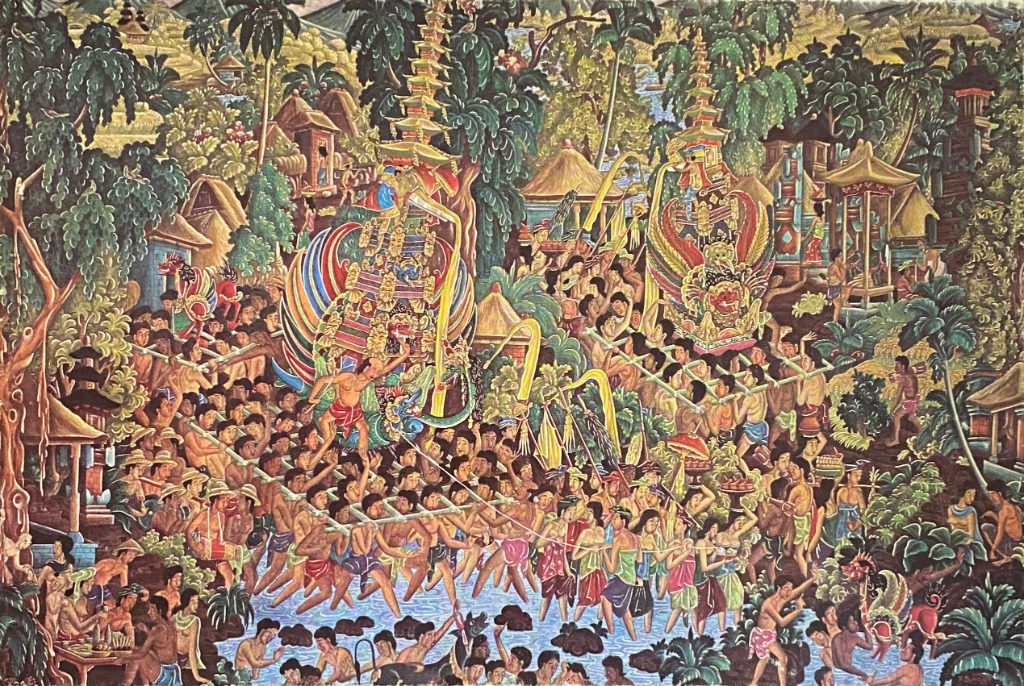
This intricate painting captures a vibrant Balinese ceremonial scene, likely a cremation procession. At the center of the activity, large groups of people carry two elaborate, multi-tiered funeral towers, known as bade. These towers are ornate, featuring bright colors and sweeping, wing-like structures, and they are surrounded by a bustling crowd of figures in traditional attire. Several individuals are depicted wading through a shallow, dark-toned river that cuts across the foreground, actively supporting the heavy structures with bamboo poles while others assist from the banks.
The setting is a dense, lush tropical landscape filled with traditional thatched-roof buildings, tall palm trees, and varied foliage. The composition is packed with activity, creating a sense of dynamic movement as the procession makes its way through the verdant environment. In the background, smaller shrines and dwellings are tucked among the greenery, suggesting a community deeply connected to its surroundings.
The artwork is rendered in a stylized, traditional Balinese manner, characterized by flattened perspective and highly detailed patterns. The color palette is rich and earthy, dominated by deep greens and browns of the vegetation, punctuated by the vibrant reds, yellows, and golds of the ornate towers and the participants' garments. The light appears soft and diffuse, typical of a jungle setting, and the overall mood is one of communal solemnity mixed with ceremonial energy and cultural tradition.
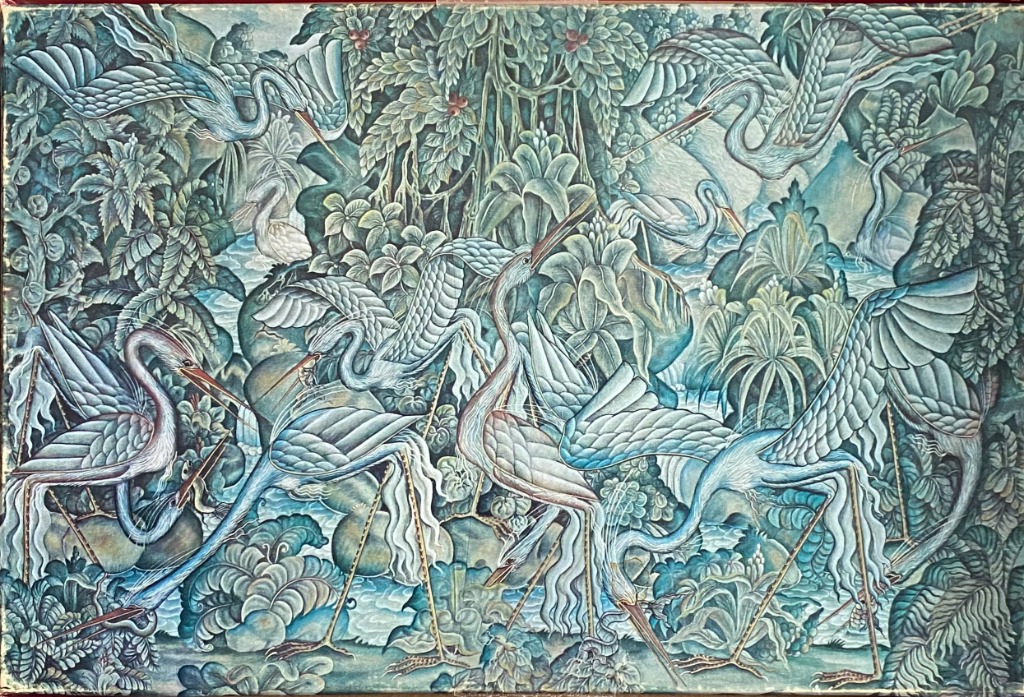
This intricate artwork depicts a lush, tropical jungle teeming with multiple large, long-legged wading birds, likely herons or egrets. The birds are captured in dynamic poses: some are in flight with wings outstretched, while others stand tall among the dense undergrowth, their long, pointed beaks poised as if foraging or interacting with one another. The composition is layered and complex, filling the entire frame with a dense tangle of flora.
The setting is a dense, stylized forest filled with varied plant life, including large ferns, broad-leafed plants, and intertwining vines. A suggestion of a small stream or body of water winds through the lower portion of the scene, providing a foreground for the birds. The spatial layout creates a sense of depth, with some birds positioned deep within the foliage and others prominently featured in the foreground.
The aesthetic is monochromatic, dominated by varying shades of cool, muted blues, teals, and soft, dusty grey-greens. The light is soft and even, highlighting the textured lines of the birds' feathers and the detailed veining of the leaves. The medium appears to be an artistic illustration or perhaps a print of a textile tapestry, characterized by fine, deliberate linework and a decorative, almost classical approach to nature. The overall mood is tranquil yet vibrant, capturing the rhythmic, interconnected patterns of a wild, undisturbed natural habitat.




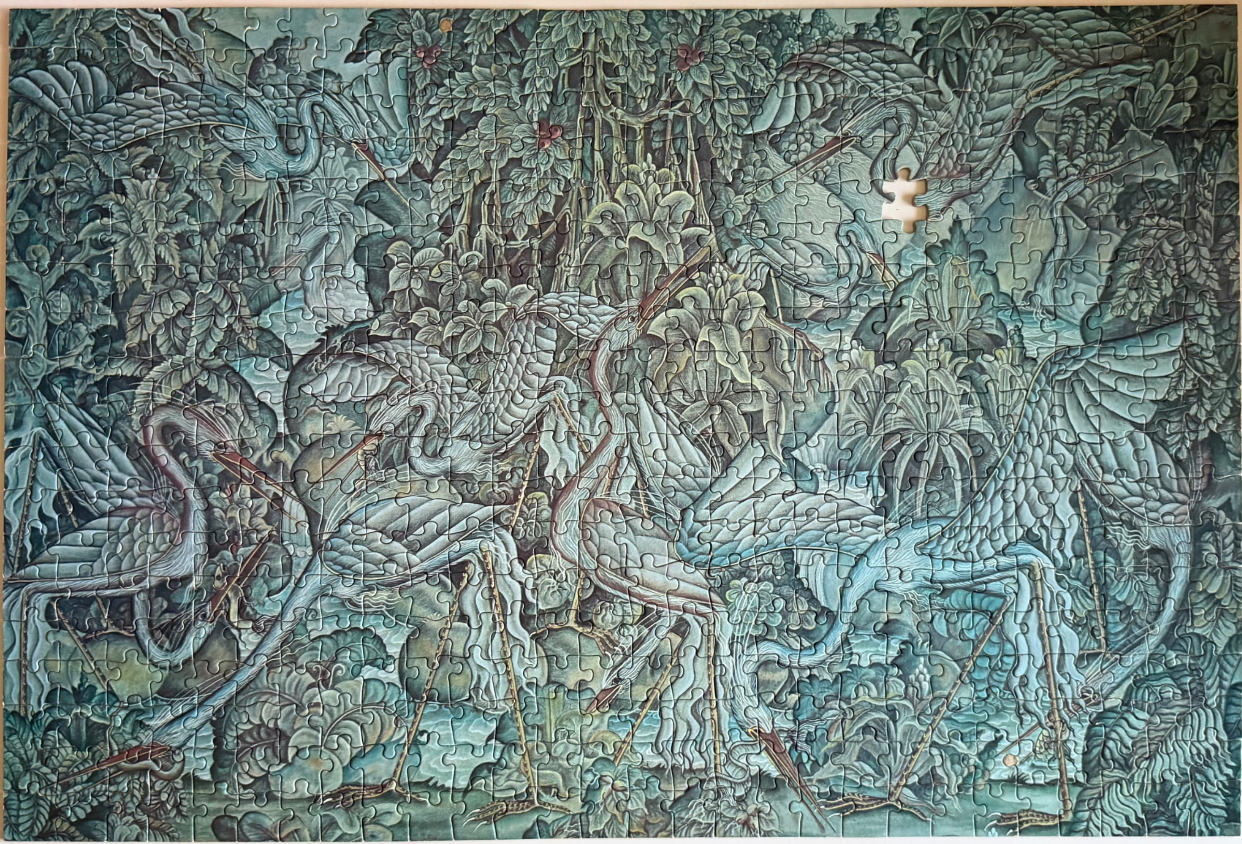
This illustration depicts a vibrant, dense jungle scene populated by numerous long-legged, heron-like birds. The birds are depicted in various positions—some stand tall with necks extended, others bend their heads toward the water, and some have wings partially unfurled, creating a sense of movement within the stillness of the forest. The composition is highly complex and layered, with the birds seamlessly integrated into a thick tapestry of tropical leaves, ferns, and exotic plants.
The colour palette is dominated by cool, desaturated tones, primarily varying shades of teal, blue-grey, and mossy green. This monochrome-leaning approach gives the image a vintage, botanical lithograph aesthetic. The light appears soft and diffuse, typical of a canopy-covered forest floor, with subtle tonal shifts providing depth and separating the overlapping forms of the birds from the surrounding flora.
The style is reminiscent of 19th-century natural history illustrations, characterized by intricate line work and careful observation of avian anatomy mixed with a decorative, patterned layout. Small, subtle details like round berries or fruits in shades of deep red or muted purple are scattered throughout the greenery, providing minor pops of contrast against the prevailing blue and green hues. The dense overlapping of the foliage and bird forms creates an immersive, claustrophobic atmosphere that feels both serene and wild.
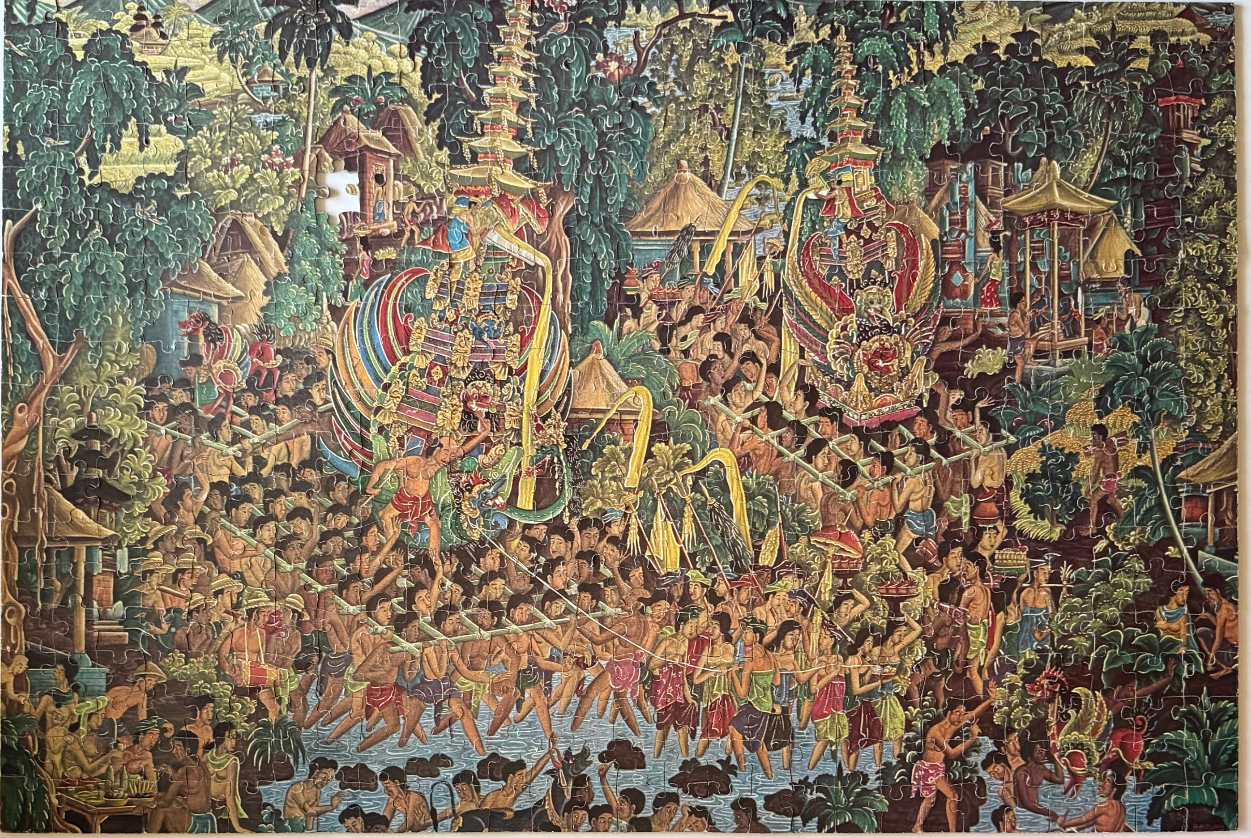
This detailed illustration depicts a traditional Balinese cremation ceremony, characterized by a bustling, multi-layered scene set amidst a lush tropical landscape. The focal points are two towering, ornate cremation structures, known as bade, which are intricately decorated with mythical bird motifs, gold leaf, and vibrant colors. These elaborate towers are being carried by a massive crowd of people, many of whom are wading through water in the foreground, while others walk along the path.
The composition is densely packed and teeming with activity, capturing a sense of communal movement and cultural ritual. The background is filled with traditional Balinese architecture, including small shrines and thatched-roof buildings, all nestled within a thick, verdant jungle environment with towering trees and hanging vines. The spatial layout creates a rich sense of depth, drawing the eye from the foreground of water and figures upward toward the intricate spires of the ceremonial towers.
The color palette is earthy and lush, dominated by deep forest greens, browns, and ochres, which serve as a backdrop for the brilliant highlights of gold, crimson, and turquoise found on the cremation towers and the ceremonial attire of the participants. The style is reminiscent of traditional Batuan-style Balinese painting, known for its fine detail and narrative focus. The overall mood is one of solemn yet vibrant celebration, blending the solemnity of funeral rites with the energetic beauty of Indonesian island life.