The Golden Chalice
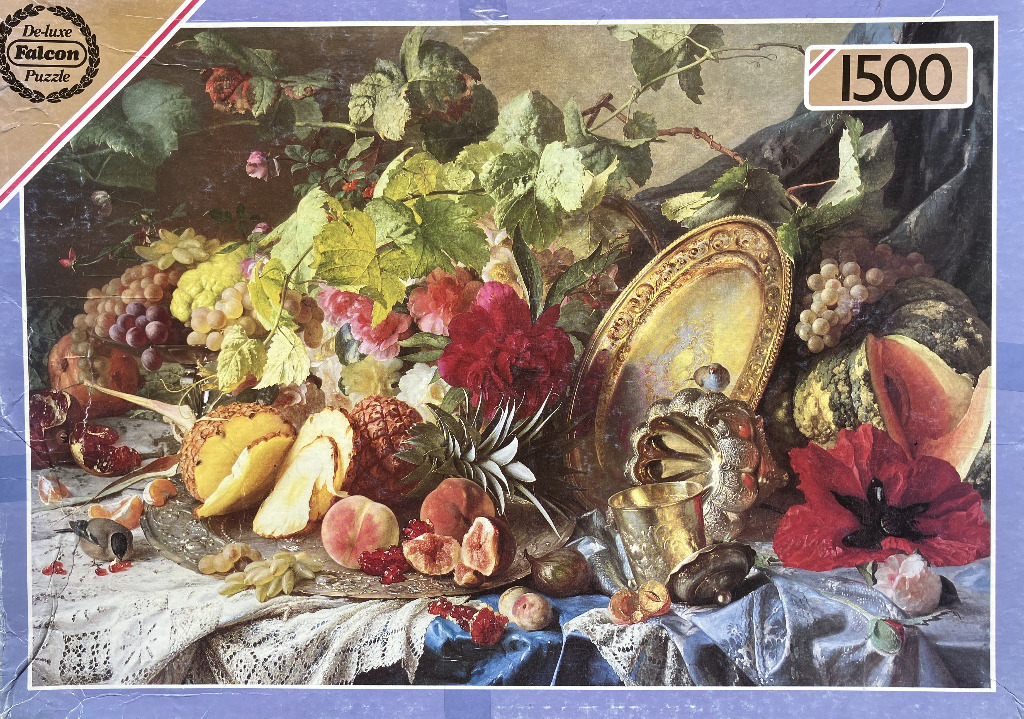
This classical still life painting presents an opulent, overflowing arrangement of fruit and flowers set upon a table draped in a delicate white lace cloth over a rich blue velvet fabric. The composition is dense and lush, featuring sliced pineapples, ripe peaches, halved figs, and clusters of green and purple grapes spilling across a silver serving platter. Interspersed among the fruit are vibrant, deep red peonies and poppies, their petals providing dramatic focal points against the surrounding greenery.
To the right of the fruit, the scene is anchored by ornate metallic objects, including a large, embossed oval platter and a decorative goblet that catch the light. The background is shadowy and moody, filled with dark foliage, tangled grapevines, and a hint of a dim interior wall. The play of light creates a sense of depth, highlighting the textures of the lacy tablecloth, the translucent skins of the grapes, and the metallic sheen of the tableware.
Executed in a traditional, highly detailed oil painting style, the work utilizes a rich palette of deep reds, golden yellows, and muted greens against the cool blue of the draped fabric. Small, realistic details, such as a tiny bird perched atop the silver vessel, add an element of narrative charm to the otherwise structured, bountiful display. The lighting appears soft and directional, evoking the atmosphere of a seventeenth-century Dutch or Flemish masterpiece.
This classical still life painting features an opulent, bountiful banquet table overflowing with a variety of textures and objects. At the heart of the composition sits a brilliant, ornate golden chalice, catching the light and acting as a focal point among the surrounding bounty. The scene is densely packed with a variety of fresh produce, including a sliced pineapple, clusters of grapes, pomegranates, peaches, and a melon, all rendered with meticulous attention to their individual textures and ripe appearances.
Surrounding the fruit are delicate floral elements, featuring bright poppies and roses that add splashes of color and organic softness to the arrangement. The objects are set upon a rich, blue embroidered cloth, layered with intricate lace work that spills over the edge of the table. Two small birds are integrated into the composition, providing a subtle, living element that contrasts with the inanimate feast.
The overall style is that of a traditional 19th-century oil painting, characterized by deep, dramatic shadows and warm, glowing highlights that emphasize the metallic sheen of the plates and vessels. The colour palette is rich and saturated, leaning into deep blues, vibrant reds, and earthy tones that evoke a sense of abundance and luxury. The composition is structured yet appears casually gathered, reflecting the era's fascination with capturing the tactile qualities of varied surfaces, from velvet-skinned fruit to polished metal and fine, intricate textiles.

The artwork, titled "The Golden Chalice" by Theude Grønland, is an intricate oil painting depicting a lush, classical still life scene. The central focal point is an ornate, gleaming golden chalice resting amidst a bountiful spread of produce. The composition is dense and overflowing with variety, featuring clusters of deep purple and translucent green grapes, sliced peaches, and pomegranates that spill across the foreground.
The setting is reminiscent of a traditional Dutch or Victorian still life, arranged on a surface partially covered by a rumpled, cool-toned cloth. To the right, the chalice stands out against the dark, moody background, catching light in a way that suggests polished metal and fine craftsmanship. The textures are rich and varied, ranging from the fuzzy skin of the peaches to the glossy, rounded surfaces of the grapes and the metallic sheen of the vessel.
Deep, earthy tones dominate the palette, with dark greens, rich browns, and shadowy backgrounds contrasting against the vibrant reds and bright gold highlights. The lighting is dramatic, directed from the left to create soft highlights on the fruit and a brilliant glint on the chalice. This chiaroscuro effect gives the piece a sense of depth and realism, characteristic of the 19th-century academic style.