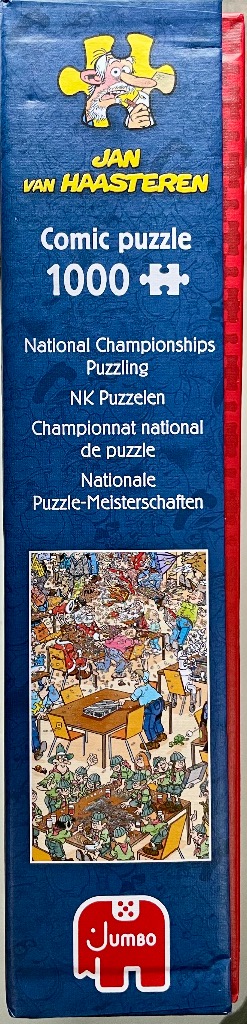
National Championships Puzzling
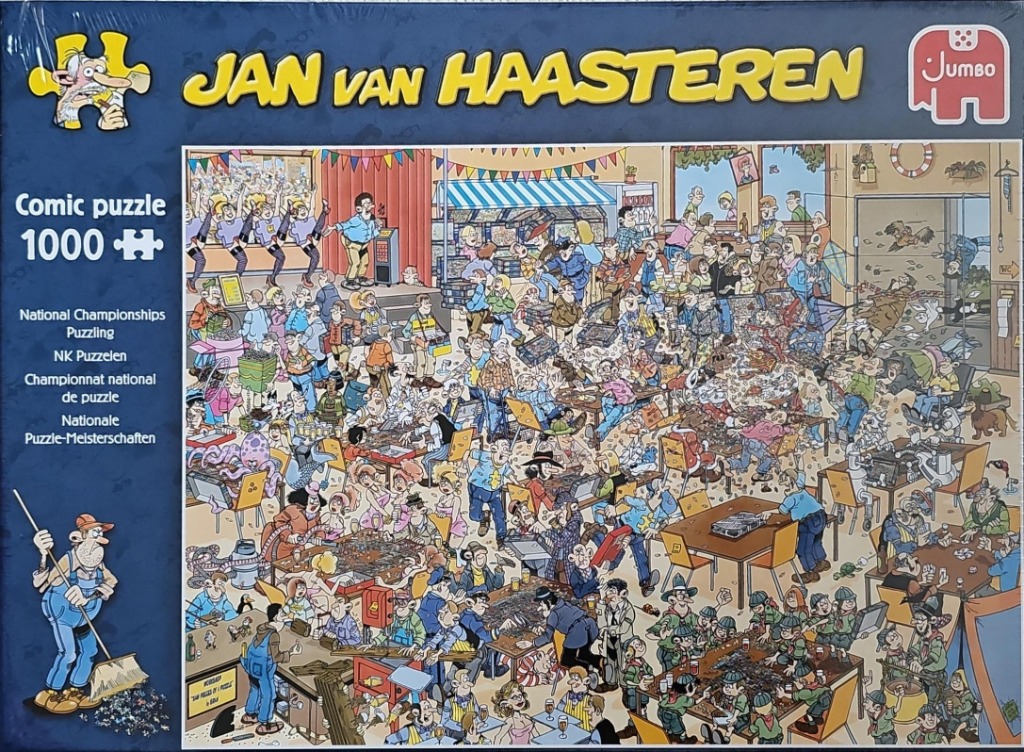
This highly detailed comic illustration captures the chaotic energy of a national puzzle championship. The setting is a large, brightly lit hall filled with numerous tables where dozens of people are hunched over intense puzzle-solving sessions. In the background, a stage features a line of synchronized dancers performing in front of an audience, while other participants move through the aisles, some carrying puzzle boxes or struggling with spills. The composition is packed from corner to corner, creating a bustling, frenetic atmosphere where every inch of space is filled with quirky characters and humorous activities.
Typical of this artistic style, the scene is rendered with exaggerated, bulbous features and vibrant, saturated colours. The palette includes earthy browns and yellows for the furniture, contrasted by the bright clothing of the competitors and festive, multi-coloured bunting hanging from the ceiling. Lighting is uniform, typical of an indoor event space, though individual character expressions—ranging from stressed and sweating to manic and joyful—drive the visual narrative.
The artwork is brimming with recurring humorous details, such as runaway animals, people falling over, and bizarre mishaps occurring behind the main subjects. A recurring caricature of a man with a distinct nose and whiskers can be spotted throughout the scene, adding a layer of hidden discovery. The medium is a clean, classic comic style with bold black outlines and flat, bright colour fills, prioritizing comedic storytelling and high-density visual gags over realistic perspective.
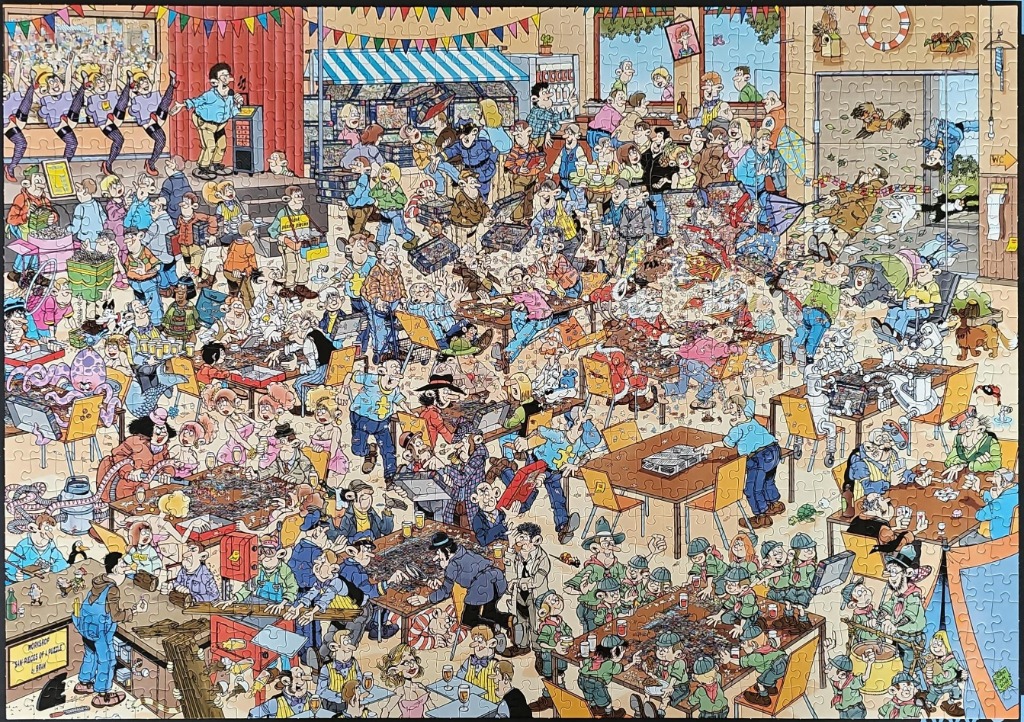
This detailed, humorous cartoon illustration depicts a chaotic and lively convention hall packed with a large crowd of people. The scene is filled with numerous sub-plots and individual characters engaged in varied activities, including dancing, socializing at tables, and browsing displays. The overall atmosphere is one of energetic disarray, with people flowing between open seating areas, a small performance stage in the upper left, and various activity zones scattered throughout the room.
The setting is an expansive indoor space featuring a high ceiling draped with colorful triangular bunting. The interior is decorated with warm wood tones, beige walls, and light-coloured tables, giving the impression of a large communal hall or activity center. A large window on the right allows for a view of the outside, where wind-blown debris adds to the sense of movement and minor mayhem characterizing the entire scene.
The artwork uses a vibrant, saturated colour palette featuring bright blues, reds, oranges, and earthy browns, characteristic of comic-strip art. The light is bright and even, highlighting the intricate details of the characters' expressions and the cluttered tabletops. The style is distinctly cartoonish, utilizing bold outlines, exaggerated physical features, and slapstick humor to create a dense, observational narrative that rewards close inspection of every corner of the room.
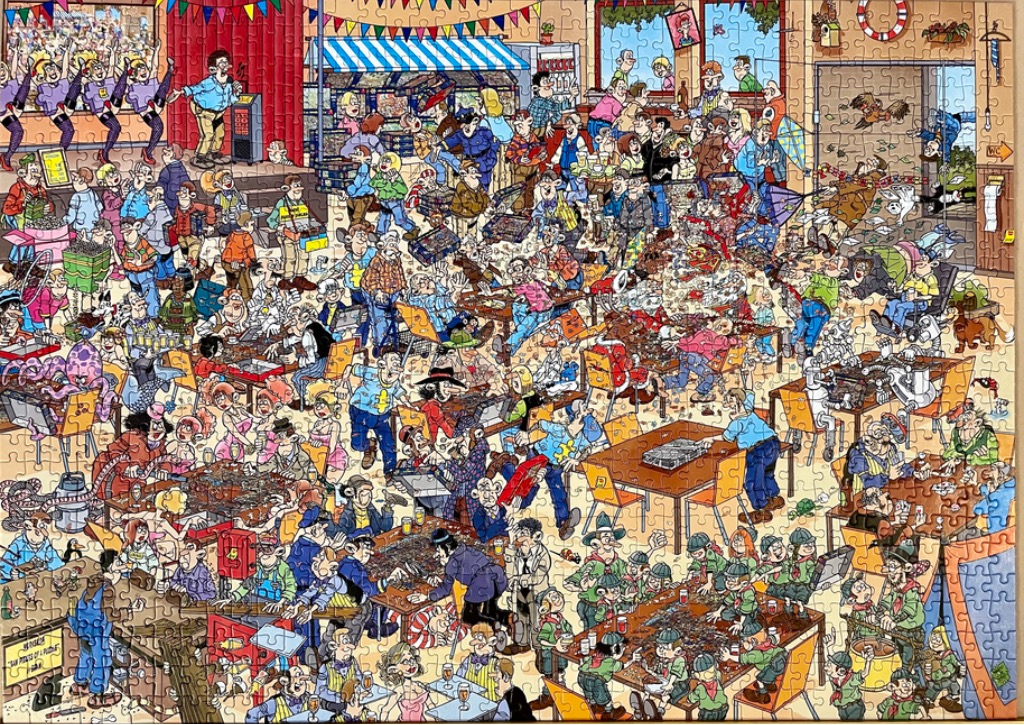
This highly detailed, busy cartoon illustration depicts a massive competition hall packed with people engrossed in an activity at numerous square tables. In the top left corner, a troupe of dancers performs on a small stage, while elsewhere in the hall, individuals are captured in moments of confusion, excitement, and frustration. The scene is filled with a dense crowd of characters, including onlookers, competitors, and various quirky figures interacting in a chaotic, humorous environment.
The setting is a large, open-plan hall decorated with festive bunting hanging from the ceiling. A blue and white striped awning covers an area near the back, and several tables are scattered throughout the room, each cluttered with numerous tiny fragments of an activity. The composition is overflowing with characters, creating a sense of organized mayhem where every inch of the frame contains a small, narrative-driven interaction.
The artistic style is a bright, vibrant, and exaggerated caricature typical of humorous puzzle art. The colour palette is saturated, using primary and secondary colours that highlight the energetic mood of the scene. The lighting is bright and even, casting minimal shadows and ensuring that all the small, comical details remain visible. Overall, the image is a dense, lighthearted, and sprawling tableau of human activity.
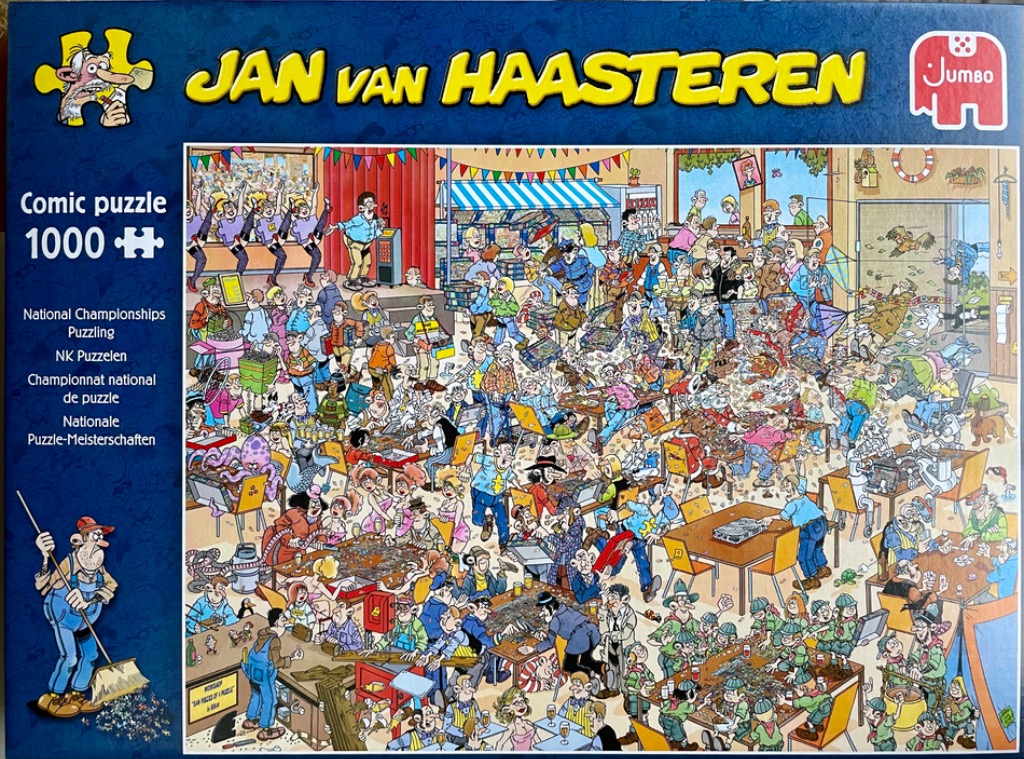
This chaotic, densely packed comic illustration depicts a high-energy National Puzzling Championship. The scene is filled with dozens of exaggerated, humorous characters engaged in various states of competitive puzzling. Scattered throughout the large indoor hall are numerous tables where participants work on puzzles, while others wander, trip, or interact in silly ways. The artwork is brimming with slapstick comedy, including a rogue purple octopus, people falling over, and bizarre costumes, capturing a frantic and festive atmosphere.
The setting is a spacious, brightly lit hall decorated with colorful bunting draped across the ceiling. The composition is a classic "wimmelbilder" or hidden-picture style, with no single focal point, forcing the eye to jump from one small, absurd vignette to another. A wooden stage on the left features dancing performers, while a refreshment counter and various seating areas occupy the center and right. The style is distinctly cartoonish, utilizing bold, clean black outlines and vibrant, varied colors that define each character's unique clothing and personality.
The overall mood is joyful, busy, and whimsical. Light illuminates the interior evenly, highlighting the sprawling clutter of puzzle boxes, stray pieces on the floor, and the eccentric antics of the contestants. Notable recurring elements of this specific artistic style include oversized noses, expressive faces, and hidden details like the shark fin and a recurring weary man with a broom, who appears in the bottom left corner, reinforcing the humorous tone of the bustling scene.