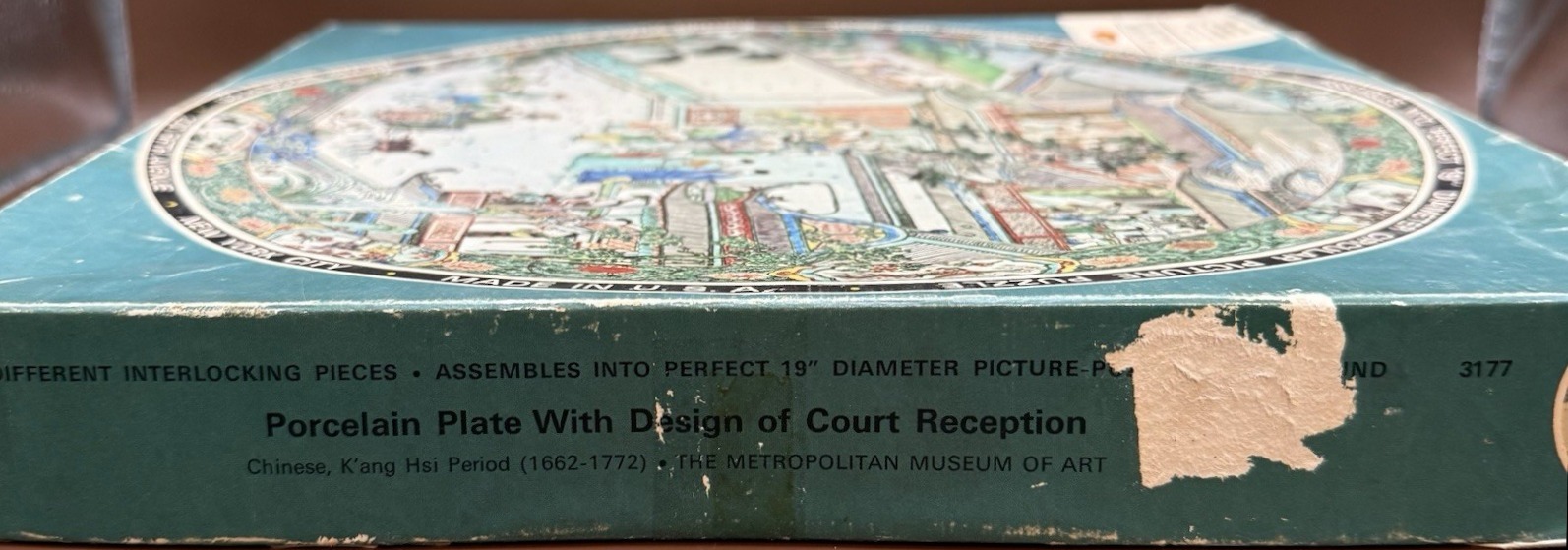
Porcelain Plate with Design of Court Reception
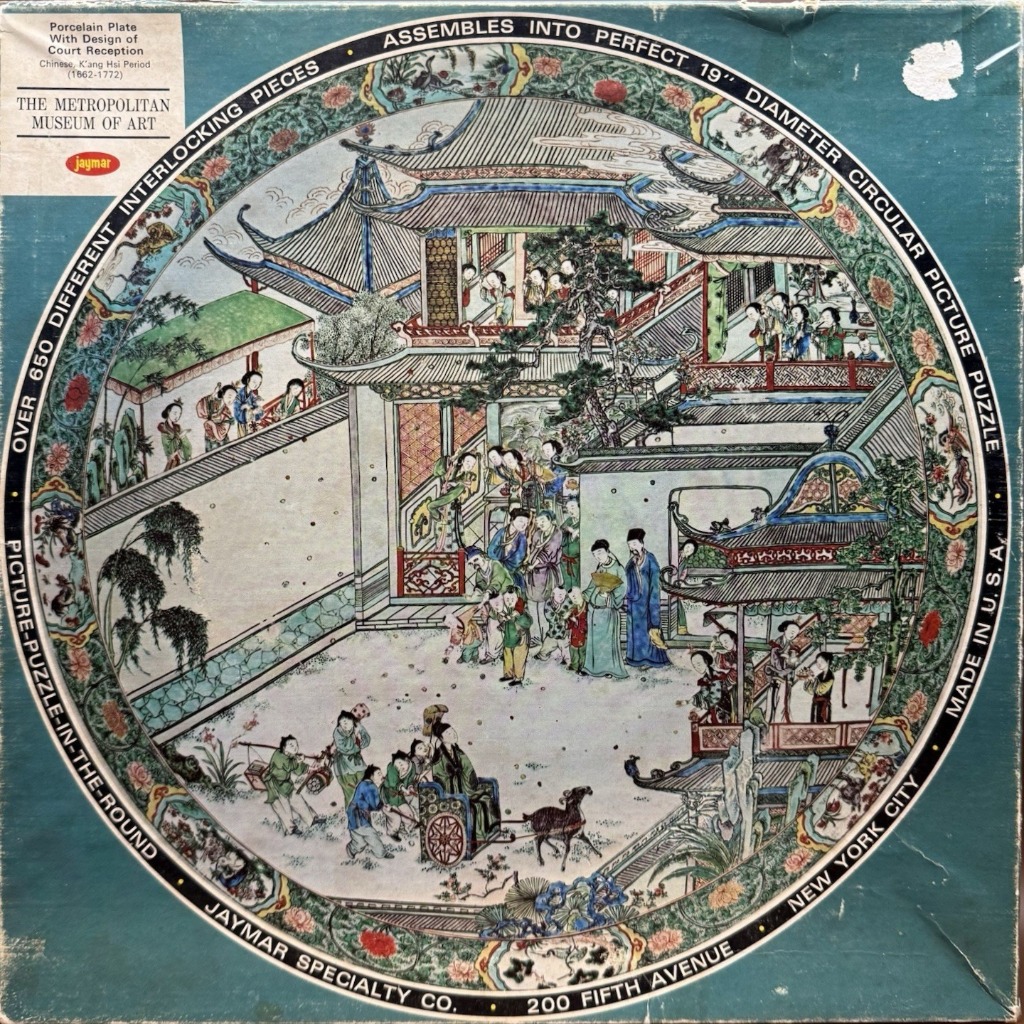
This circular image depicts a bustling scene set within an expansive Chinese court or garden complex, characteristic of the Kang Hsi period. The composition is defined by traditional architecture, featuring multi-tiered pavilions with sweeping, tiled roofs and open-air galleries. People dressed in historical, vibrant robes populate the foreground and the balconies, engaging in various social interactions. Some figures walk along the paved courtyard, while others appear to be arriving in carts, one of which is being pulled by an animal.
The setting is composed of sharp, angular lines representing the walls and roofs, balanced by the softer, organic shapes of willow trees and rocky outcrops. The spatial layout creates a layered sense of depth, drawing the viewer's eye from the busy foreground activities back toward the secluded upper pavilions. The artwork style is reminiscent of fine ink and wash paintings, utilizing precise linework to define the architectural details and the gentle, expressive gestures of the figures.
The color palette is a harmonious blend of muted earth tones, soft greens, and vibrant pops of red and blue found in the clothing and decorative roof tiles. The light is diffused and even, suggesting a peaceful, bright day within the courtyard walls. The overall mood is one of graceful elegance and historical pageantry, captured with a detailed, narrative quality that invites close inspection of the individuals scattered throughout the vast architectural landscape.
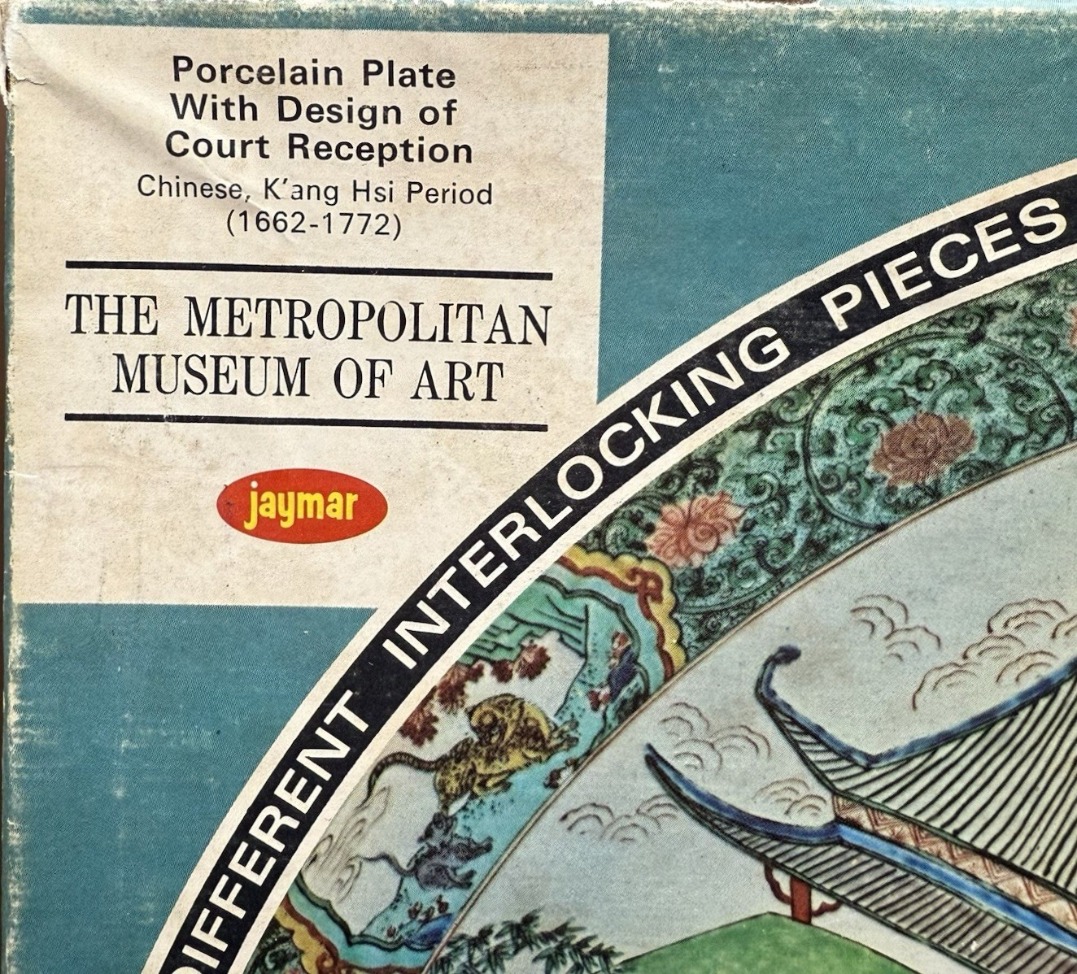
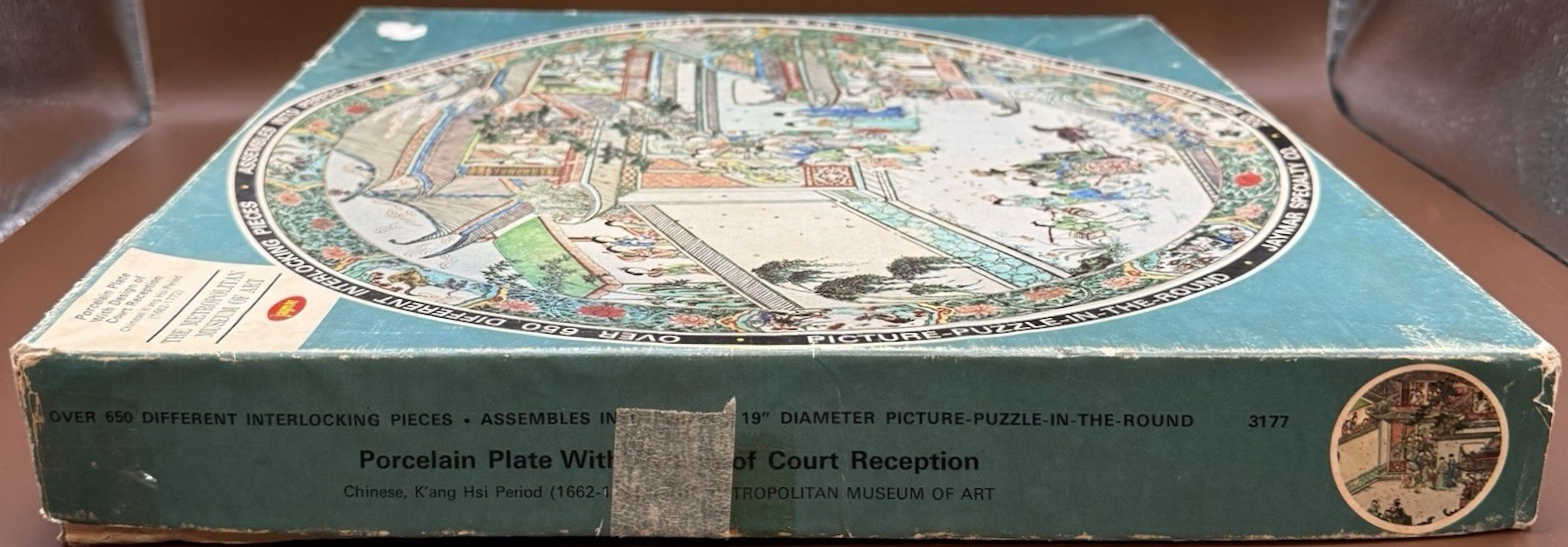
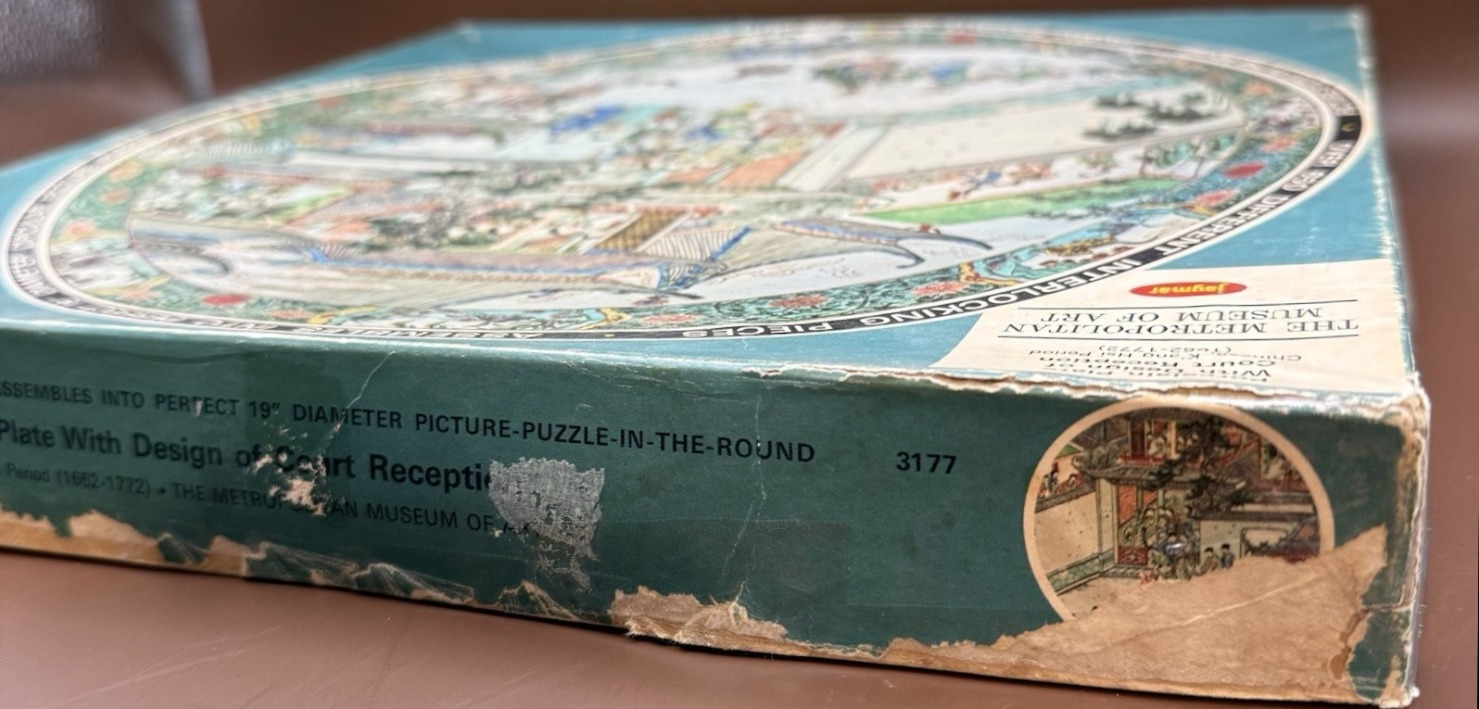
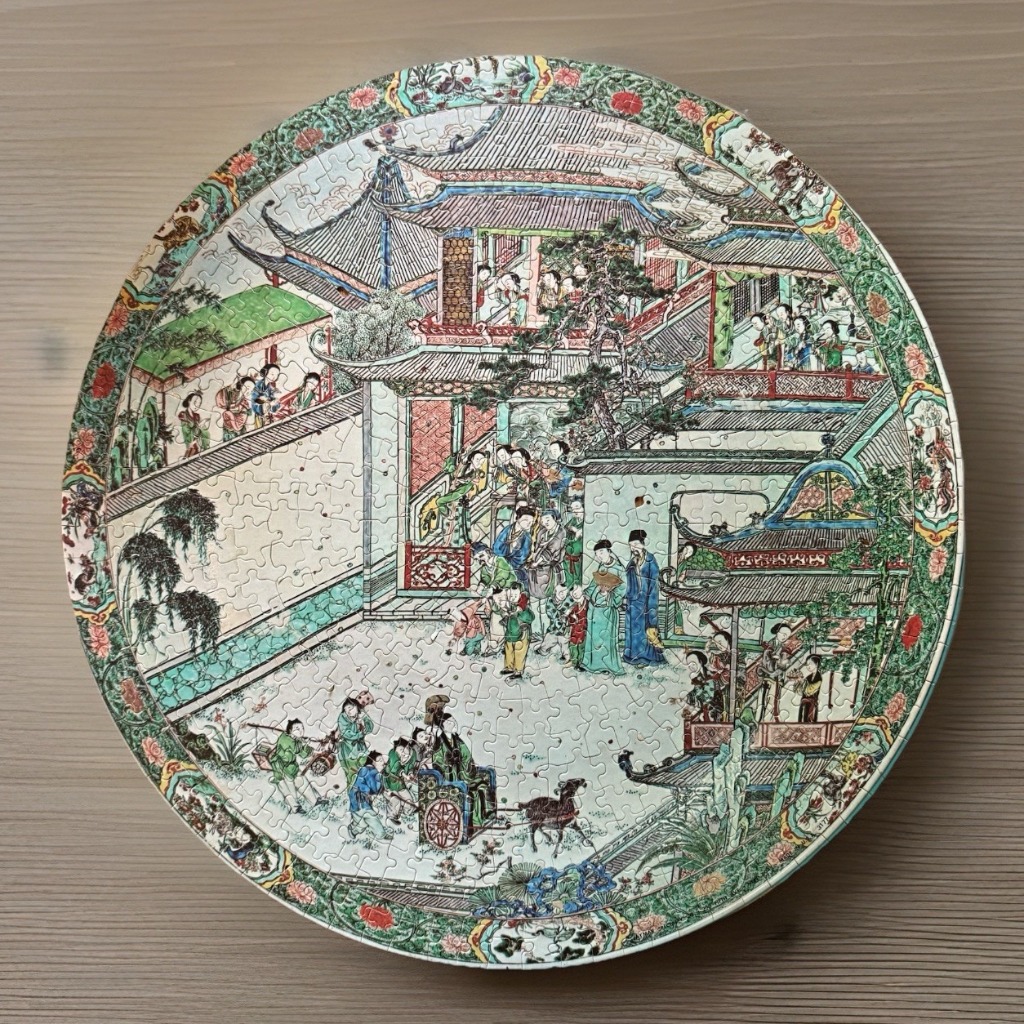
This circular image features an intricate classical Chinese courtyard scene, presented in the style of traditional hand-painted ceramic or porcelain art. The focal point is a bustling multi-story pavilion complex where numerous figures in traditional robes gather. In the foreground, people interact in an open courtyard, including a group standing near a small, horse-drawn cart, while others converse on balconies or walk along sheltered walkways.
Compositionally, the scene is framed by a highly detailed, decorative border filled with floral patterns and scrolling vines in shades of green, red, and gold. The perspective is slightly elevated, allowing the viewer to peer into the various sections of the architecture, which include tiled roofs with curved eaves, latticework screens, and lush pine trees tucked between the buildings. The spatial layout creates a sense of depth, drawing the eye from the busy foreground through the central social hub and back toward the private upper levels of the estate.
The colour palette is reminiscent of famille verte porcelain, dominated by soft shades of seafoam green, celadon, and muted earthy tones, accented by vibrant pops of red and deep ink-blue on the figures' robes. The light is soft and even, highlighting the delicate ink-line detail characteristic of traditional brush painting. The medium appears to be a digital or printed reproduction of a classic porcelain plate design, capturing a moment of refined, historical social life.