Togetherness
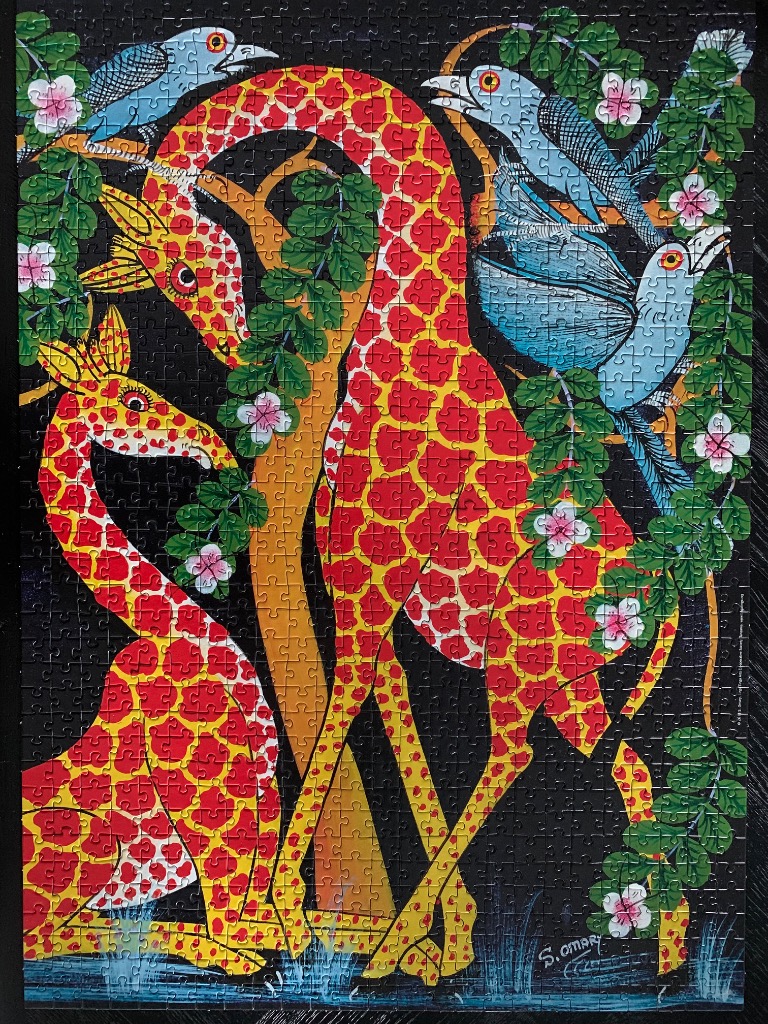
This vibrant, stylized illustration features two giraffes as the central focus, set against a solid black background. The giraffes are depicted with a striking, decorative pattern of bright red spots over a golden yellow base. One giraffe is positioned standing upright, while the second stands slightly behind it, both elegantly framed by dense, dark green foliage and small, light pink flowers.
Interspersed among the branches are three light blue, long-beaked birds, their feathers detailed with fine line work. The composition is highly decorative and folk-art inspired, emphasizing bold shapes and repetitive patterns rather than realistic animal anatomy. The scene is grounded by a narrow band of blue at the bottom, suggesting a water source or grassy patch, with the artist's signature, "S. Omary," visible in the lower right corner.
The overall colour palette is high-contrast, utilizing the deep black backdrop to make the warm yellows, rich reds, and cool blues pop. The artistic style is flat and graphic, reminiscent of traditional African or Indian folk painting, with a clear emphasis on symmetry and ornamental detail. The lighting is uniform, lacking shadows or depth, which reinforces the two-dimensional, tapestry-like quality of the image.
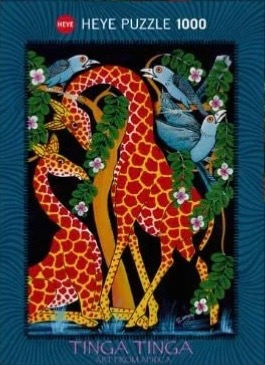
This illustration is a vibrant example of Tinga Tinga art, featuring two giraffes as the central subjects. One giraffe is standing tall in the center, while the other is positioned lower to the left, slightly crouched or resting. Both animals are rendered in a highly stylized manner with a bright, warm palette, covered in distinctive, interconnected orange-red patches outlined in yellow. They have long, graceful necks and expressive faces, captured in a flat, graphic style typical of this East African folk tradition.
The giraffes are nestled within a stylized tree that frames the composition. Green leafy branches sprout around the animals, accented by small, simple white and purple flowers. Perched among the branches are three blue-grey birds with white markings, their forms clean and geometric. The entire scene is set against a stark, solid black background, which causes the bold, saturated colours of the animals and foliage to pop with high contrast. At the very bottom, a suggestion of blue water or ground indicates the base of the tree. The overall aesthetic is whimsical and decorative, emphasizing clear shapes, symmetrical patterns, and a playful, rhythmic arrangement of wildlife elements.