D-Day - The Airborne Assault
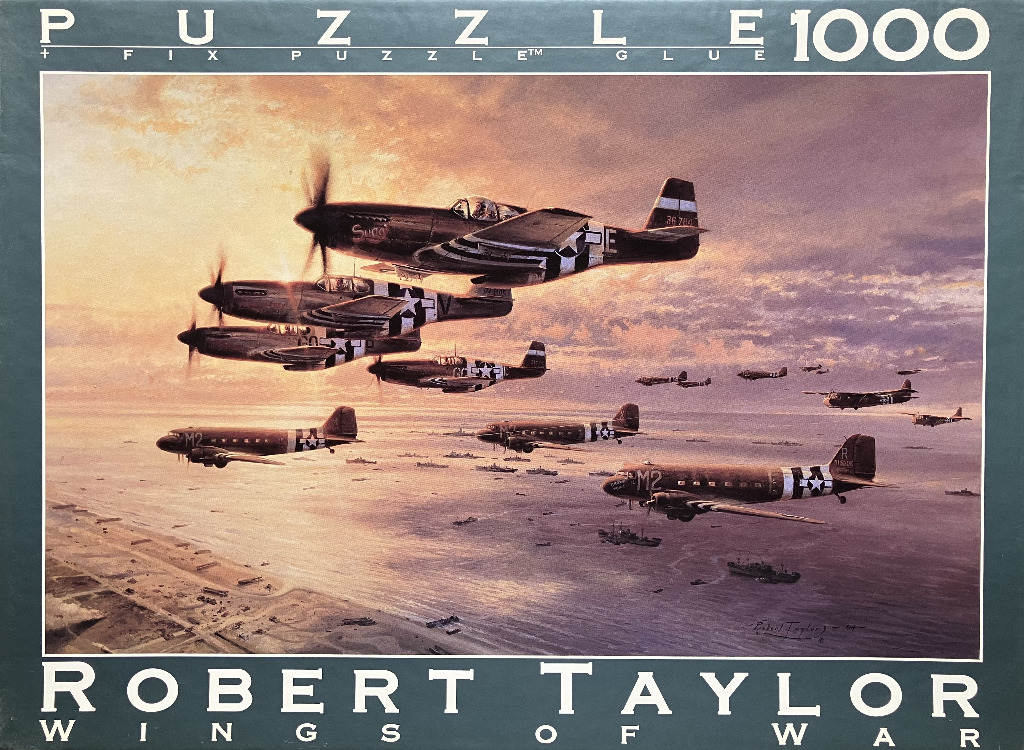
This oil painting depicts a powerful aerial scene featuring a squadron of North American P-51 Mustang fighter aircraft flying in close formation over a vast maritime landscape. The Mustangs are positioned at an angle, leading a larger group of Douglas C-47 Skytrain transport planes that span across the middle and lower right of the composition. Below the aircraft, a coastline meets a vast expanse of water, scattered with numerous small ships and vessels arranged in a strategic naval formation.
The artwork captures a dramatic sunset, bathing the entire scene in a warm, golden-amber light that highlights the silhouettes of the planes. The sky is filled with textured clouds that transition from bright orange and yellow near the horizon to deeper, muted purples and grays at the top. This atmospheric lighting creates a sense of movement and scale, emphasizing the vastness of the sky and the sea below.
The medium is a realistic aviation painting with intricate attention to historical detail, including the distinct black-and-white invasion stripes on the aircraft wings and fuselages. The brushwork creates soft, blended transitions in the clouds and water, contrasting with the sharper, more defined edges of the aircraft. The signature of the artist, Robert Taylor, is visible in the lower right corner, lending a sense of historical narrative to the composition.

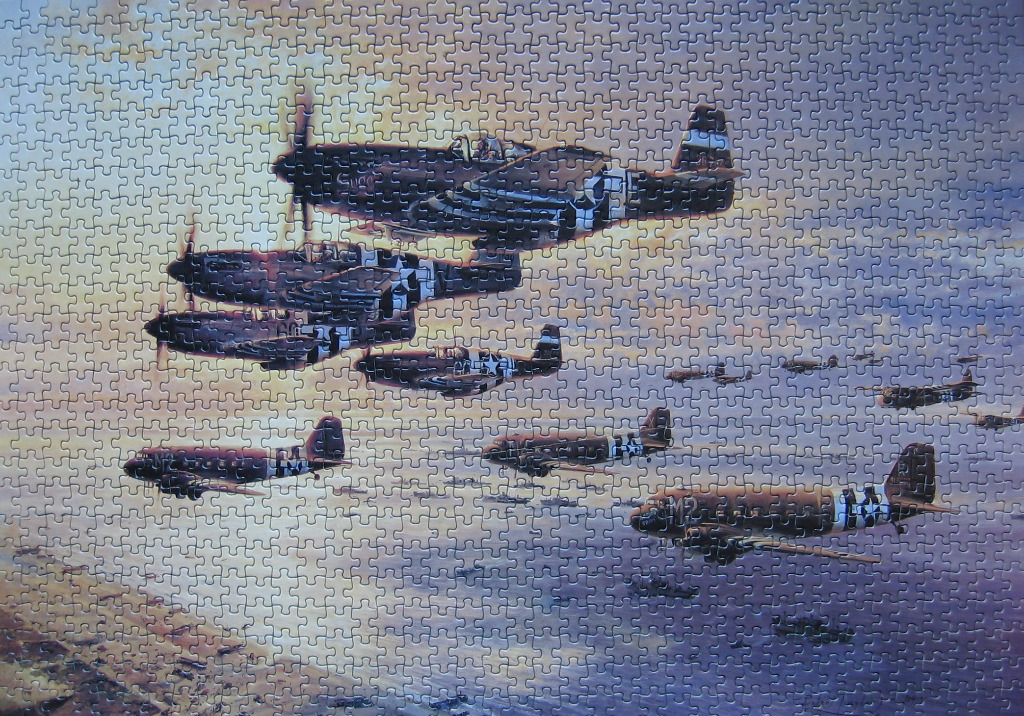
This illustration depicts an aerial military scene during World War II, focusing on a formation of aircraft in flight. In the upper left, a group of P-51 Mustang fighter planes are shown in close formation, banking slightly. Below and to the right, several C-47 Skytrain transport aircraft are flying in a staggered line toward the right side of the frame. The composition emphasizes the scale of the operation, with smaller silhouettes of additional aircraft and naval vessels visible in the distance toward the horizon.
The scene is set over a coastal area at sunset, with a shoreline visible in the lower left corner. The lighting is soft and warm, characteristic of late afternoon or early evening, which casts a golden glow across the sky and creates long, dark silhouettes for the aircraft. The palette transitions from warm yellows and oranges near the sunlit horizon on the left to deepening purples and blues on the right side of the sky, mirroring the encroaching twilight.
The artistic style is realistic and painterly, capturing the atmospheric haze of the coastal environment. The planes feature distinct black-and-white "invasion stripes" on their fuselages and wings, a key detail of the Allied air power during this historical period. The overall mood is one of disciplined movement and historical significance, capturing a moment of heavy aerial activity against the serene backdrop of a fading day.