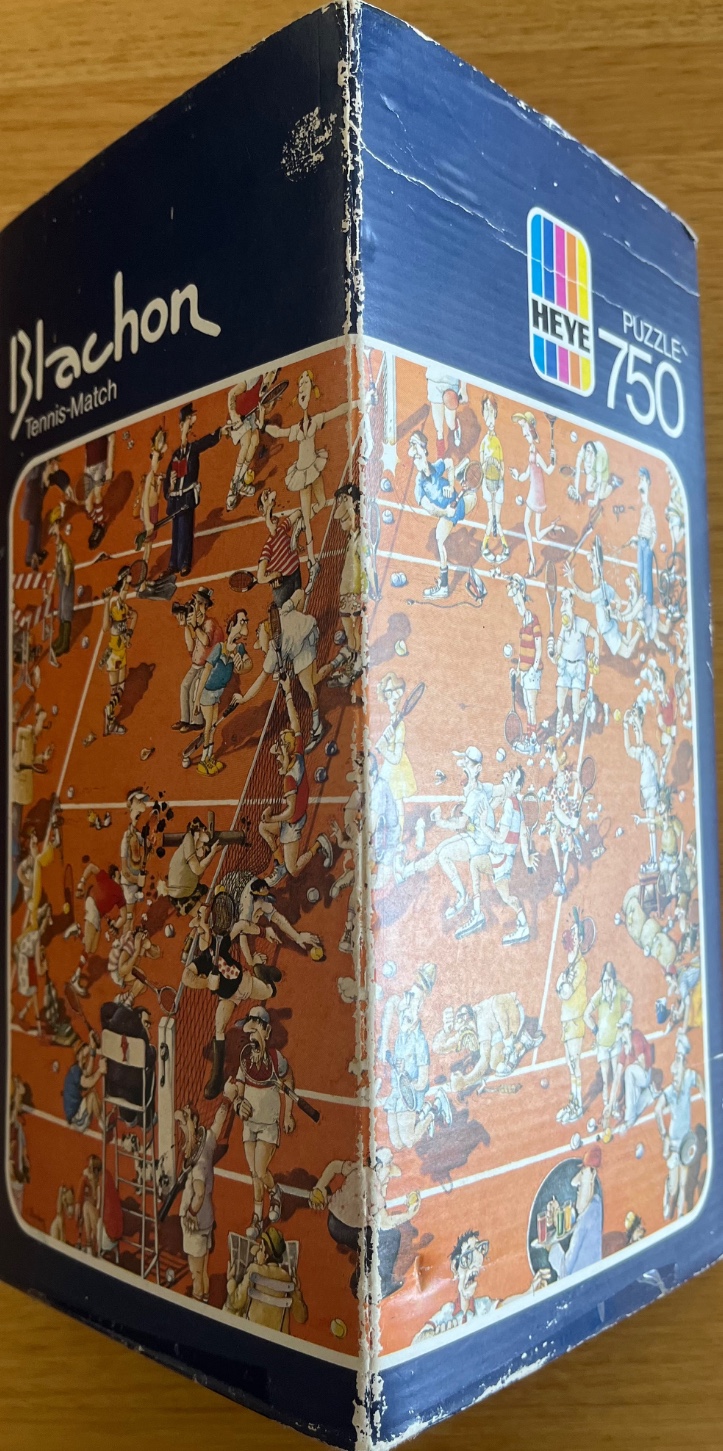
Tennis Match
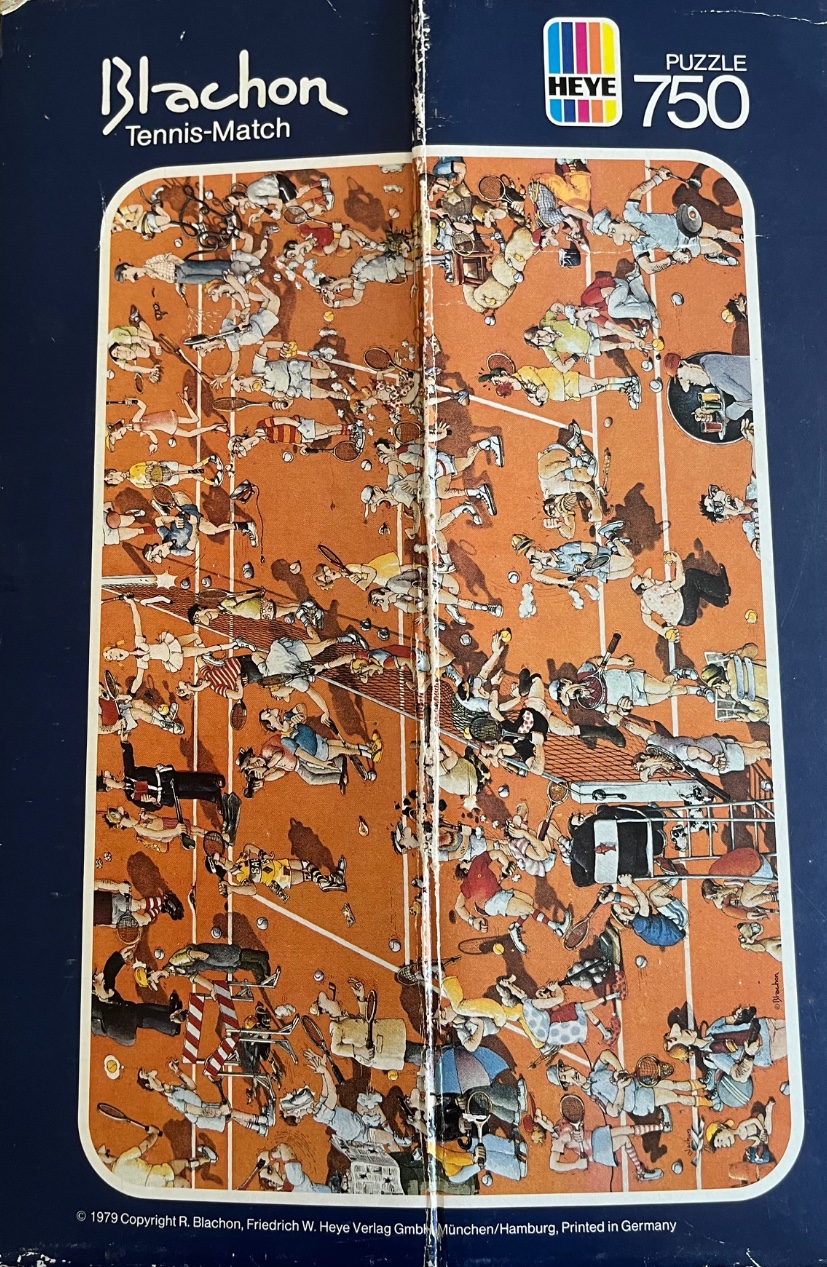
This humorous cartoon depicts an overhead view of a clay tennis court in absolute chaos. The composition is densely packed with dozens of figures, including tennis players, spectators, referees, and quirky incidental characters, all interacting in a chaotic, slapstick narrative. The scene captures the frantic energy of a match gone wrong, with people sprawling, falling, arguing, and serving balls in every direction.
Set against a distinct terracotta-orange clay surface, the court is crisscrossed by sharp white lines that contrast with the chaotic activity. The style is that of a classic European comic strip, featuring expressive, exaggerated character designs with exaggerated movement and comedic expressions. The palette is dominated by the warm, saturated earth tones of the court, punctuated by the varied, colorful attire of the characters.
Every inch of the scene is filled with secondary details: discarded rackets, scattered tennis balls, broken furniture, and spilled refreshments. There is no clear focal point; instead, the eye is invited to wander across the surface to discover hidden jokes and small-scale dramas unfolding between the diverse cast of characters. The overall mood is playful, absurd, and highly energetic, showcasing a masterful use of crowded visual storytelling.
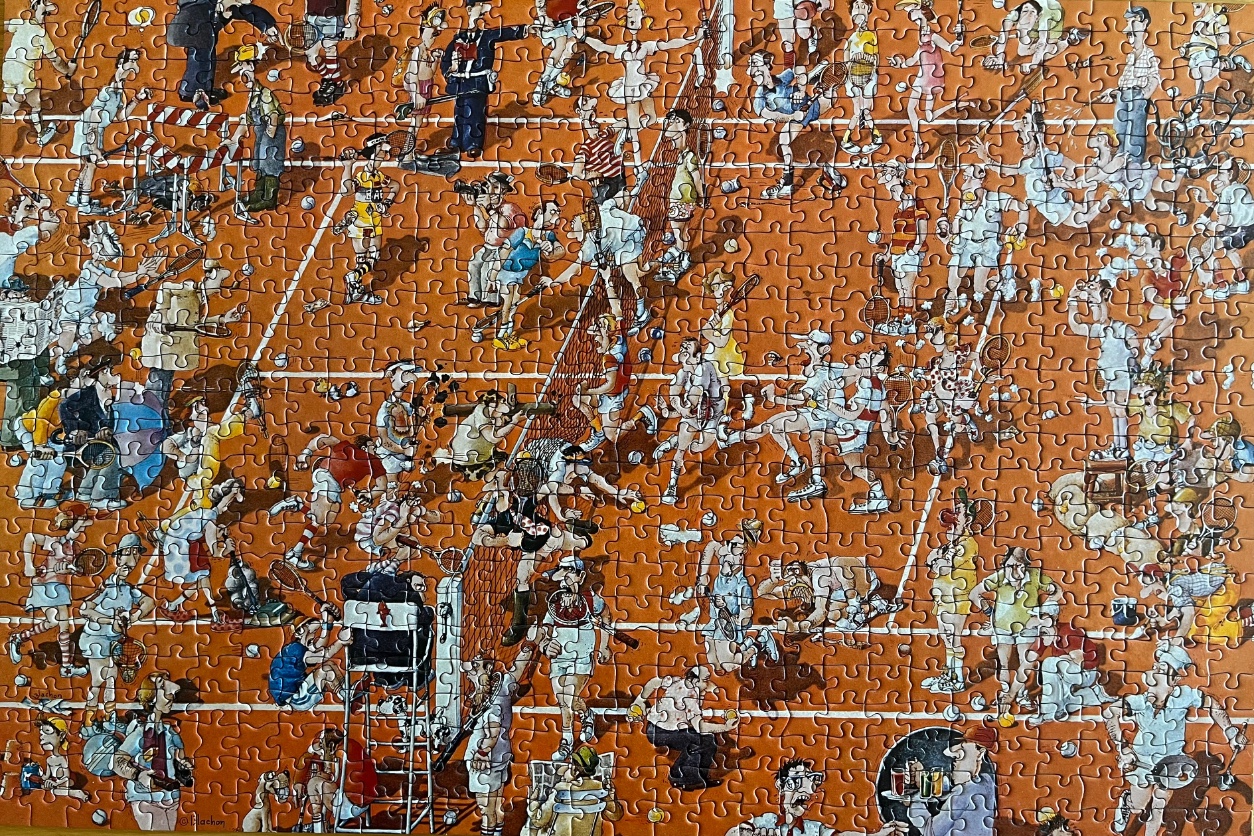
This highly detailed cartoon illustration depicts a chaotic and humorous tennis match taking place on an orange clay court. The scene is densely populated with dozens of exaggerated, caricatured characters, including players, referees, photographers, and spectators, all interacting in absurd ways across the entire playing surface. The action is frantic, with tennis balls flying in every direction, players diving and tumbling, and various mishaps occurring throughout the court.
The composition is top-down and sprawling, filled with comedic vignettes. Near the net, players are entangled in comical struggles, while on the sidelines, others are distracted, injured, or engaged in bizarre side activities. A tall umpire chair stands near the bottom left, and various items like cameras, rackets, and refreshment trays are strewn about the clay. The perspective captures the entire expanse of the court as a single, busy plane of activity.
The colour palette is dominated by the vibrant, uniform orange of the clay, which serves as a warm background for the eclectic and brightly coloured clothing of the characters. The art style is classic caricature, featuring long, spindly limbs, expressive, bulbous facial features, and dynamic, messy motion lines. The mood is lighthearted and slapstick, emphasizing the disorder and absurdity of a sporting event gone completely wrong.
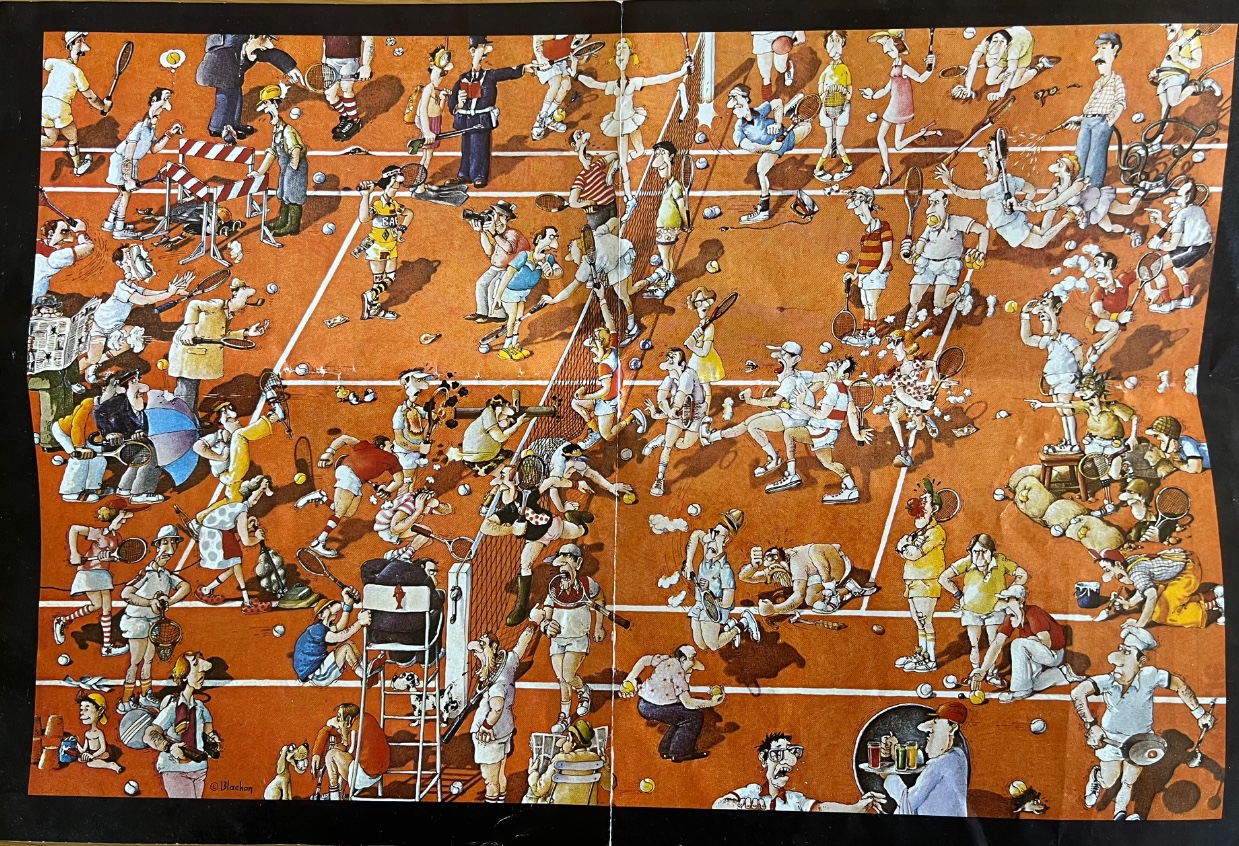
This highly detailed, humorous cartoon depicts a chaotic tennis court scene saturated with dozens of quirky characters. The composition is dense and frantic, with no clear focal point, as every inch of the clay-coloured court is occupied by individuals in various states of sporting disarray, odd jobs, or social mishaps.
The scene is rendered in a vibrant, expressive illustrative style with warm earth tones. Many people are holding tennis rackets, but few are actually playing tennis. Instead, characters are seen gardening, painting, drinking, fighting, or simply wandering aimlessly. The spatial layout is intentionally cluttered, creating a feeling of joyful confusion where eyes are constantly drawn to new, funny interactions occurring in every corner of the court.
Notable details include a man serving a teapot, someone trimming the clay with garden shears, a person reading a newspaper while another prepares a picnic, and various pets weaving through the legs of the players. The atmosphere is whimsical and satirical, poking fun at the sport by ignoring the traditional rules and logic of tennis entirely. The illustration features clean, defined lines with soft shading, giving it a classic comic-strip aesthetic that feels both busy and lighthearted.