Frederick the Great playing the flute at Sanssouci
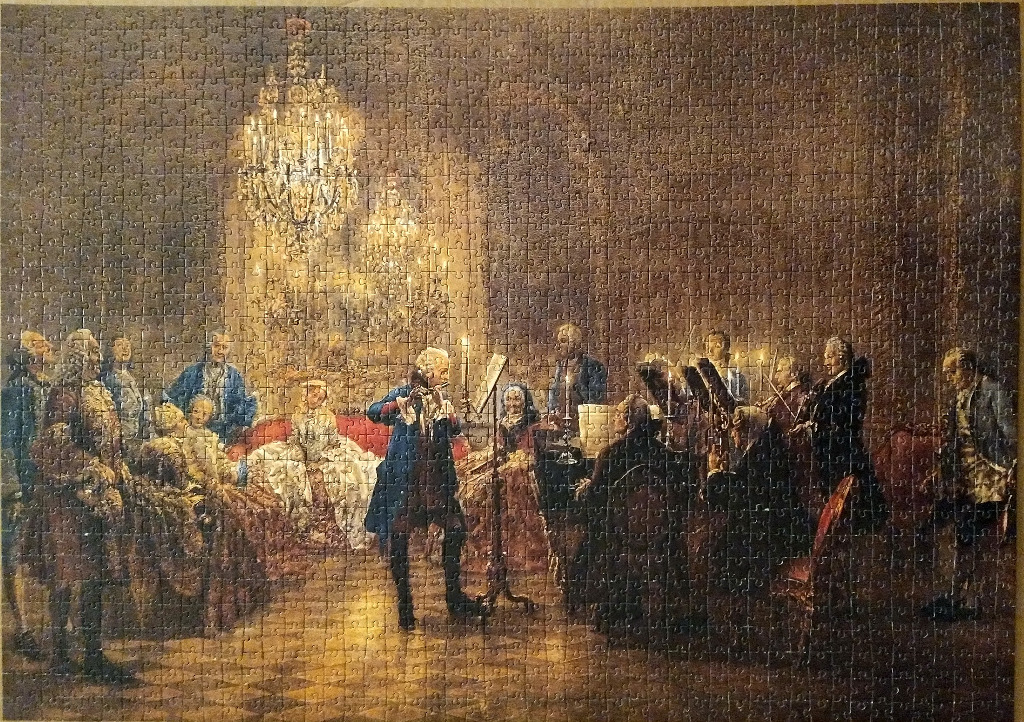
This classical oil painting depicts an intimate musical performance within an opulent 18th-century interior. In the center, a man in a blue frock coat stands playing the flute, focused on a music stand. He is surrounded by a small chamber ensemble of seated musicians, including a keyboardist and several string players, all gathered to perform for an audience of elegantly dressed noblemen and women seated on ornate furniture.
The room is bathed in the warm, golden glow of a large, intricate crystal chandelier suspended from the ceiling and several tall, slender candles placed on music stands and tables. The architectural backdrop features deep shadows and muted, earthy tones that recede into the darkness of the room, emphasizing the bright, singular points of light. This dramatic contrast creates a somber, regal atmosphere typical of the Rococo era.
The composition is balanced, with the flautist acting as the central anchor for the gathering. The figures are rendered with fine detail, showcasing elaborate period attire such as powdered wigs, lace ruffles, and silk gowns. The overall style is reminiscent of historicist academic art, characterized by a soft, painterly brushwork that blurs the edges of the room while highlighting the central action of the concert.
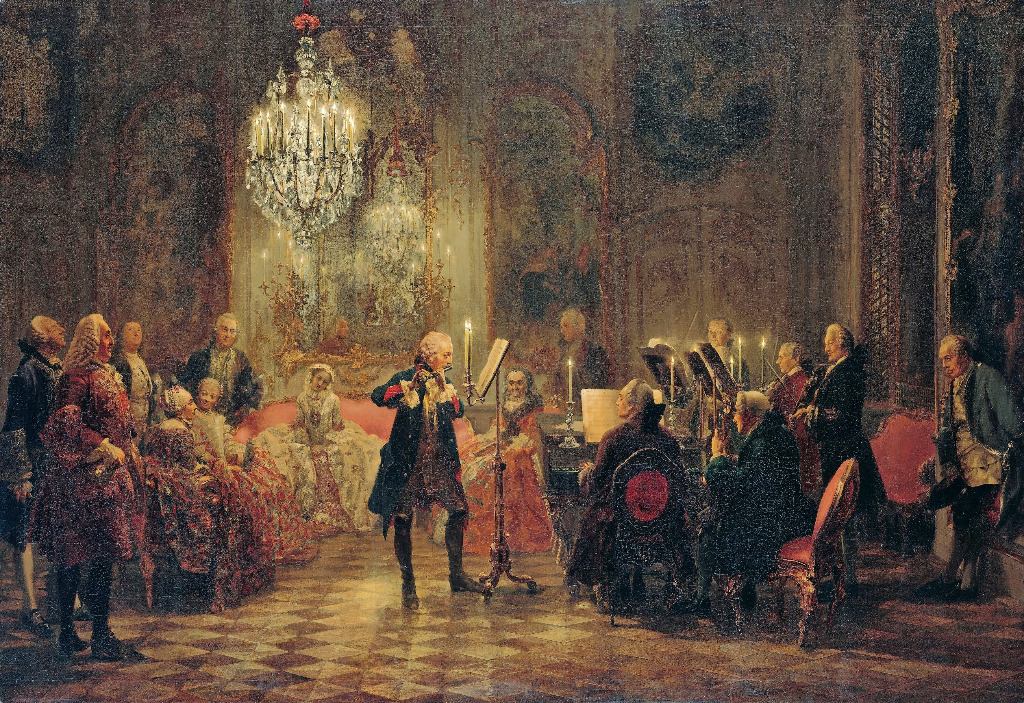
An opulent 18th-century ballroom or parlor serves as the setting for an intimate musical performance. In the center, a man dressed in period attire stands playing the flute, reading from a music stand illuminated by a single tall candle. A small ensemble of musicians, including a keyboardist and string players, is gathered to his right, while a group of elegantly dressed nobles in elaborate formal wear watches from the left side of the room.
The room is characterized by deep, moody earth tones, with gilded mirror frames and ornate wall carvings receding into the shadows. The floor is covered in a distinctive monochromatic checkerboard pattern that reflects the warm, soft glow emanating from the performers. A magnificent crystal chandelier hangs from the ceiling, casting a brilliant light that highlights the performers and creates high-contrast highlights against the dark, rich textures of the surrounding interior.
The painting style is dense and textured, utilizing thick, visible brushstrokes that mimic the quality of an oil on canvas. The overall mood is one of refined elegance and hushed reverence, capturing the concentrated atmosphere of a private concert in a grand historic residence. The composition is balanced, with the flutist serving as the clear focal point, bridging the gap between the attentive seated audience and the performing musicians.
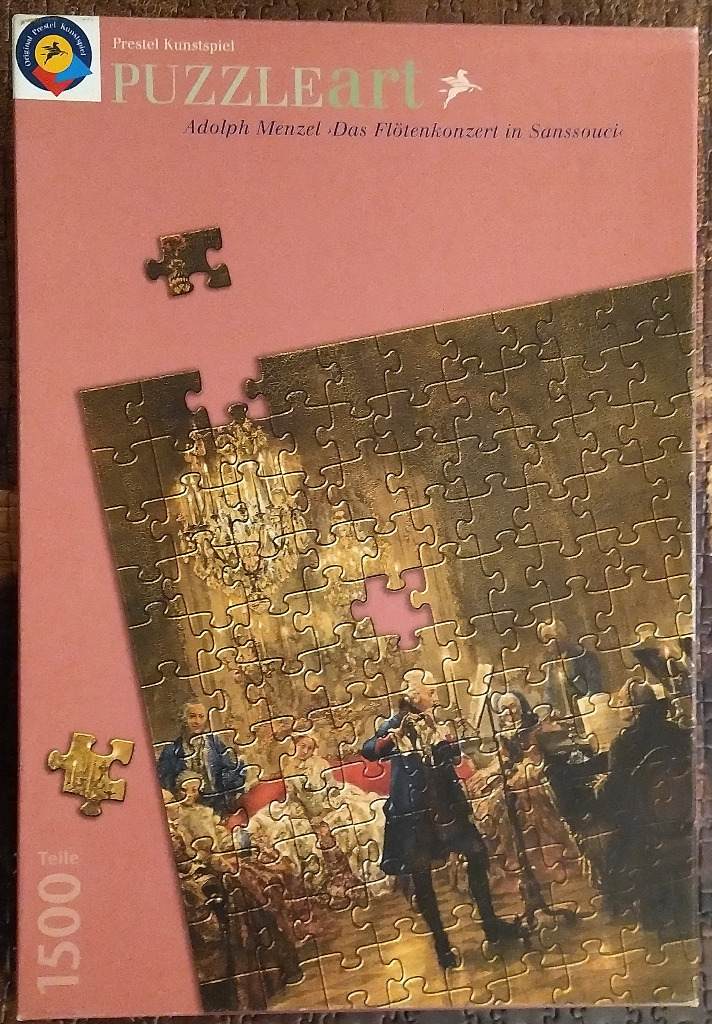
The main subject is a reproduction of the 19th-century oil painting 'The Flute Concert at Sanssouci' by Adolph Menzel. The scene depicts an elegant 18th-century royal court gathering, centered on a monarch playing the flute. He stands in a luxurious room, accompanied by a small ensemble of musicians, while an audience of courtiers in formal period attire watches from seated positions. The atmosphere is formal and sophisticated, capturing a quiet, cultured musical moment in history.
Compositionally, the painting occupies a large rectangular section on the right, tilted slightly off-center. The artwork features rich, warm tones of gold, amber, and deep brown, characteristic of candlelight reflecting off gilded architecture and ornate chandeliers. The style is highly detailed and realistic, emphasizing the textures of velvet clothing, powdered wigs, and the shimmering glow of the opulent interior.
The artwork appears as an assembled image with a few disconnected pieces placed on the plain, dusty rose background that surrounds the central painting. One loose piece is positioned in the upper-left, while another is placed near the bottom-left corner, creating a sense of a workspace. The overall aesthetic is one of historical classical art presented within a modern, structured frame.
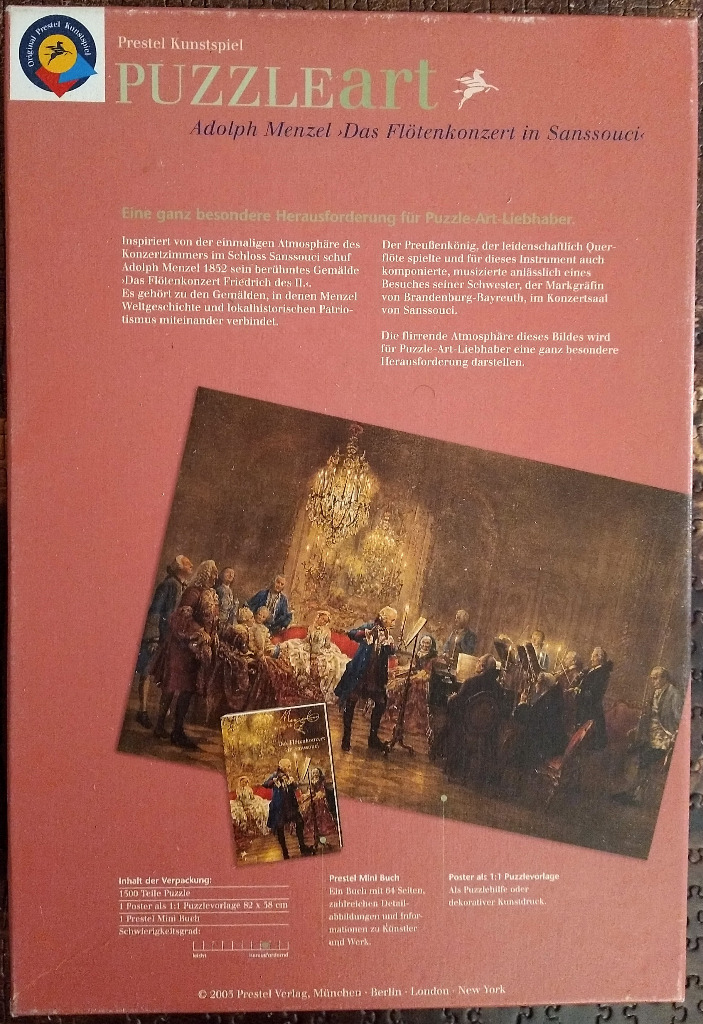
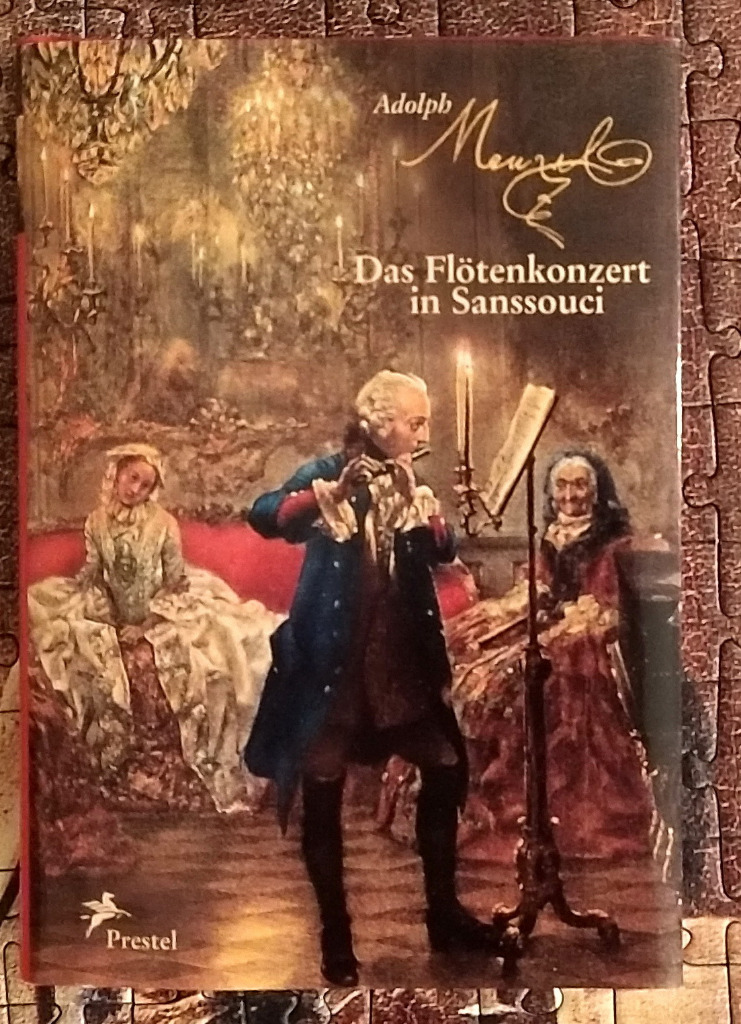
The central figure is a man in an 18th-century blue coat, white ruffles, and dark breeches, standing as he plays a transverse flute. He is positioned in front of a tall, thin music stand holding an illuminated sheet of music. To his left sits a woman in a pale, voluminous gown on a vibrant red sofa, while to his right, another figure is partially visible in the shadows. The painting features text at the top reading "Adolph Menzel" and "Das Flötenkonzert in Sanssouci."
Set within a grand, opulent interior, the composition is defined by the warm, flickering glow of candles. A large, ornate chandelier hangs in the background, casting highlights on the decorative walls and furniture. The overall palette is dominated by deep browns, shadows, and rich crimsons, contrasted by the bright, concentrated yellow light emanating from the candles and reflected on the faces and clothing of the subjects.
The artwork is a historical oil painting rendered in a realistic, detailed style characteristic of 19th-century academic art. The lighting creates a sense of intimacy and drama, pulling the viewer's focus to the musician and the glowing music stand. The background is intentionally obscured by atmospheric dimness, emphasizing the regal yet private atmosphere of an evening concert at the palace.