Bon Bock Café
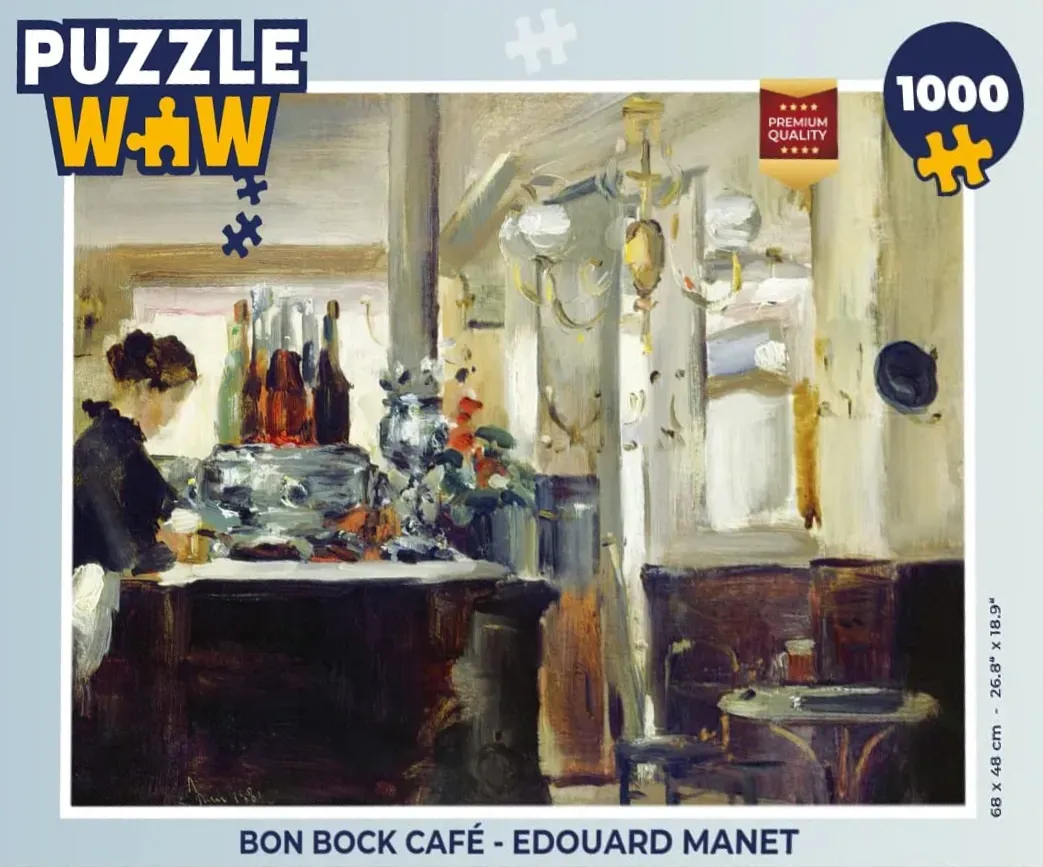
This impressionist oil painting depicts the interior of a 19th-century cafe. The central focal point is a woman dressed in black, standing behind a dark wooden bar counter. Her profile is turned toward the left, and she appears to be occupied with tasks behind the counter, where an array of bottles is lined up. The style is characterized by loose, confident brushstrokes that capture the essence of light and movement rather than precise detail.
Behind the bar, a large, ornate metal object and a cluster of colourful flowers sit amongst the bottles. The composition is balanced by a prominent, airy chandelier hanging from the ceiling, which draws the eye upward and adds depth to the indoor setting. To the right, the cafe floor is suggested with a small, circular table and empty chairs, creating a sense of a quiet, reflective space within the public establishment.
The colour palette is dominated by warm, neutral tones—creams, beiges, and soft whites—which suggest the light-filled atmosphere of the room. These are contrasted against the deep, rich browns and blacks of the furniture and the woman's clothing. The light appears to stream in from unseen windows, washing over the walls and reflecting off the metallic surfaces of the chandelier and the bar fixtures, lending the scene a soft, glowing, and atmospheric quality.
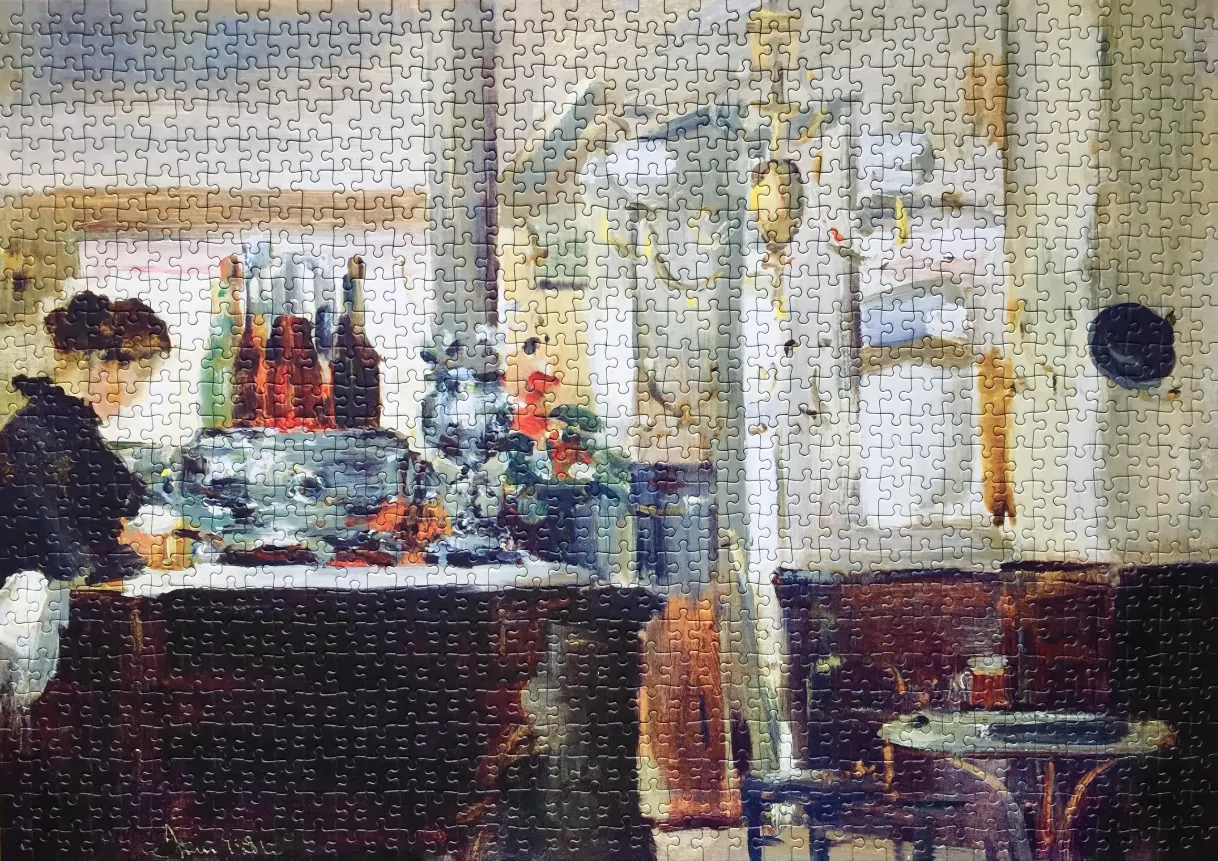
This impressionistic oil painting captures a quiet, intimate interior scene, likely a French café or bar. On the left, a woman with dark hair dressed in a dark blouse stands behind a long counter, leaning slightly as if attending to customers or preparing an order. Beside her on the counter is a cluster of amber and green glass bottles, which catch the ambient light, adding a touch of warmth and transparency to the composition.
The setting is rendered with loose, visible brushstrokes and a muted color palette dominated by soft greys, beiges, and deep browns. The background features a large, rectangular window or mirror that reflects subtle light, while architectural details such as wainscoting and a small round table in the foreground suggest a classic, established interior. A single dark hat hangs on the wall to the right, serving as a focal point that balances the visual weight of the woman on the opposite side.
The overall mood is contemplative and atmospheric, typical of late 19th-century European interior scenes. The light is diffused, creating soft shadows and a sense of depth that suggests the quiet hum of a daytime establishment. The artist uses a blend of impressionistic techniques to prioritize the play of light and shadow over sharp, defined lines, imbuing the scene with a nostalgic, painterly quality.