Jigsaw Trilogy
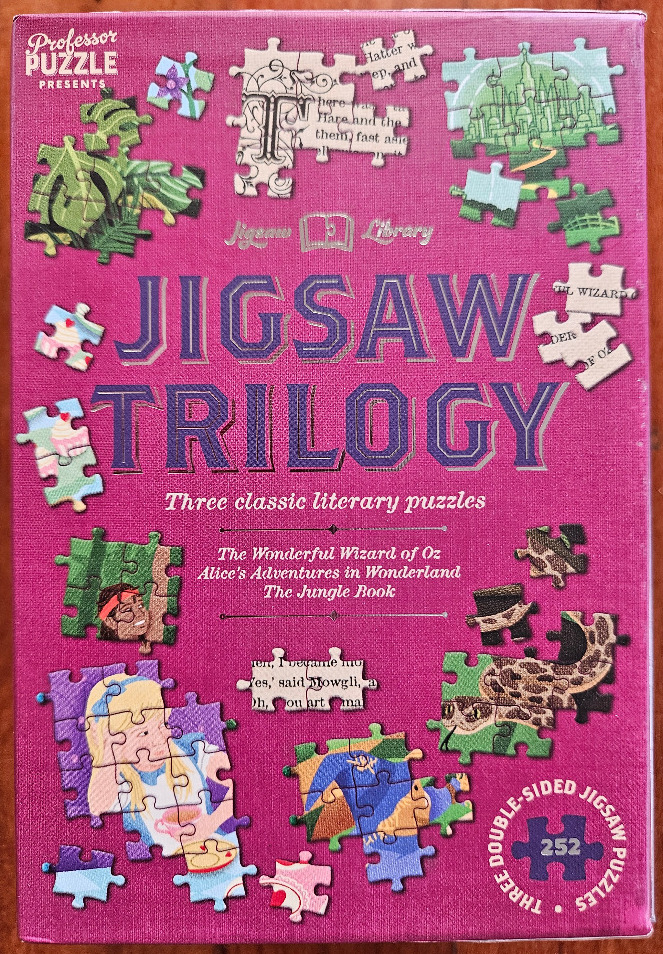
The design features a vibrant, fuchsia-pink background scattered with various puzzle pieces that showcase illustrations from three classic literary works: The Wonderful Wizard of Oz, Alice's Adventures in Wonderland, and The Jungle Book. The pieces are arranged artfully across the field, with some featuring text excerpts from the novels, while others display iconic imagery like the Emerald City, Alice's blonde hair, and Mowgli's jungle surroundings.
The central focus is the text "JIGSAW TRILOGY" rendered in a bold, dark blue collegiate-style font with thin white outlines. Beneath the main title, smaller white text lists the three featured stories, flanked by elegant decorative dividers. The overall layout is balanced yet whimsical, mimicking the chaotic joy of an unfinished puzzle project. The colour palette contrasts the deep magenta backdrop with the softer, varied tones of the illustrations found on the individual pieces.
The artwork style is illustrative, employing different artistic techniques to suit each book. The scenes range from detailed line drawings to vibrant, saturated character portraits. Each puzzle piece is given a subtle drop shadow to create a sense of depth against the flat pink surface, making the pieces appear as if they are resting on a tabletop. The juxtaposition of literary snippets, iconic character art, and scattered, interlocking shapes creates a cohesive, bookish theme.
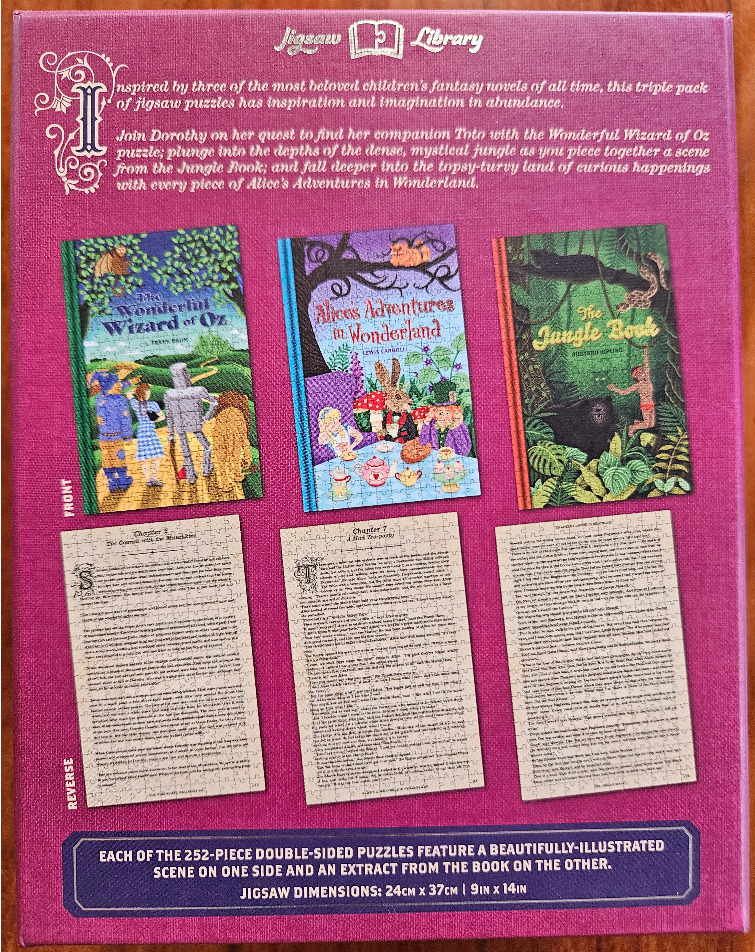

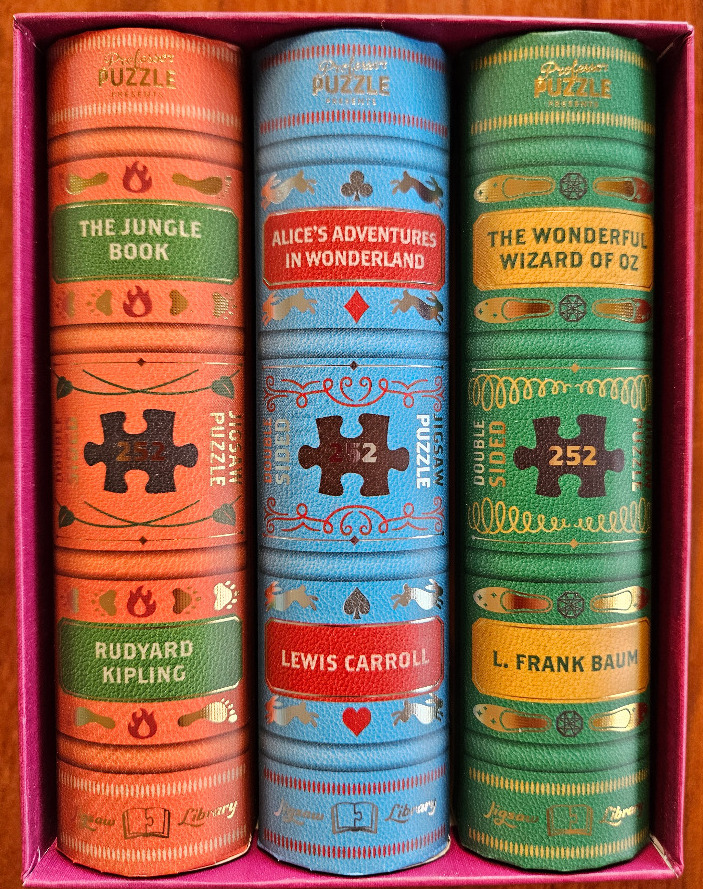
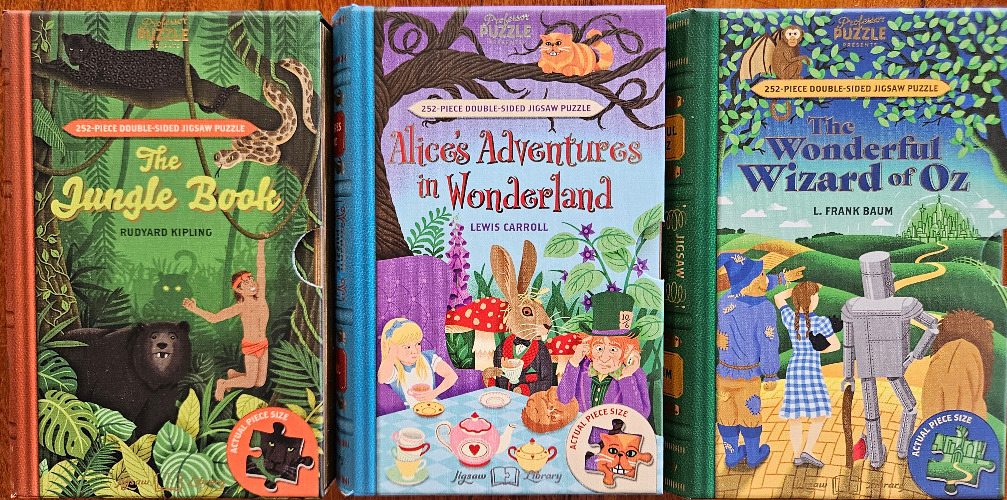
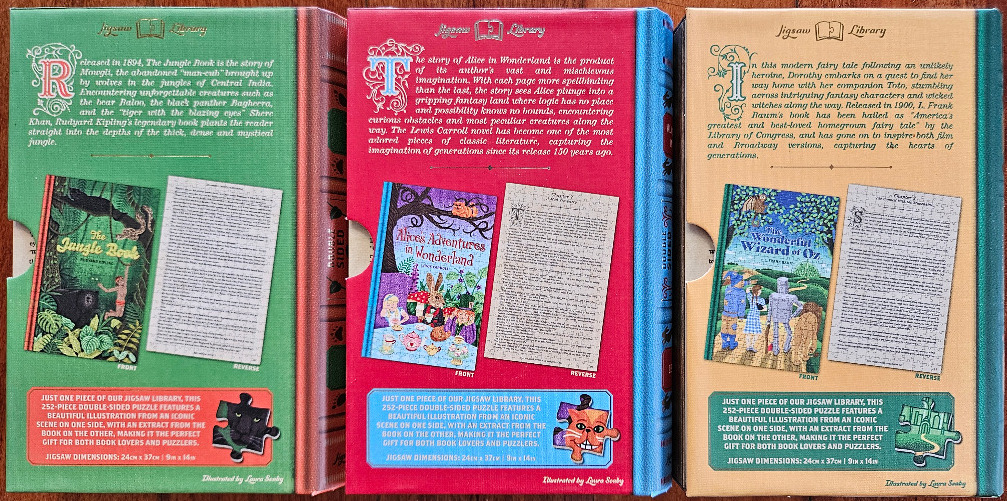
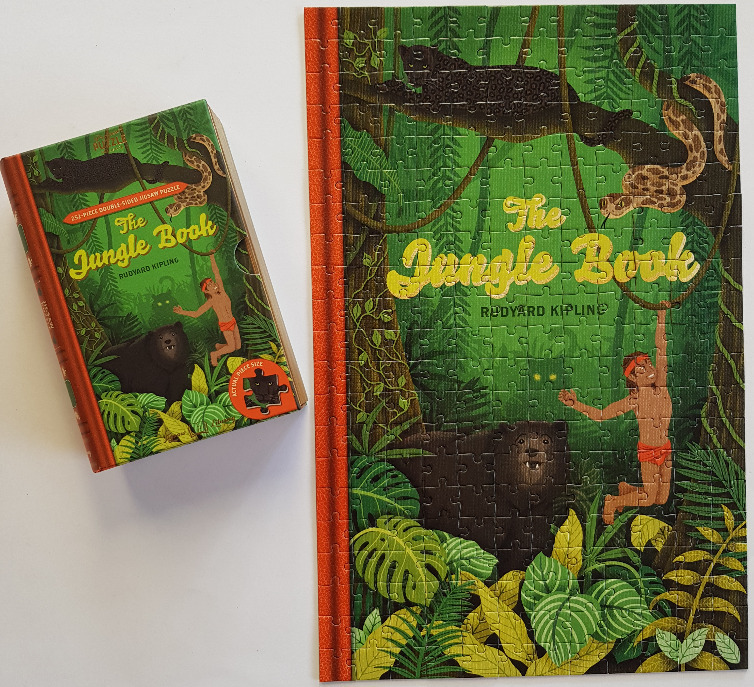
This illustration depicts a vibrant, stylized scene inspired by Rudyard Kipling's The Jungle Book. At the center, the title is written in large, playful, yellow cursive lettering, with the author's name printed below in smaller, clean white text. The composition is framed by a vertical orange border along the left side, mimicking the spine of a book.
Central characters from the story populate the dense, green jungle landscape. Mowgli, the young boy, hangs playfully from a sturdy vine on the right. Below him, a large, friendly-looking black bear stands amidst lush, oversized tropical leaves. In the upper branches, a sleek black panther lounges horizontally, while a sinuous, patterned snake curls through the vines nearby. Deep in the background, two glowing yellow eyes peer out from the foliage, adding a hint of mystery to the forest.
The artwork uses a rich palette dominated by varying shades of green, from deep forest hues to bright lime. Contrasting pops of warm colour come from the orange text, the orange border, and Mowgli's loincloth. The style is reminiscent of classic storybook cover art, utilizing flat blocks of colour, bold outlines, and a clean, graphic aesthetic that creates a sense of whimsical adventure.
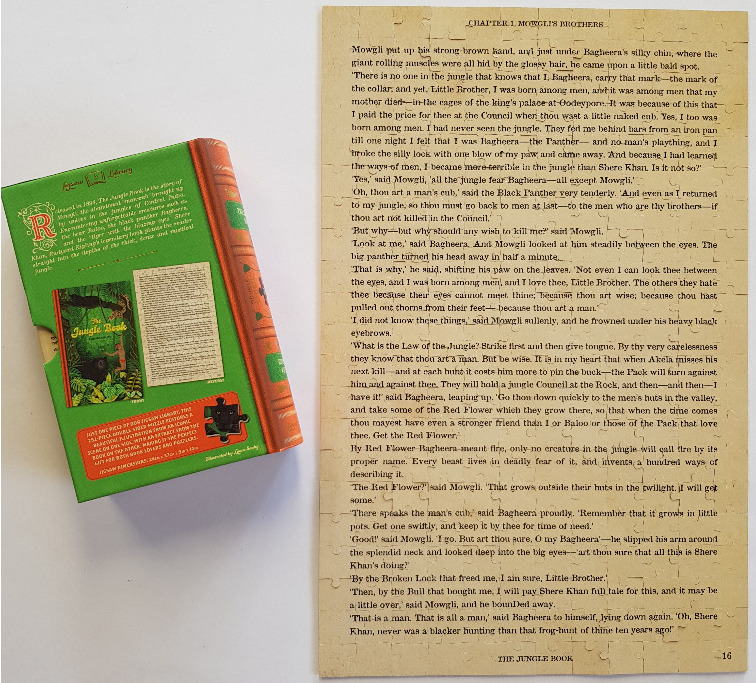
The image features two distinct items: a rectangular print of text and its corresponding storage container, which is designed to look like a book. The primary focus is a single page of prose titled "CHAPTER I. MOWGLI'S BROTHERS." The text is printed in a dark, serif font on a light, parchment-coloured background, giving it the appearance of an aged, antique book leaf. At the bottom right corner, the page number "16" is clearly visible.
To the left sits a green box designed to resemble a classic hardbound book. The cover features an illustrated inset of a lush, dark jungle scene with a panther and Mowgli, along with a smaller inset showing a page of text. The box spine is decorated in shades of orange and brown with decorative gold lettering. The overall aesthetic is one of literary nostalgia, combining the warm, earthy tones of the vintage-style text with the vibrant, jungle-inspired green of the presentation box.
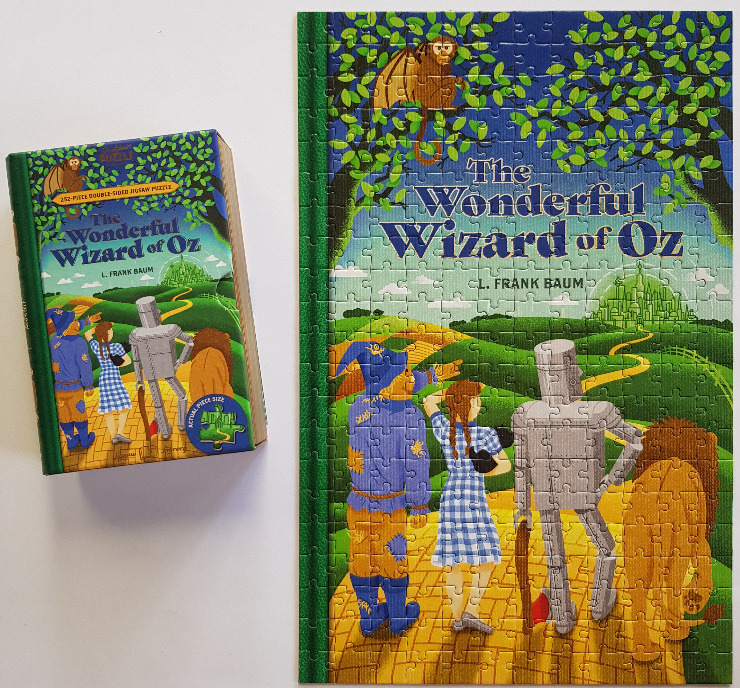
This illustration depicts the iconic characters from The Wonderful Wizard of Oz, including Dorothy, the Scarecrow, the Tin Man, and the Cowardly Lion, as they stand on a yellow brick road. The group faces away from the viewer, looking toward the distant, glowing Emerald City nestled within rolling green hills. A winged monkey sits perched in a tree branch near the top of the frame, overlooking the scene.
The artwork is styled as a vintage book cover, featuring the title "The Wonderful Wizard of Oz" and the author's name, L. Frank Baum, prominently displayed in the upper center. The composition is structured with a deep, vertical perspective, framed by tree trunks on either side, which creates a sense of depth as the path leads the eye from the foreground characters toward the horizon.
The colour palette is vibrant and saturated, dominated by lush shades of green in the fields and foliage, contrasted with the bright yellow of the brick road and the deep blue of the sky. The art style is clean and illustrative, reminiscent of mid-20th-century storybook drawings, using clear lines and solid colours to create a nostalgic, whimsical mood that captures the spirit of the classic fantasy tale.
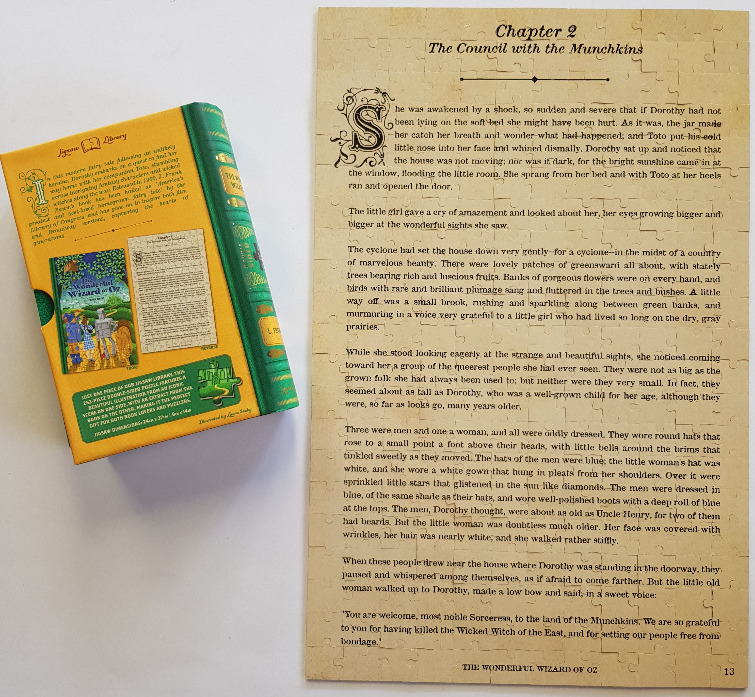
The image depicts a vertical, rectangular page from a book, specifically Chapter 2 of The Wonderful Wizard of Oz, titled "The Council with the Munchkins." The text is printed in a classic serif font on a light, parchment-like background that appears slightly aged or tanned. An ornate, decorative capital letter "S" begins the narrative, which describes Dorothy waking up after a cyclone to find herself in a new, magical land. The layout is clean and resembles a vintage literary publication, with the chapter title centered at the top and a small decorative flourish underneath.
Beside the text page lies the book-shaped storage container. Its spine is a deep, textured forest green with gold embossed detailing and book-binding ridges, mimicking a classic leather-bound volume. The cover portion of the box is a vibrant yellow, featuring a small color illustration of Dorothy, the Tin Woodman, and the Cowardly Lion. The text on the cover provides information about the edition, set against a bright, cheerful background that contrasts with the neutral, antique aesthetic of the text page. The overall presentation evokes the feeling of a collector's item or a specialty literary tribute.
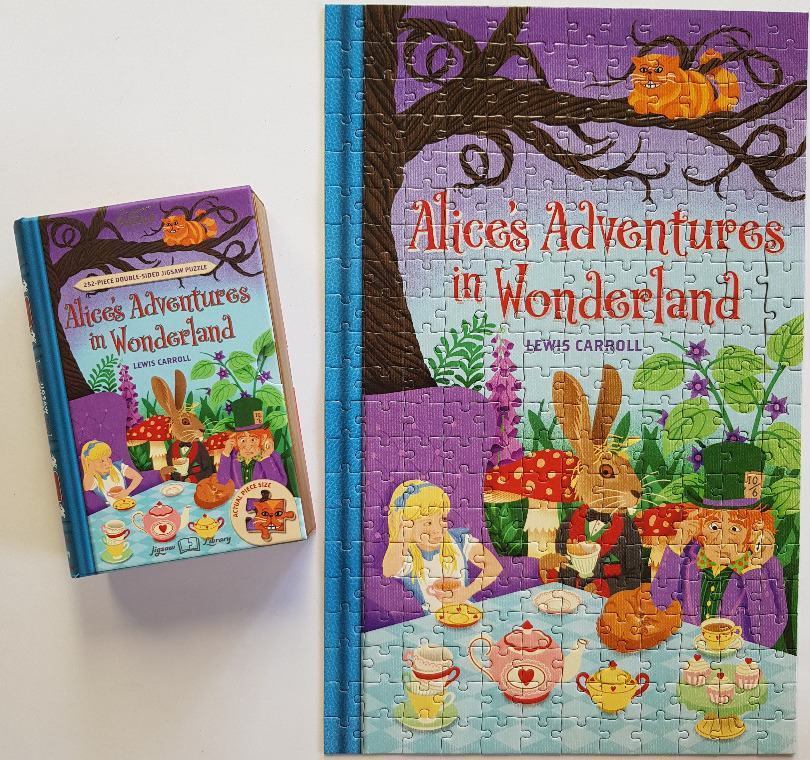
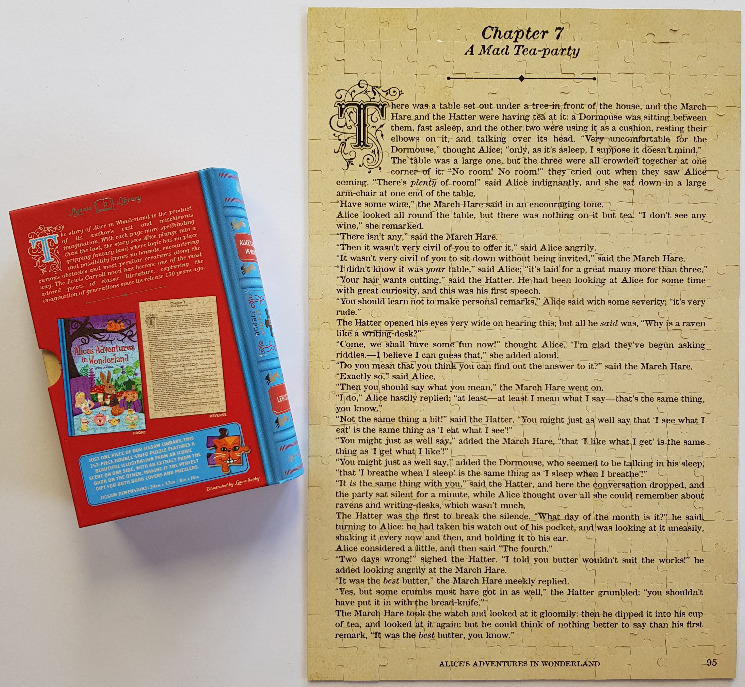
This whimsical illustration depicts a scene from Alice's Adventures in Wonderland, framed to resemble the cover of an old book. The central focus is the iconic tea party, featuring Alice, the March Hare, and the Mad Hatter gathered around a table draped in a light blue checkered cloth. A variety of tea pots and delicate cups sit upon the table, while the background is filled with lush greenery, purple flowers, and large red-and-white spotted mushrooms. High above, nestled in the branches of a dark, stylized tree, the Cheshire Cat smiles down at the guests.
Text in a vintage, red serif font spans the center of the image, reading "Alice's Adventures in Wonderland" with the author's name, "Lewis Carroll," written below in smaller letters. The style is that of a colorful, storybook illustration with clean lines and flat, saturated colors. The composition is structured vertically, with the dark trunk of the tree creating a column along the left side, mirroring the spine of a book. The overall mood is playful, classic, and magical, capturing the quintessential charm of the beloved literary tale.