Groovy Records
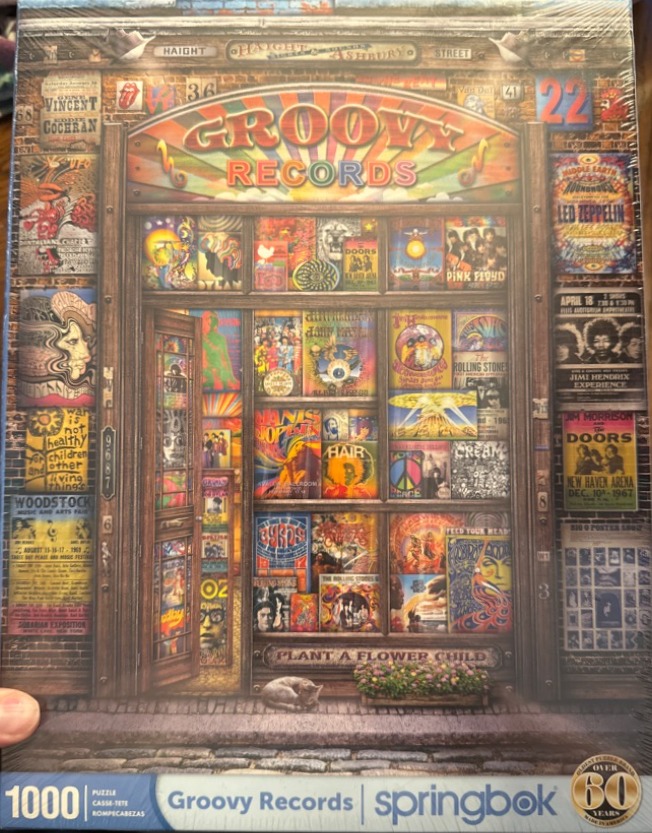
This illustration depicts the vibrant facade of a vintage record shop titled Groovy Records. The storefront is set into a weathered brick building located at the corner of Haight and Ashbury streets. The shop window is densely packed with a collage of iconic 1960s psychedelic rock posters and album art, featuring artists such as The Rolling Stones, Jimi Hendrix, Led Zeppelin, and The Doors. The warm glow emanating from within the store illuminates the posters, creating a nostalgic, bustling atmosphere of a bygone musical era.
The shop exterior is framed by dark wooden trim, with a single door propped open to reveal more posters inside. At the street level, a quiet, grey cat curls up on the cobblestone sidewalk next to a small, vibrant flower box placed beneath the window. The composition is highly symmetrical, with the main shop entrance acting as a central anchor, while the surrounding brick walls are plastered with weathered flyers advertising historic concerts and festivals like Woodstock.
The artistic style is detailed and richly colored, utilizing a warm, earthy palette of deep reds, browns, and ambers, contrasted by the bright, hallucinogenic patterns of the posters themselves. The lighting is soft and inviting, suggesting an evening setting where the shop acts as a beacon of culture. Every inch of the store's surface area is utilized to display musical ephemera, capturing the essence of the 1960s counterculture movement in a dense, visually engaging tapestry of music history.
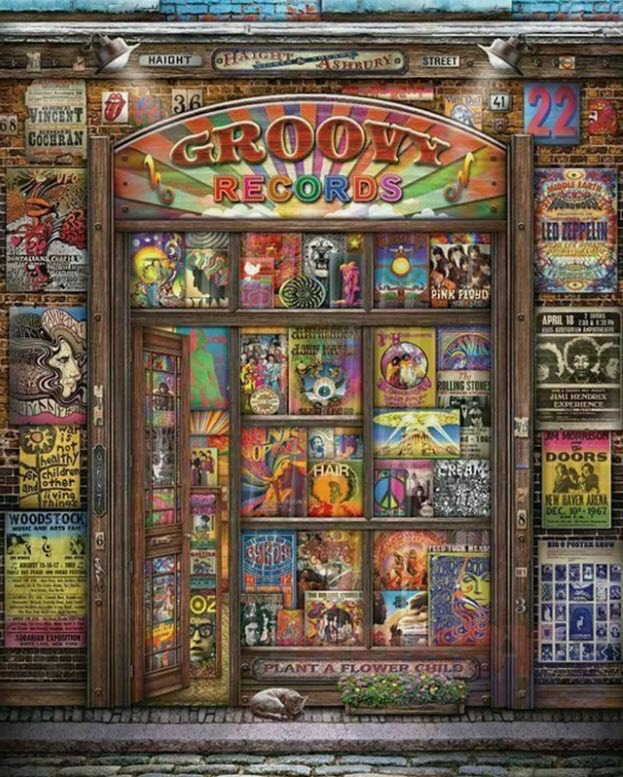
This illustration depicts a classic, wooden storefront entrance known as "Groovy Records," nestled within a rustic brick wall. The shop is filled with an extensive collection of iconic 1960s-era music posters and album covers, arranged behind the multi-paned glass windows and on the exterior brick facade. A partially open wooden door invites the viewer into the colorful, dimly lit interior, where shelves stacked with more records and artwork are visible.
The setting radiates a nostalgic, psychedelic aesthetic characteristic of the Haight-Ashbury era. The brick walls surrounding the storefront are cluttered with weathered flyers and posters featuring legendary artists, iconic festivals like Woodstock, and surreal, trippy illustrations. A subtle sign above the doorway reads "Haight-Ashbury Street." The lighting is warm and ambient, emanating from overhead lamps that cast a soft glow on the textured brick and the colorful assortment of music ephemera.
Fine details enrich the scene, including a small, sleepy cat resting on the cobblestone sidewalk in front of the door and a modest window box filled with greenery below the main display window. The illustration style is highly detailed and painterly, capturing the weathered texture of the brick, the grain of the wooden doorframe, and the varied artistic styles of the posters, ranging from bold, high-contrast graphics to fluid, abstract psychedelic art. The overall mood is immersive and evocative of a bygone musical subculture.
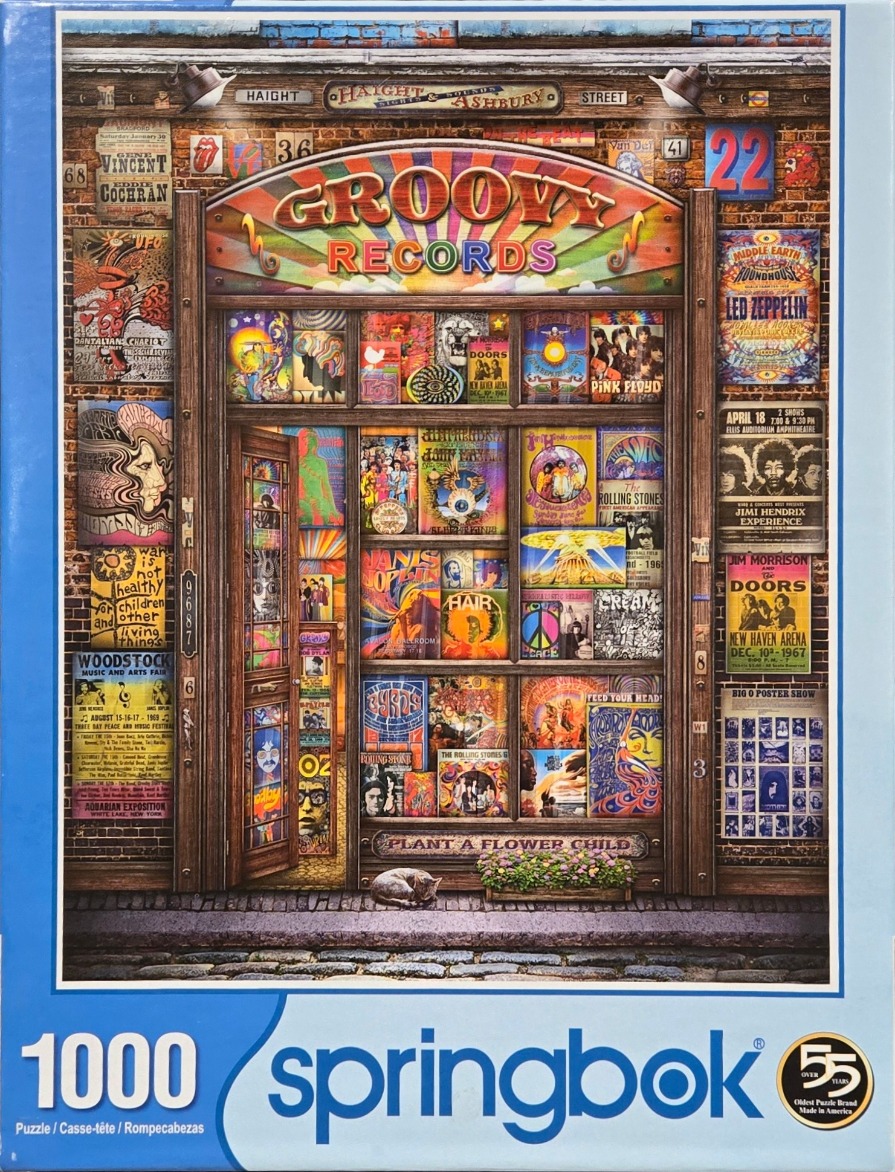
The central focus is the storefront of "Groovy Records," a vintage shop facade heavily adorned with colorful 1960s psychedelic rock music posters. The arched sign above the entrance features vibrant rainbow-hued patterns and classic bubble lettering. A single door is slightly ajar, revealing more posters inside, while large glass display windows are packed with iconic album art and concert advertisements from legendary bands like Pink Floyd, The Doors, The Rolling Stones, and Led Zeppelin.
The setting is a brick-walled street scene reminiscent of Haight-Ashbury, identified by a sign at the top. The composition is symmetrical, with the dark wood-framed storefront acting as the anchor for an explosion of contrasting posters. The exterior brick walls are similarly plastered with historical gig posters, including references to Woodstock and various underground venues. Below the display window sits a small planter box filled with flowers and a sleeping gray cat resting on the cobblestone sidewalk.
The artwork uses a rich, saturated color palette that emphasizes the psychedelic aesthetic of the late 1960s, featuring deep oranges, electric blues, and vivid purples. The illustration style is detailed and realistic, capturing the gritty texture of urban brick and wood while maintaining the high-energy, eclectic look of original vintage screen-printed posters. The lighting is soft and ambient, suggesting a late afternoon or twilight setting that highlights the warm glow radiating from the store's display.