After the Mission
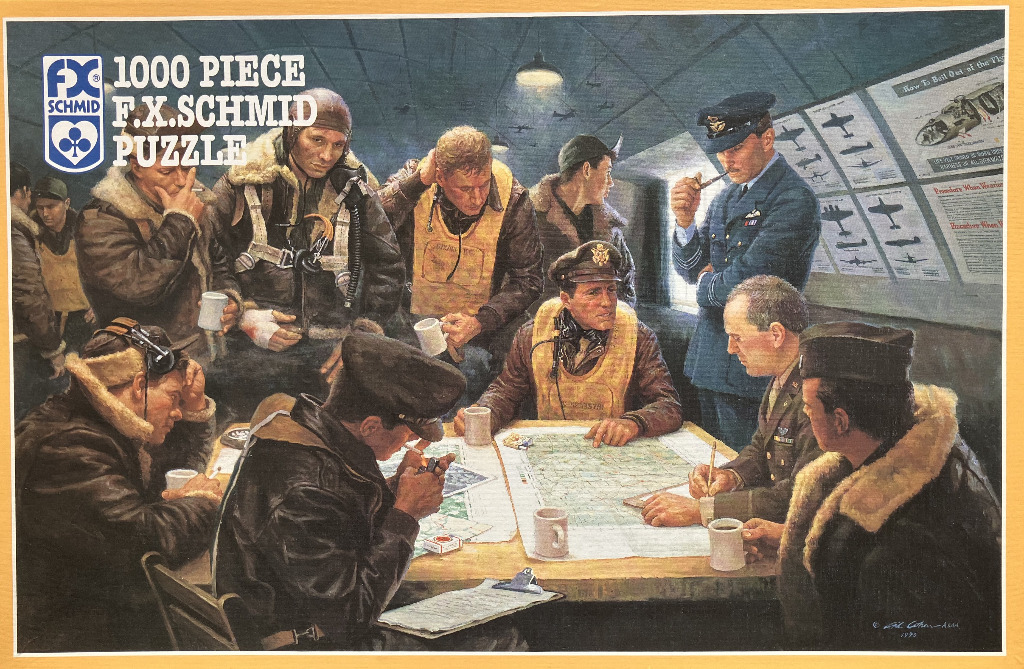
This detailed illustration depicts a group of World War II military airmen gathered around a large wooden table inside a dimly lit Quonset hut or briefing room. A large map is spread out across the center of the table, where several men in leather flight jackets, shearling-lined coats, and military service uniforms study the terrain and coordinate flight plans. Some of the men hold pencils, marking positions on the charts, while others lean in closely to observe.
Surrounding the table, the airmen appear tired but focused, with several holding white ceramic mugs of coffee or tea. One officer stands at the edge of the table, wearing a dark blue dress uniform and a service cap, thoughtfully smoking a pipe as he watches the group. The atmosphere is tense and professional, evoking a scene of pre-mission preparation.
The room is rendered in muted, earthy tones of brown, olive green, and dark blue, reflecting the interior of a military structure. Sunlight streams in from a doorway in the background, creating a sharp contrast against the shadowed workspace. On the far wall, large instructional posters display technical drawings of aircraft and safety procedures. The painting style is realistic, emphasizing the textures of worn leather jackets, the rugged faces of the soldiers, and the soft, ambient lighting of the bunker environment.

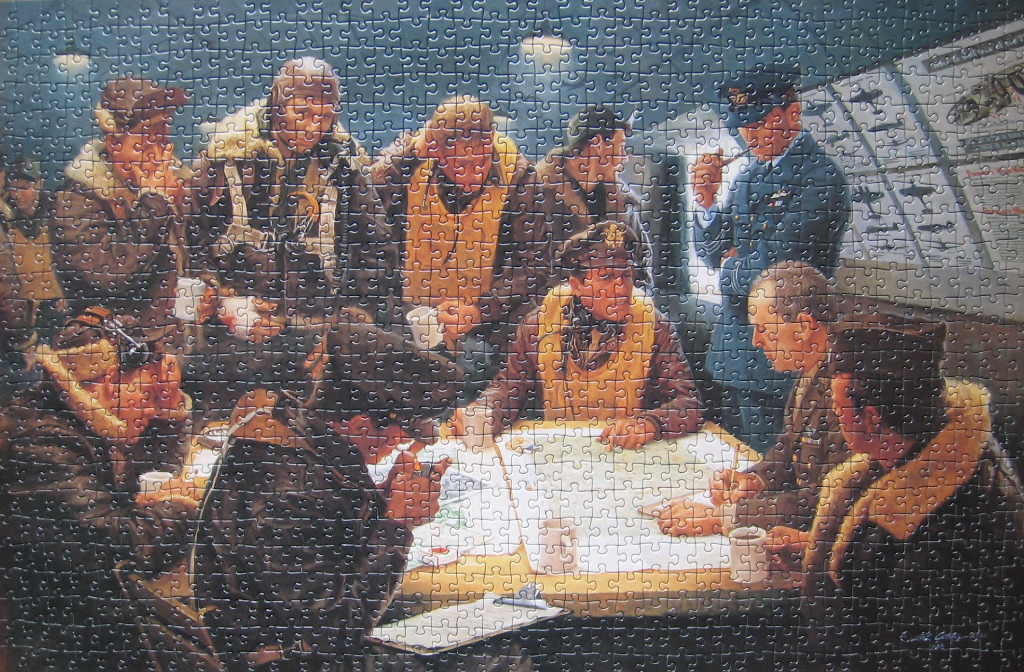
This detailed illustration depicts a group of World War II-era military pilots gathered for a nighttime mission briefing. They are clustered around a large table covered with maps, illuminated by dim overhead lighting. Several pilots wear heavy flight jackets with shearling collars, some also donning flight caps or headphones. An officer in a formal blue dress uniform stands near the right side of the table, holding a small object and seemingly providing instructions. The group's expressions are focused and serious as they lean in to study the documents laid out before them.
The setting is a dimly lit, enclosed space, likely a briefing room or a transport structure. A large chart or board mounted on the wall behind the officer displays silhouettes of various aircraft, adding to the military atmosphere. The composition is intimate and crowded, emphasizing the camaraderie and tension of men preparing for a flight. Scattered on the table are pens, papers, and several mugs of coffee, suggesting a long night of planning.
The artistic style is realistic and painterly, characterized by a muted, nocturnal colour palette dominated by deep shadows, cool blues, and earthy browns. The light is soft and concentrated on the map surface and the faces of the pilots, creating strong contrasts that heighten the sense of drama and urgency. The scene evokes a nostalgic, cinematic quality typical of historical wartime art.