École Maternelle à Amsterdam, 1880
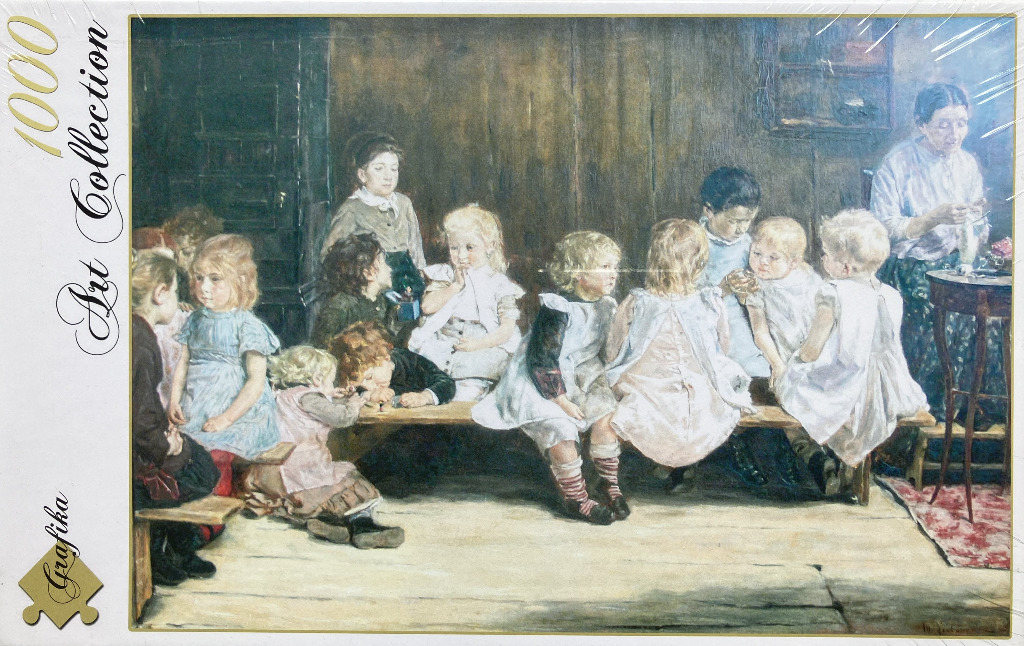
This oil painting depicts a nostalgic classroom scene featuring a large group of young children sitting on wooden benches. The children are dressed in period-appropriate clothing, with many wearing light-colored pinafores and dresses. They are arranged in a horizontal line, some looking toward the viewer while others are engaged with their neighbors or focused on tasks. To the far right, a woman, presumably the teacher, stands at a small table, tending to her work while overseeing the quiet group.
The interior space is rendered with a muted, earthy palette, emphasizing the shadows and the worn wooden floorboards. The wall behind the children is a deep, dark brown, providing a stark backdrop that makes the pale clothing of the children stand out. The lighting is soft and diffused, likely coming from a window off-canvas to the left, which creates gentle highlights on the children's hair and clothing. The composition is grounded and steady, reflecting the orderly yet humble atmosphere of a late 19th or early 20th-century school setting.
Technically, the artwork displays classic painterly brushwork with a focus on capturing the soft expressions and varied textures of the children's attire. The floorboards are painted with loose, horizontal strokes that draw the eye across the base of the scene, leading toward the teacher on the right side. The overall mood is one of quiet contemplation, capturing a snapshot of childhood education from a bygone era.


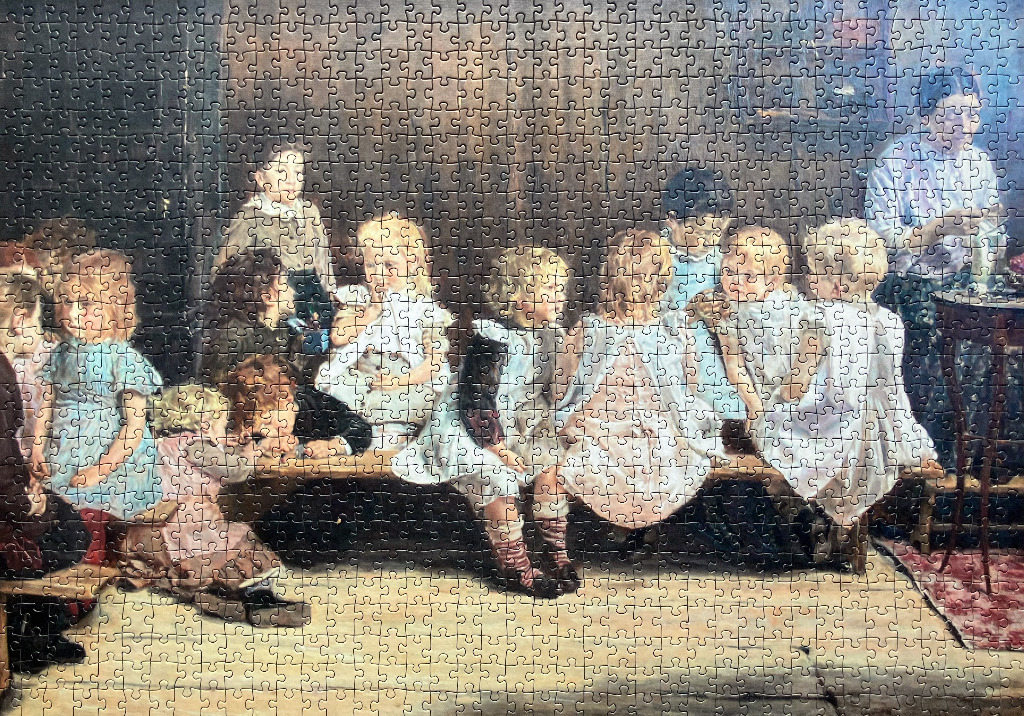
This atmospheric oil painting depicts a group of young children gathered in a rustic, dimly lit room. The children are seated on a long wooden bench that spans the width of the frame, facing toward the left. Most are dressed in light-coloured or white pinafores and dresses, their heads often bowed in focus or contemplation. To the far right, an adult woman is seated near a small wooden table, watching over the group, suggesting a classroom or nursery setting. The composition emphasizes the horizontal alignment of the children, creating a sense of shared purpose or collective activity.
The colour palette is dominated by deep, earthy tones, featuring warm browns and shadows that define the walls and wooden flooring. This contrasts with the soft, pale highlights on the children's clothing, which draw the viewer's eye to the center of the scene. The lighting is subtle, filtering in from an unseen source to illuminate the faces and dresses of the children, while the background recedes into dark, indistinct textures. The overall mood is quiet and reverent, capturing a moment of Victorian-era domesticity or early childhood education through a realistic, slightly somber artistic style.