The Coach Journey
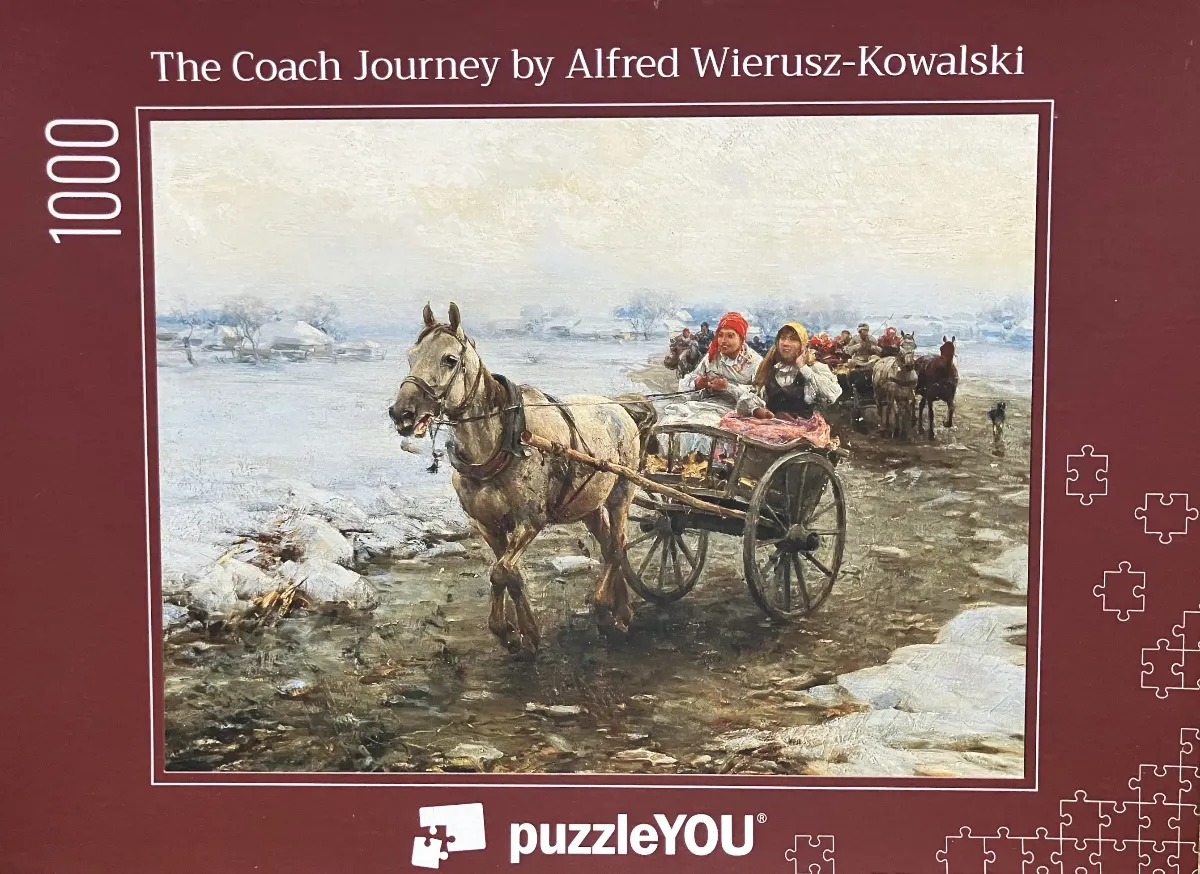
This oil painting depicts a rural winter scene featuring a horse pulling a cart occupied by several people. In the foreground, a sturdy, light-colored horse trots along a muddy, rutted track, pulling a wooden cart. Two women sit prominently in the front of the vehicle, one wearing a vibrant red headscarf and the other a yellow one. Behind them, other passengers are visible, suggesting a crowded journey.
The setting is a vast, open landscape covered in a thin, patchy layer of snow, hinting at the early thaw of late winter or early spring. In the distance, faint outlines of small wooden dwellings are visible under a pale, overcast sky. The composition creates a sense of movement as the carriage travels from the mid-ground toward the foreground, with the brown, slushy earth contrasting sharply with the white, frozen surroundings.
The color palette is muted and atmospheric, dominated by shades of grey, pale white, and earthy browns, punctuated by the bright colors of the women's head coverings. The style is realist, characterized by visible, textured brushstrokes that convey the cold, damp air and the rough, uneven ground. The lighting is diffuse and flat, typical of an overcast winter day, casting minimal shadows and emphasizing the bleak yet busy nature of the journey.

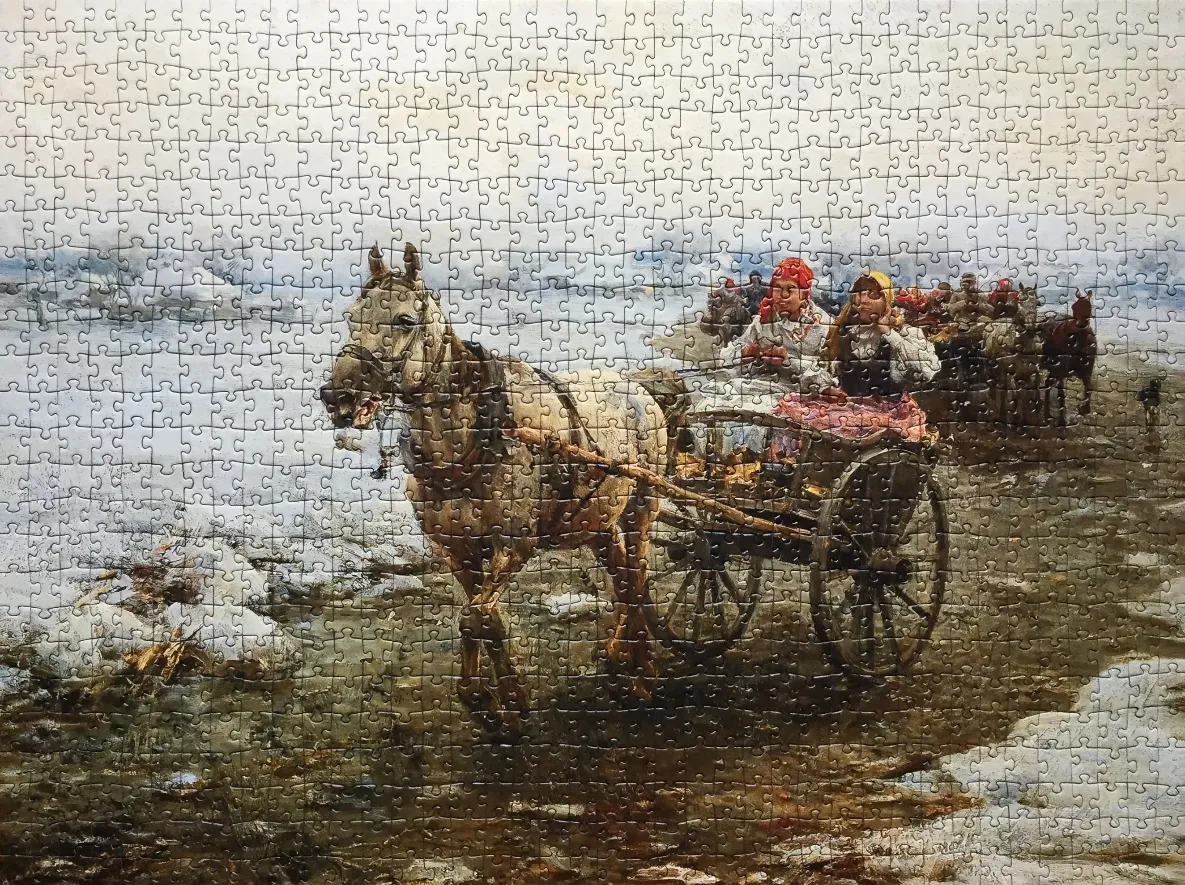
This classical oil painting depicts a rural winter scene featuring a light-coloured horse pulling a wooden cart across a slushy, muddy path. Two women sit in the front of the cart, dressed in traditional folk attire; one wears a vibrant red headscarf and the other a yellow one. They appear to be traveling with a small procession, as other figures and additional horses can be seen trailing behind them in the mid-ground.
The setting is a desolate, overcast landscape blanketed in patches of melting snow and dark, wet earth. The horizon is faint and muted, suggesting a chilly, grey day with low light. The composition places the horse and cart prominently in the left-to-center foreground, creating a narrative focus on their journey through the difficult terrain.
The colour palette is dominated by earthy browns, muddy greys, and muted whites, which contrast with the bright reds and yellows of the women's head coverings. The style is representational and textured, typical of nineteenth-century realism, with soft, visible brushstrokes that convey the damp atmosphere and the rustic, weathered quality of the surroundings.