Optical Illusion Jigsaw
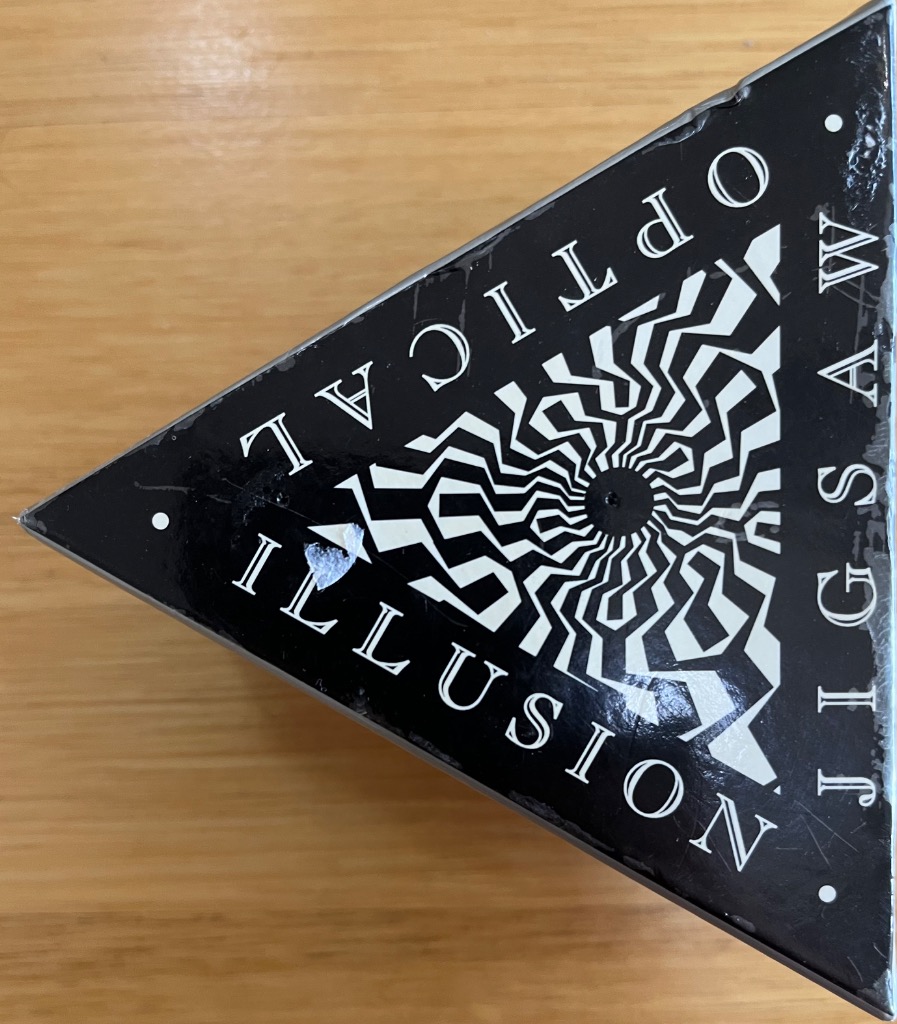
The central artwork features a striking black and white optical illusion design. A series of serrated, lightning-bolt-like shapes radiate outward from a solid black circular center, creating a sense of dynamic motion and depth. The geometric pattern is contained within an inverted triangular field, emphasizing the stark contrast between the bold black shapes and the negative white space.
The overall composition relies on high-contrast, minimalist aesthetics to produce a hypnotic, spinning effect. The design uses jagged, repetitive lines to guide the eye toward the dark focal point in the middle, typical of classic mid-century op-art styles. The stark monochromatic palette ensures that the focus remains entirely on the geometric distortion and visual energy of the lines.
Text borders the central pattern within the triangular frame, with the words "OPTICAL" and "ILLUSION" printed in a clean, serif white font. The orientation of the letters follows the perimeter of the triangle, framing the central vortex. The entire aesthetic is sharp, graphic, and purposefully disorienting, designed to challenge the viewer's perception through repetitive, high-contrast geometry.
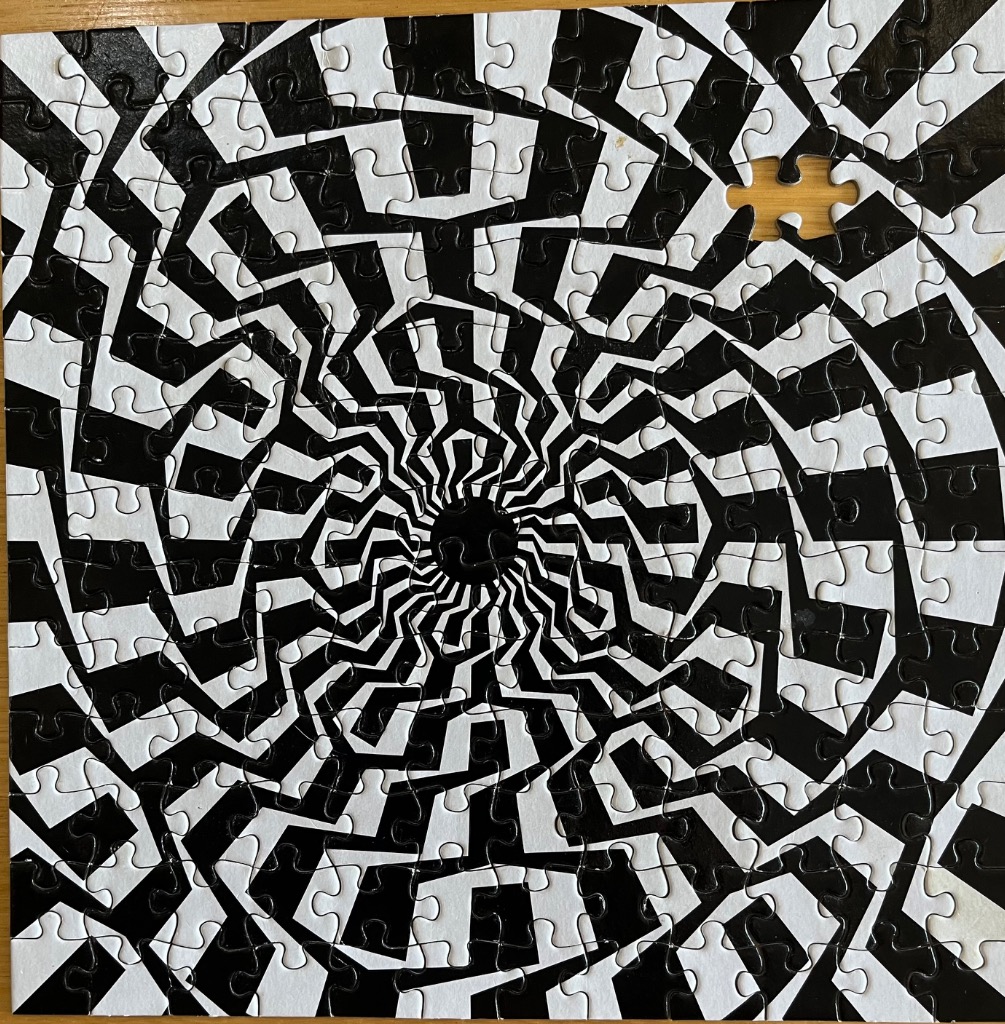
This image features a stark, high-contrast optical illusion rendered entirely in black and white. At the center lies a solid black circle, which serves as the focal point for a complex, radiating pattern. From this core, numerous jagged, arm-like shapes spiral outward toward the edges of the square frame, creating a sense of deep, swirling motion that draws the viewer’s eye toward the center.
The composition is based on geometric repetition, with white and black blocks alternating to form twisting, propeller-like vanes. As these shapes move further from the center, they gradually increase in size, intensifying the illusion of depth and a funnel-like perspective. The sharp edges of the monochrome shapes create a disorienting, hypnotic effect typical of op-art.
The visual style is graphic and minimalist, stripping away all color and texture to focus solely on the interplay of light and dark. The arrangement of the alternating blocks creates a dynamic rhythm that suggests a whirlpool or a vortex, turning a flat, two-dimensional surface into a seemingly cavernous, three-dimensional space.