The Capture of the Porto Bello
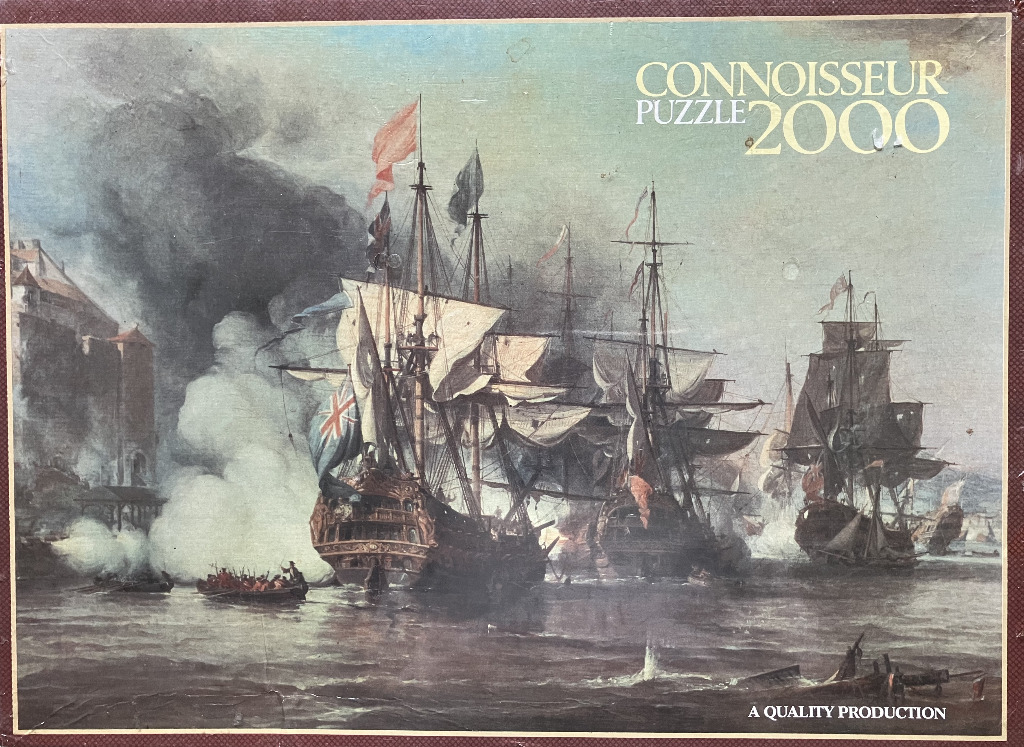
This classic oil painting depicts a chaotic naval battle scene from the age of sail. The composition is dominated by several large, ornate wooden warships maneuvering through a harbor or coastal setting. The primary vessel in the foreground shows intricate stern detailing and a British naval ensign flying from the mast. Smaller rowboats filled with crew members are visible in the foreground, navigating the choppy waters between the massive hulls.
To the left of the scene, a fortress or coastal town is obscured by thick, billowing clouds of black and grey smoke, suggesting a heavy cannonade. The atmosphere is tense and filled with the intensity of combat, with masts and rigging silhouetted against a muted, overcast sky. The overall color palette is somber, dominated by earthy browns, deep grays, and muted teals, which emphasizes the grit and scale of the maritime conflict.
The style is consistent with traditional marine oil painting, focusing on light reflecting off the water and the dramatic contrast between the massive, sturdy ships and the ephemeral smoke of the battle. The level of detail in the rigging and the weathered texture of the wooden ships provides a historical feel. The painting captures a sense of monumental action, freezing a moment of maritime warfare amidst the turbulent sea and sky.

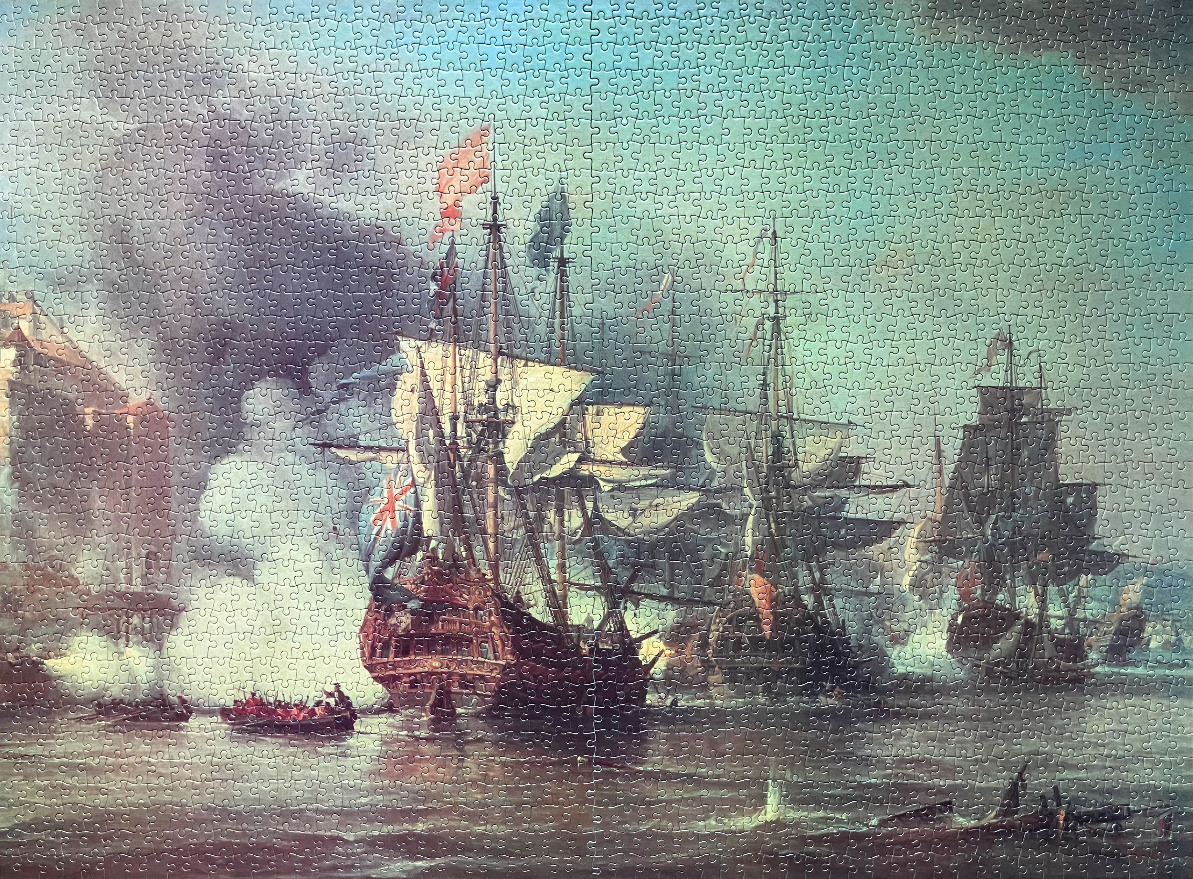
This classical maritime oil painting captures a dramatic naval engagement featuring several large, multi-masted warships. The foreground is dominated by a majestic ship viewed from the stern, its wooden hull intricately detailed and its masts towering above the water. A small rowboat packed with sailors moves toward the vessel, while other ships of the line are visible nearby, their silhouettes partially shrouded by the thick, billowing smoke of cannon fire.
To the left, a portion of a fortress or coastal structure rises from the water, partially obscured by heavy grey plumes of smoke that suggest active conflict. The composition relies on a layered depth, with the primary ship in the foreground drawing the eye, while additional vessels recede into the misty, atmospheric distance. The arrangement creates a sense of chaotic movement and large-scale maritime action characteristic of historic naval scenes.
The color palette is defined by cool, muted tones of blue-grey and sea-foam green, which provide a somber backdrop for the darker, warmer browns and earthy tones of the ships' hulls. The lighting is diffused and stormy, emphasizing the dramatic atmosphere of the battle. The painterly style utilizes soft brushwork to render the billowing smoke and the turbulent, rippling surface of the water, capturing the intensity of 18th-century naval warfare with a focus on historical detail and epic scale.