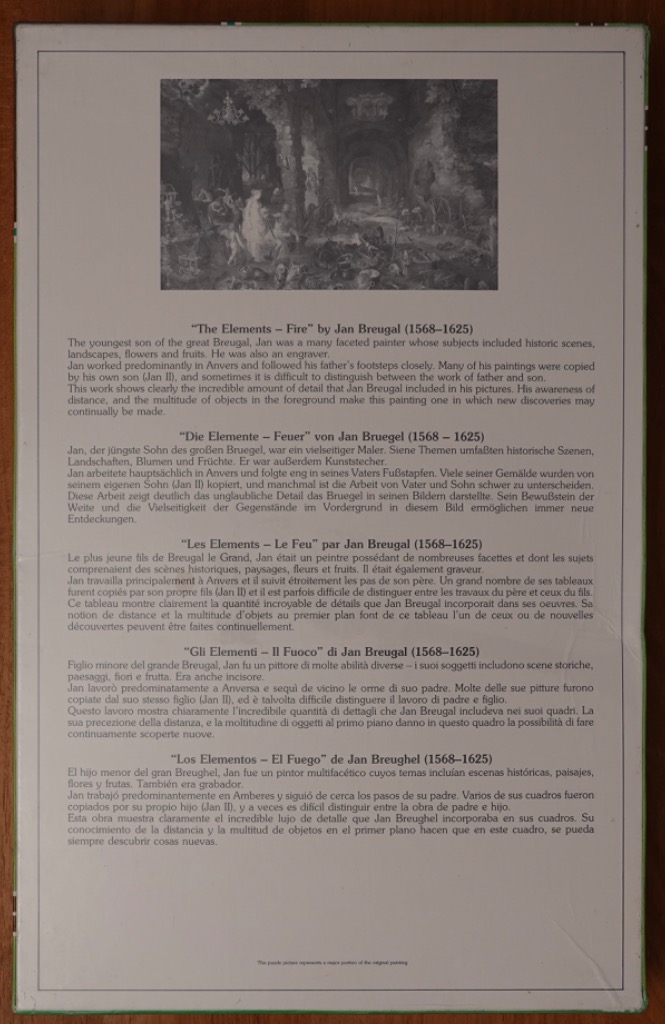
The Elements - Fire
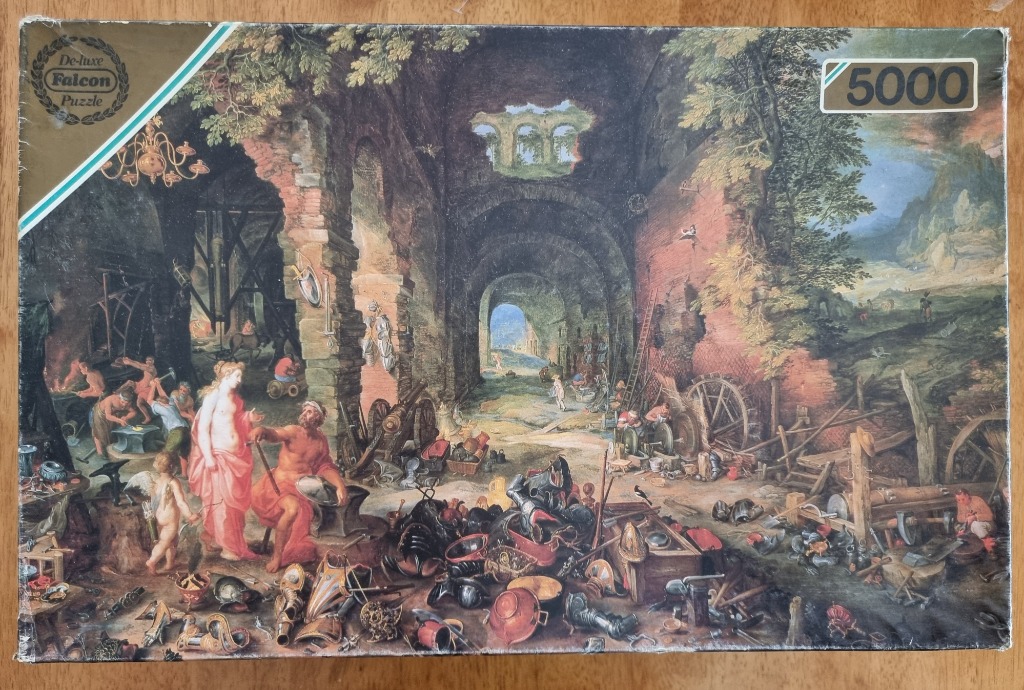
This classical oil painting depicts the busy forge of the Roman god Vulcan. In the lower-left foreground, a nude Venus stands beside Vulcan, who sits on an anvil with a hammer in hand. A small Cupid figure is nearby, while in the deep background to the left, several other figures work at furnaces amidst the glowing embers of fire. The scene is set within the ruins of a massive stone arched structure, with crumbling brick walls and a large, vaulted passage that leads to an outdoor landscape of rolling hills and a distant town under a pale sky.
The foreground is filled with an elaborate, cluttered collection of metalwork. Dozens of suits of armour, helmets, shields, swords, and ornate metal vessels are scattered across the stone floor. To the right, another worker operates a grinding wheel, further emphasizing the industrious nature of the workshop. A wooden ladder leans against a brick pier, and various tools, crates, and discarded equipment add to the sense of a working, chaotic studio.
The colour palette is dominated by earthy, muted tones of ochre, deep brown, and terracotta brick, contrasted with the metallic sheen of the weaponry. The lighting is complex, featuring internal warmth from the forge fires on the left, which casts long, dramatic shadows across the architectural elements, juxtaposed against the soft, cool natural daylight filtering through the archways from the background landscape. The style is that of a traditional Baroque or late Renaissance allegorical painting, characterized by high detail and complex, multi-layered

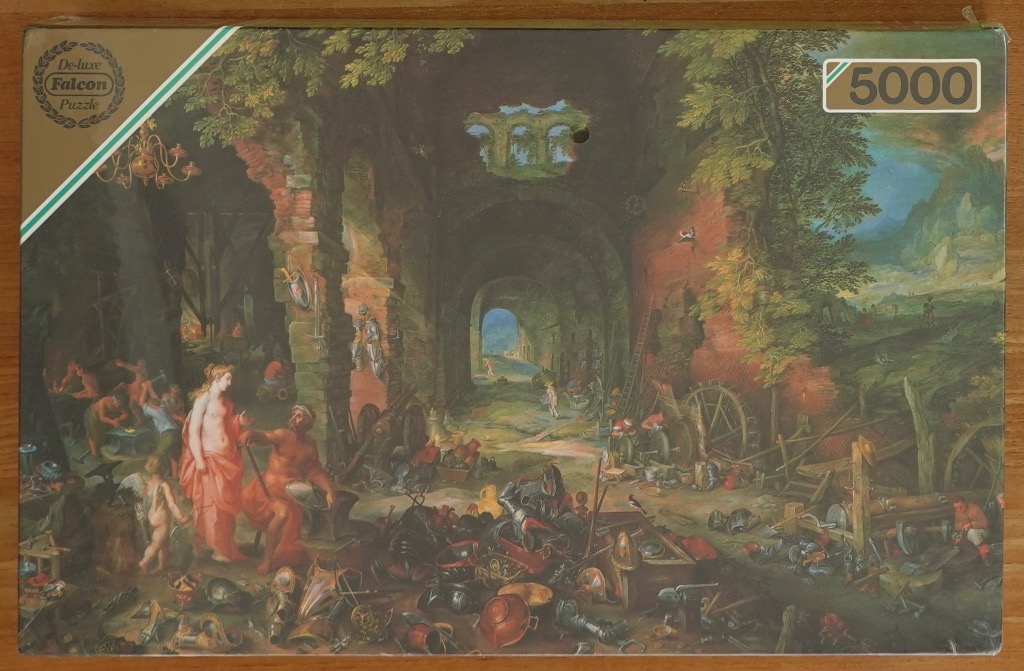
This classical oil painting depicts the mythical forge of Vulcan, set within the dark, atmospheric ruins of an ancient stone archway. In the foreground, a central pair captures attention: a fair-skinned, lightly draped woman—presumably Venus—stands beside a muscular, seated Vulcan, who is surrounded by a chaotic assortment of discarded armor, helmets, metalwork, and weapons. To the left, several figures toil at a forge, while other small, anecdotal figures are scattered across the composition, including a child near the central pair and distant silhouettes walking down the road visible through the arch.
The setting is composed of deep, cavernous shadows punctuated by architectural remnants of crumbling brick and stone. Lush, dark green foliage creeps over the top of the ruins, contrasting with the warm, reddish-brown tones of the brickwork. A bright, clear blue sky is visible through the central archway and the upper opening in the ceiling, providing a stark contrast to the dim, murky interior. The lighting is dramatic and directional, casting strong highlights on the metallic surfaces of the scattered armor and the pale skin of the central figures, creating a sense of depth and intricate detail.
The artistic style is typical of Old Master European painting, characterized by rich layering, meticulous attention to material textures—such as the sheen of polished metal and the softness of flesh—and a busy, narrative-driven composition. The scene feels timeless and grand, blending mythological allegory with the gritty, industrious atmosphere of an ancient workshop.