(No Name)
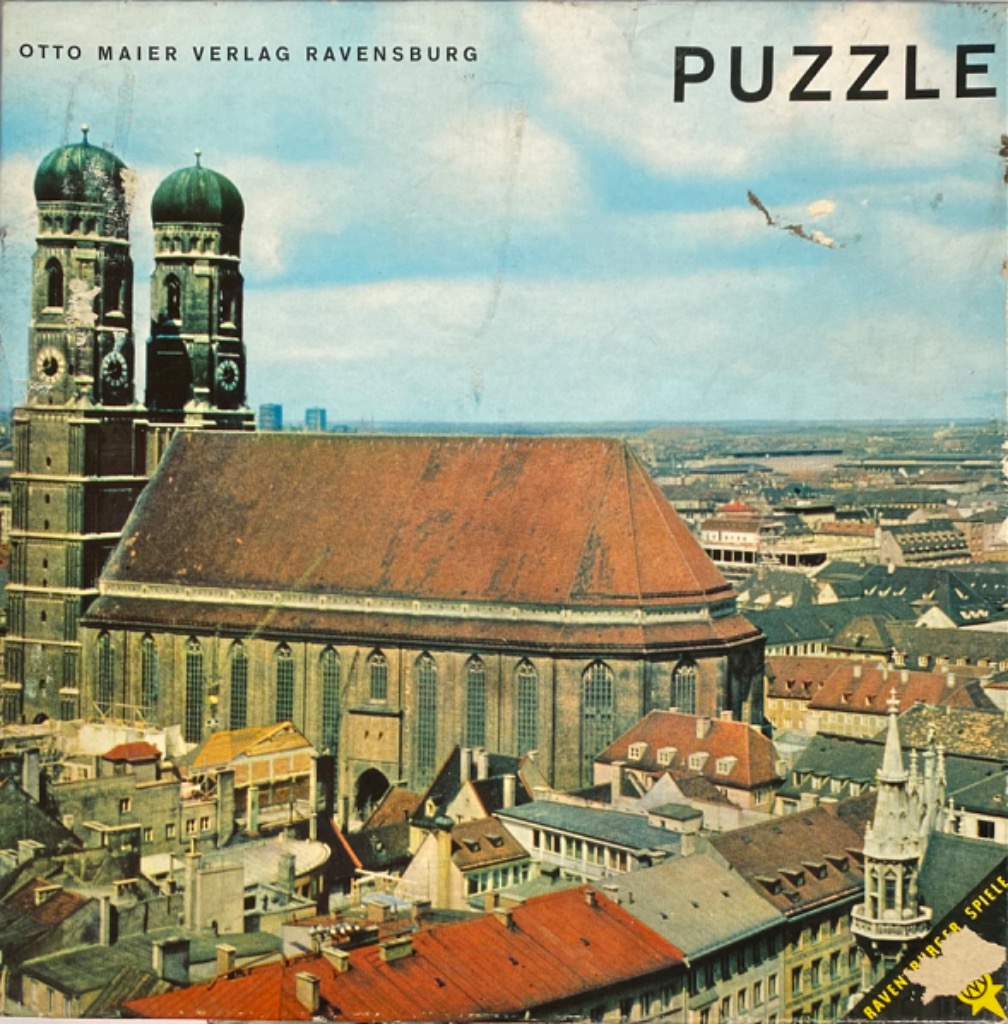
This vintage, slightly weathered photograph features a wide, elevated view of the Frauenkirche in Munich, Germany. The iconic late-Gothic cathedral dominates the left side of the frame with its two massive, distinctively capped towers rising above the surrounding urban landscape. The long, terracotta-tiled roof of the nave stretches horizontally toward the right, providing a clear focal point.
Below and beyond the cathedral, a dense cityscape of Munich unfolds. A labyrinth of rooftops in various shades of red, grey, and brown fills the foreground and mid-ground. The architecture includes residential buildings with tiled surfaces, narrow streets, and chimney pots. The background recedes into a hazy, soft-focus panorama of the city, suggesting a clear day with a flat, light blue sky scattered with thin, wispy clouds.
The overall colour palette is muted and characteristic of mid-20th-century color film. The scene is bathed in bright, natural daylight that casts gentle shadows, emphasizing the textural details of the brickwork and the intricate roof tiles. The composition is structured as a high-angle long shot, highlighting the imposing scale of the historic church against the sprawling city fabric. Despite the visible surface wear on the image, the perspective offers a timeless look at Munich’s classic skyline.
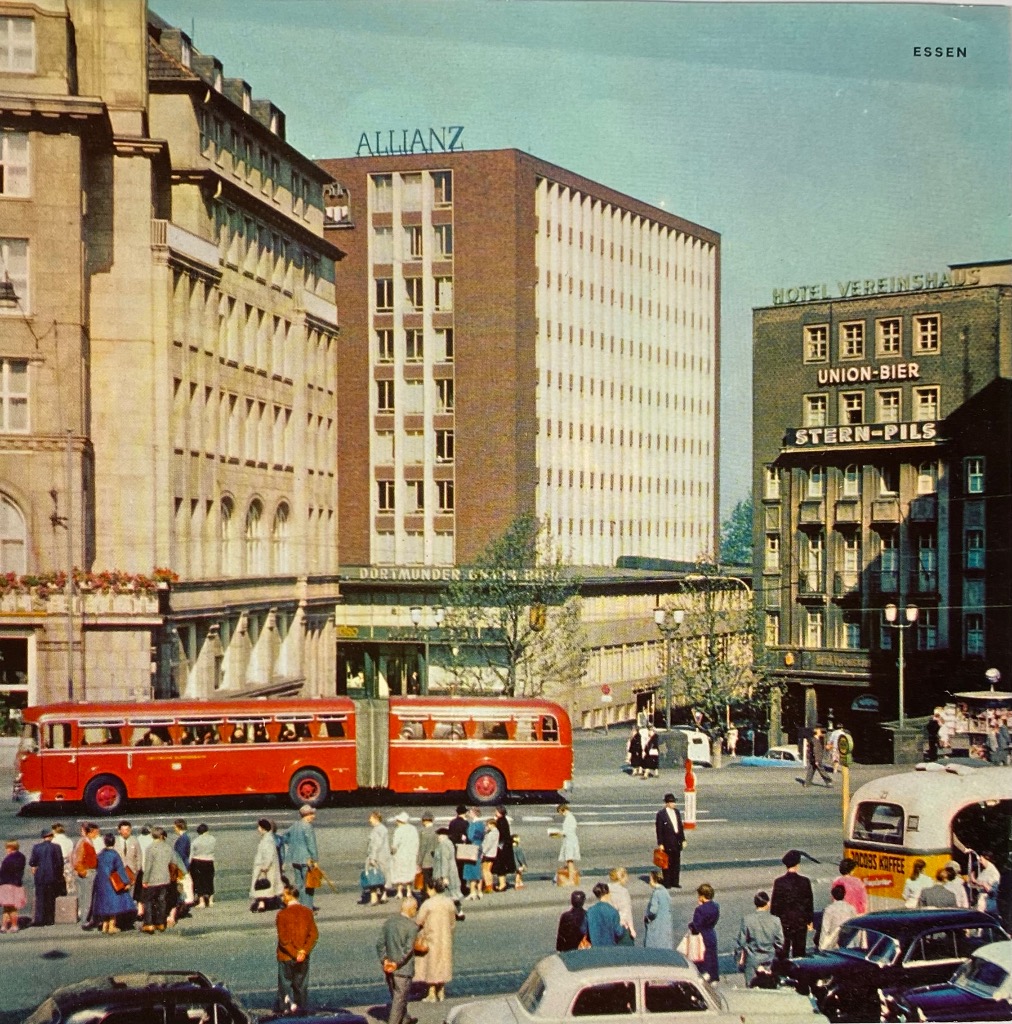
This urban scene captures a bustling intersection in a mid-century European city. A long, bright red articulated bus stretches horizontally across the middle of the frame, moving from left to right. Below it, a group of pedestrians in period clothing stand on the sidewalk or walk across the street, while several classic automobiles are parked or driving in the foreground. The city skyline is dominated by large, solid buildings with distinct architectural styles, including a prominent brick building with a vertical white grid facade and a dark-toned hotel marked with signage for "HOTEL VEREINSHAUS," "UNION-BIER," and "STERN-PILS."
The composition is anchored by the rhythmic placement of these multi-story buildings, which frame the street level activity. The scene is illuminated by natural daylight, casting soft shadows and highlighting the warm tones of the brick and the vibrant red of the bus. The overall mood is one of mid-century urban industriousness, capturing a snapshot of daily life with a clear, realistic aesthetic. Notable details include the word "ESSEN" printed in the upper right corner, the "ALLIANZ" sign atop the central building, and the vintage fashion worn by the passersby, which places the image in a historical context.
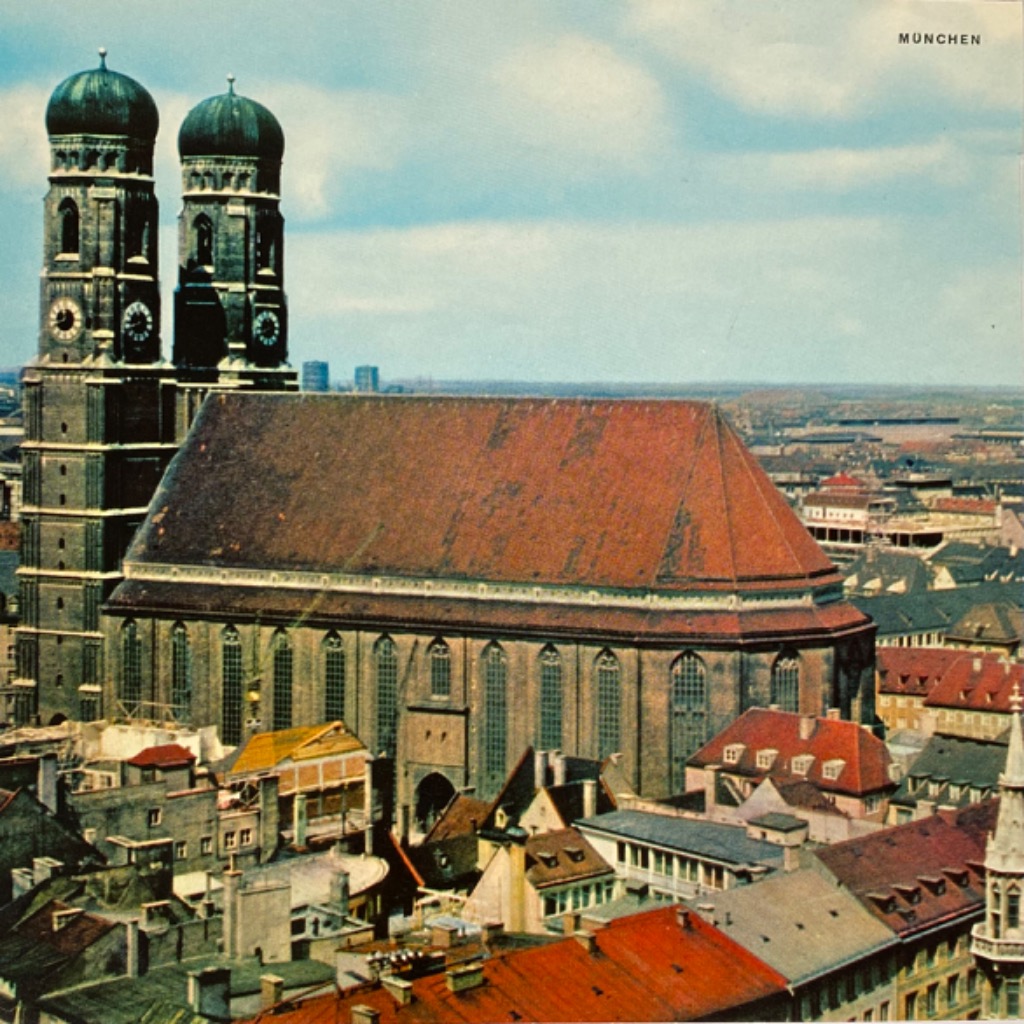
This high-angle, long-shot view focuses on the Frauenkirche in Munich, highlighting its iconic twin towers with dark, rounded onion domes. The massive brick structure of the church, featuring a long, steeply sloped red-tiled roof and rows of tall, arched windows, dominates the left side of the composition. The perspective allows for a clear view of the church’s architectural details, including the clock faces visible on the towers and the textured masonry of the exterior walls.
In the foreground and surrounding the base of the church, a dense urban landscape of smaller, multi-story buildings is visible. These structures feature varying roof styles, primarily covered in reddish-brown tiles, and are packed closely together in a traditional European city pattern. The cityscape extends toward the horizon, where a hazy, flat expanse meets the sky, suggesting an expansive metropolitan area.
The overall mood of the scene is serene and historical, captured under a pale blue sky with scattered, light clouds. The lighting is soft and consistent, casting gentle shadows that emphasize the depth of the church's vertical lines and the complexity of the nearby rooftops. The color palette is composed of natural, earthy tones, primarily the deep reds and browns of the roofs contrasted against the muted gray-brown of the cathedral’s stone walls, all set against the bright backdrop of the atmosphere. The word "MÜNCHEN" appears in simple, dark capital letters in the upper right corner.
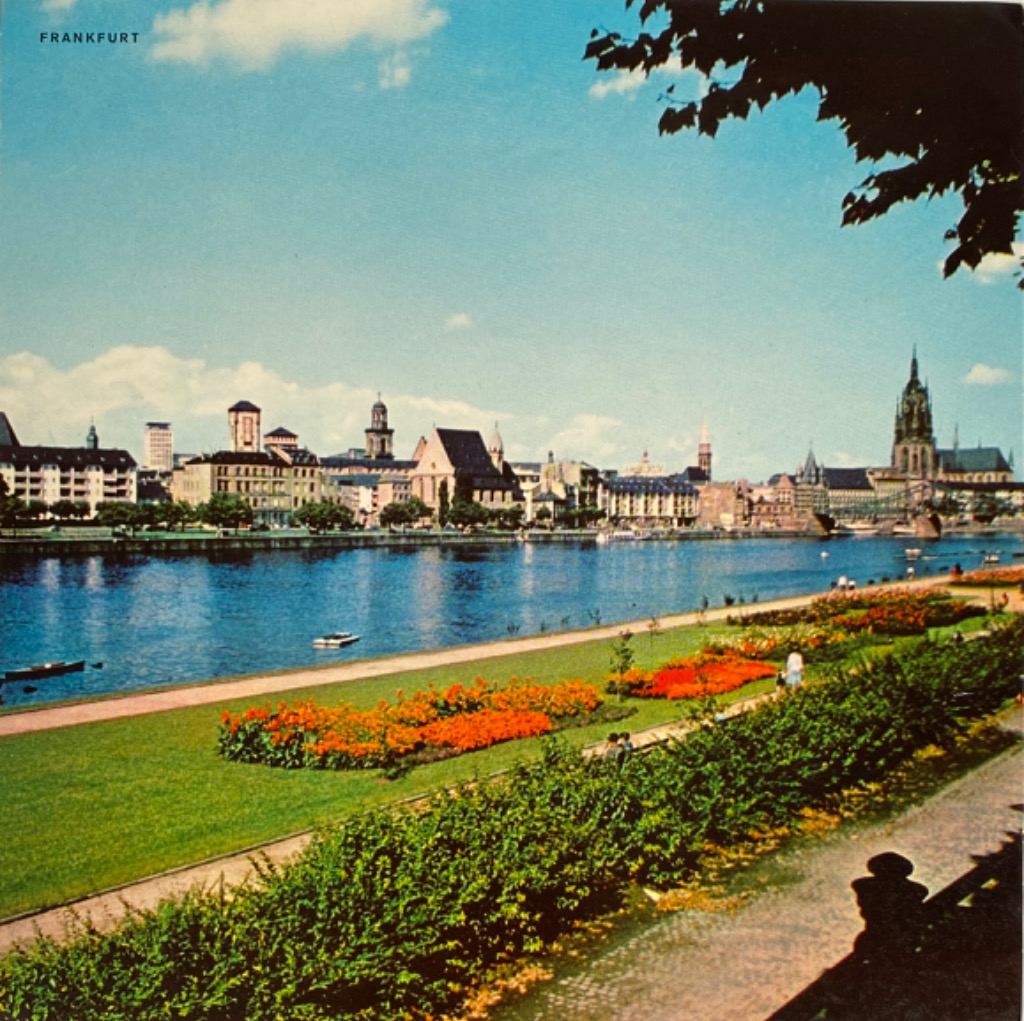
This scenic view depicts the Frankfurt cityscape stretching along the far bank of a wide, calm river. The architecture is a mix of historic buildings, tall steeples, and more contemporary structures, creating a varied urban horizon under a bright blue sky filled with wispy white clouds. The word "FRANKFURT" is subtly printed in the upper left corner.
The foreground is dominated by a lush riverside park. A wide path runs horizontally across the lower third of the scene, separated from the water by stretches of manicured green lawn and bright, eye-catching beds of orange flowers. Dense, dark green hedges line the lower edge, creating a layered visual depth that draws the eye toward the riverbank. In the lower right corner, the shadow of a tree branch provides a darkened, organic frame to the composition.
The lighting suggests a clear, sunny day, casting crisp shadows and highlighting the saturated colors of the flowers and the deep blue of the water. The overall mood is peaceful and classic, capturing a timeless urban landscape. The perspective is slightly elevated, likely from an embankment overlooking the river, providing an expansive view of the city’s landmark towers and bridges in the distance.





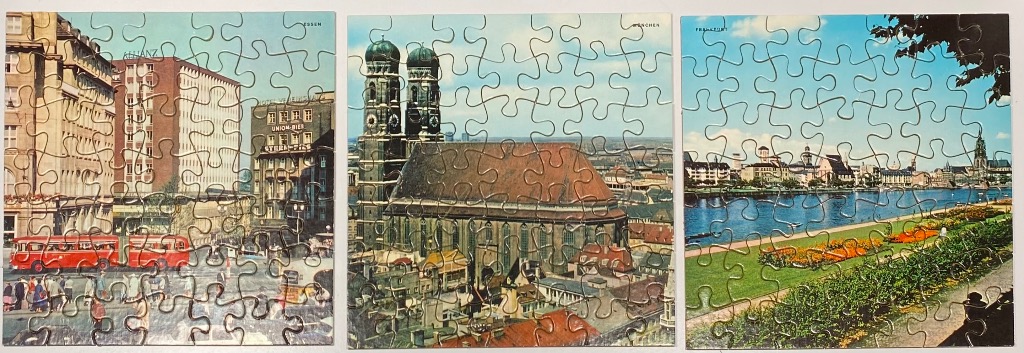
This triptych features three distinct vintage postcard scenes depicting German cityscapes. The left panel shows a busy street scene in Essen, characterized by large, multi-story buildings and a prominent, vibrant red articulated bus moving through a public square with pedestrians. The middle panel features a high-angle view of Munich, dominated by the iconic twin onion-domed towers of the Frauenkirche cathedral rising above the surrounding red-roofed buildings. The right panel captures a serene riverfront view of Frankfurt, showing the cityscape across a calm body of water, flanked by a lush green lawn and flowerbeds in the foreground.
The overall aesthetic is that of mid-20th-century color photography, featuring slightly desaturated yet warm tones typical of vintage printing processes. The lighting suggests bright, clear daylight across all three locations. The composition is structured as three vertical panels, each labeled with the name of the corresponding city in the top corner. The images evoke a nostalgic, travel-oriented mood, highlighting historical architecture and the distinct urban character of each major city.
by Stefan 2025-12-06