Solvang
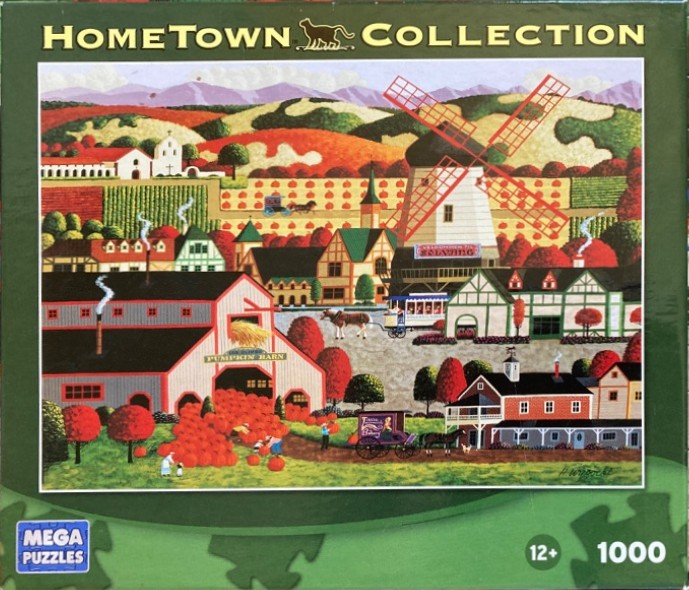
This folk art illustration depicts a vibrant, autumnal harvest scene in a rural village. The focal point is a large red barn labeled "Pumpkin Barn," where a massive pile of bright orange pumpkins spills out from an open doorway. Surrounding the barn are quaint timber-framed houses, a horse-drawn carriage, and a prominent windmill with red blades standing tall on the right side of the composition. A woman and child stand near the pumpkin pile, while other residents are dotted throughout the village streets.
The setting is defined by rolling, textured hills that stretch into the distance under a pale sky. The landscape is filled with neatly patterned fields and groves of rounded, stylized trees in shades of autumn gold, green, and deep red. A mission-style white building with an arched entrance sits atop a ridge in the background, adding to the pastoral atmosphere.
The artwork uses a rich, warm color palette dominated by earthy tones of harvest orange, terracotta, muted greens, and soft browns. The style is distinctly folk-inspired, characterized by flat perspectives, bold outlines, and repetitive, decorative patterns in the landscape and architecture. The lighting is soft and even, highlighting the cozy, nostalgic mood of a busy harvest day in a small country town.
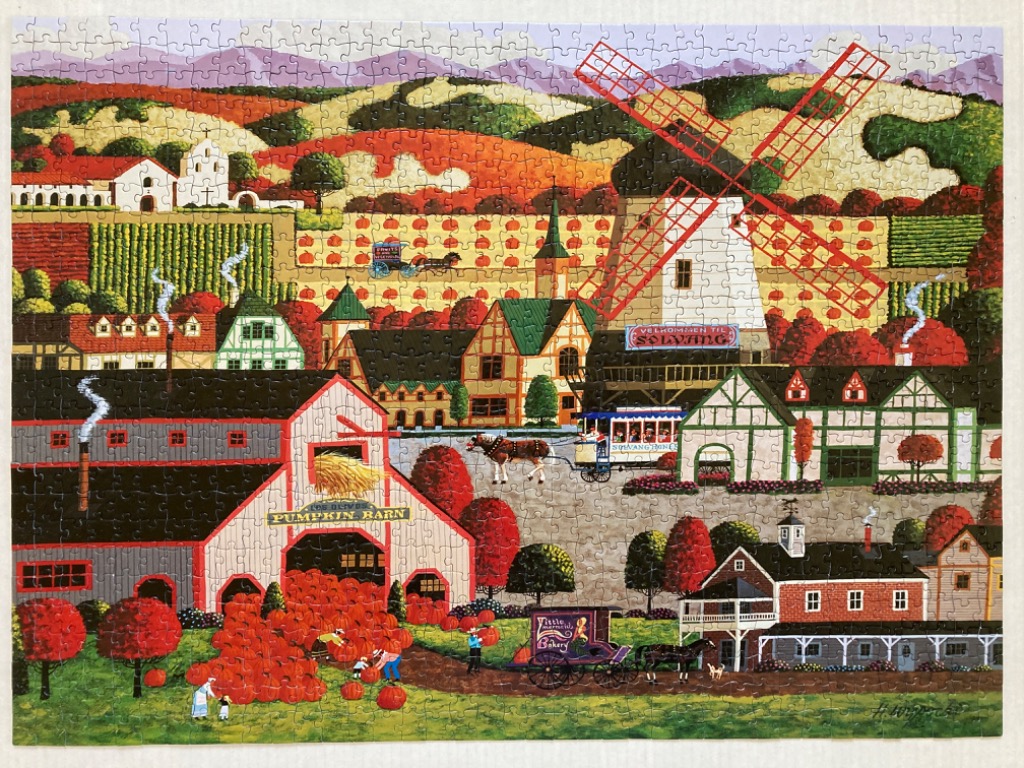
This vibrant folk art illustration captures a bountiful harvest season in a picturesque European-style town. In the foreground, a large, light-colored barn labeled "PUMPKIN BARN" is overflowing with heaps of bright orange pumpkins, while people and children gather the harvest nearby. A horse-drawn carriage from "Little Mermaid Bakery" travels along a dirt path, and another horse-drawn wagon moves past half-timbered buildings. The scene feels lively and industrious, characterized by a charming, stylized aesthetic.
Beyond the village center, the composition reveals a sprawling landscape. A prominent white windmill with red blades stands as a focal point, overlooking rolling hills that glow with warm, autumn colors of rust, gold, and deep green. Further back, a Spanish-style mission with white stucco walls and an arched facade nestles into the terraced fields. The background is capped by a soft, undulating range of purple mountains under a clear sky.
The color palette is saturated and rich, emphasizing the transition into fall. The deep oranges of the pumpkins contrast with the lush green foliage, white building facades, and the striking red of the windmill blades. Fine black outlines define the architectural details and landscape features, giving the entire image a clean, graphic quality that enhances the whimsical and cozy autumn mood.
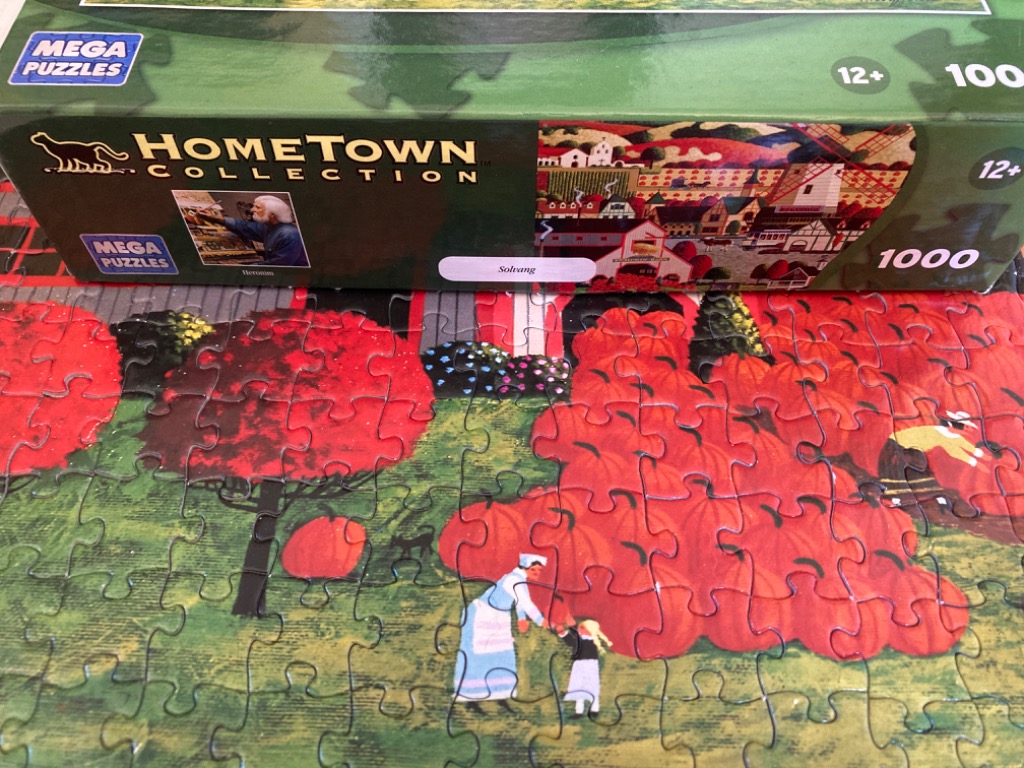
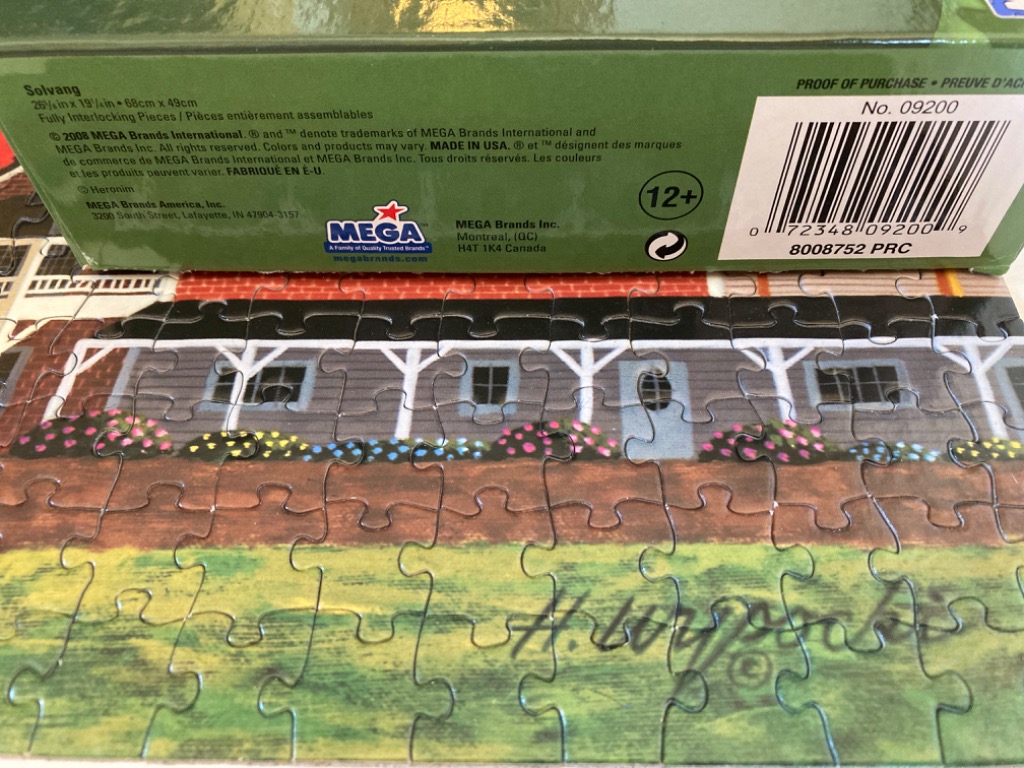
The image depicts the lower portion of a charming, painted house exterior, featuring a long, covered porch supported by white pillars. The house siding is painted in soft, cool tones of grey, punctuated by simple rectangular windows and a central entrance. Along the base of the porch, a flower bed is filled with vibrant clusters of pink, yellow, and blue blooms that add pops of colour against the muted architecture.
In the foreground, a grassy green lawn stretches across the lower third of the scene, rendered with visible, painterly brushstrokes. The composition is structured horizontally, with the lawn leading the eye up toward the house. A signature, likely reading "H. Lorporcki" or similar, is inscribed in dark script on the lawn near the bottom right corner.
The overall style of the image is that of a traditional painting, likely watercolor or gouache, characterized by soft textures and a peaceful, domestic mood. The lighting is diffused, suggesting a calm, overcast day that highlights the harmonious colors of the garden and the quaint structure of the house.