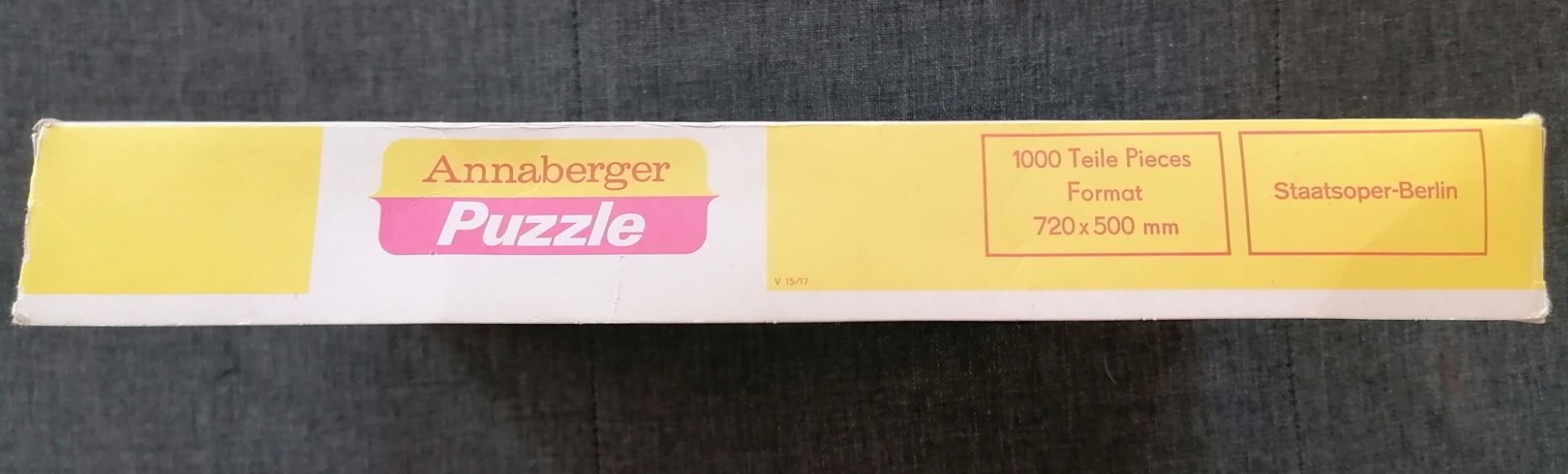
Staatsoper-Berlin
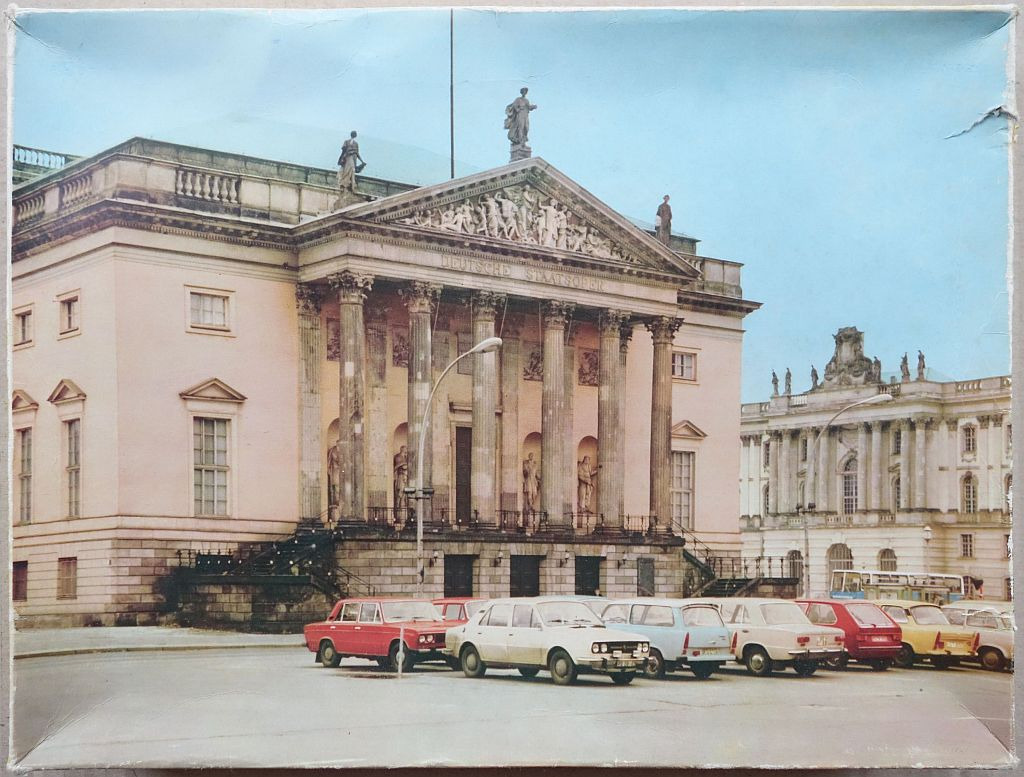
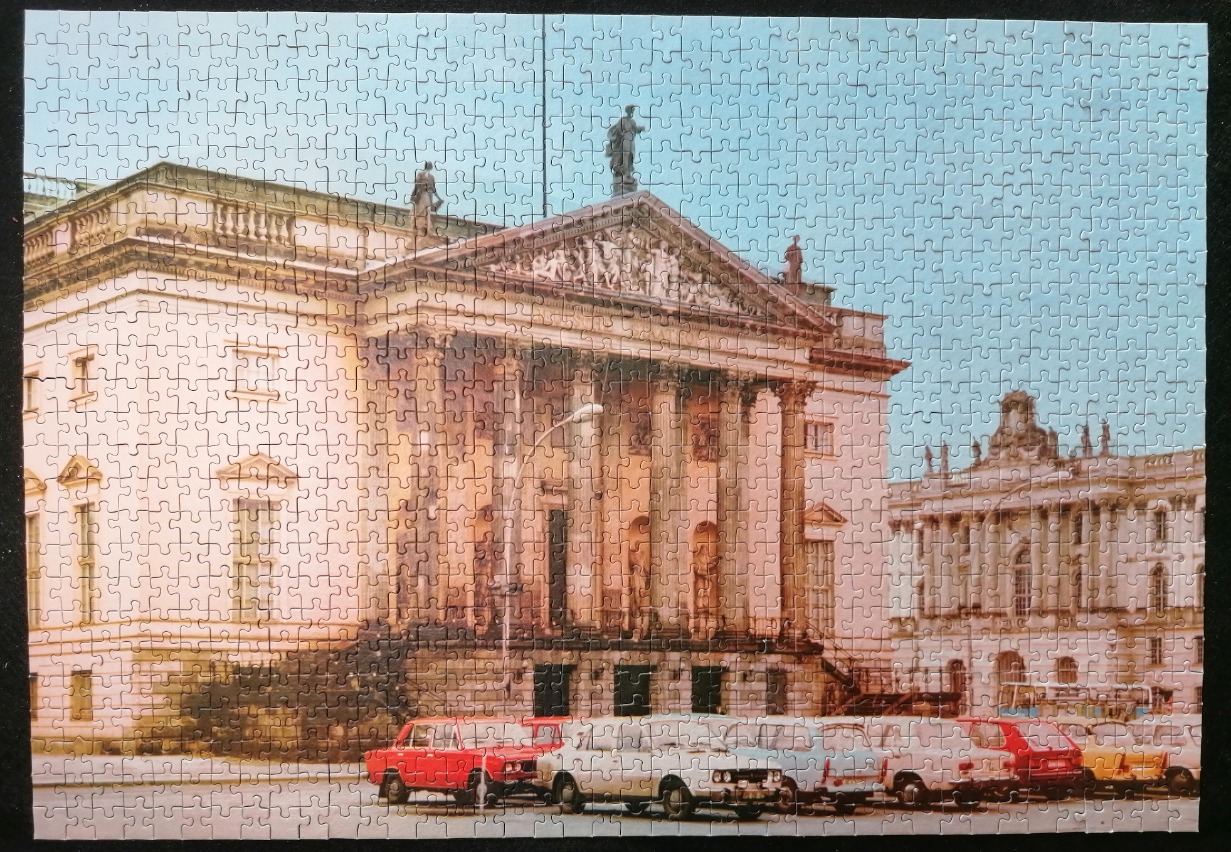
This scene captures the majestic Deutsche Staatsoper in Berlin, a grand neoclassical opera house characterized by its pale pink facade and towering Corinthian columns. A triangular pediment sits atop the portico, decorated with classical sculptures, and smaller statues are positioned along the roofline against a clear, light blue sky. The architecture reflects a historic, formal elegance, showing signs of age with weathered stone textures on the lower base.
In the foreground, a row of vintage cars from the mid-20th century is parked on an expansive, light grey paved plaza. The vehicles, including red, white, pale blue, and yellow sedans, line up horizontally across the lower third of the image, providing a sharp contrast to the monumental architecture behind them. A street lamp arches over the scene, leading the eye toward the entrance. To the right, another ornate building with classical detailing and a prominent central roof structure is visible in the distance.
The overall aesthetic is that of a vintage photograph or printed postcard with slightly desaturated colors. The lighting suggests an overcast or midday sky, creating soft, diffused shadows that emphasize the building's structural depth. The composition is balanced, grounding the grand scale of the opera house with the everyday, tangible presence of the parked vehicles, highlighting a moment of urban life in a historic setting.
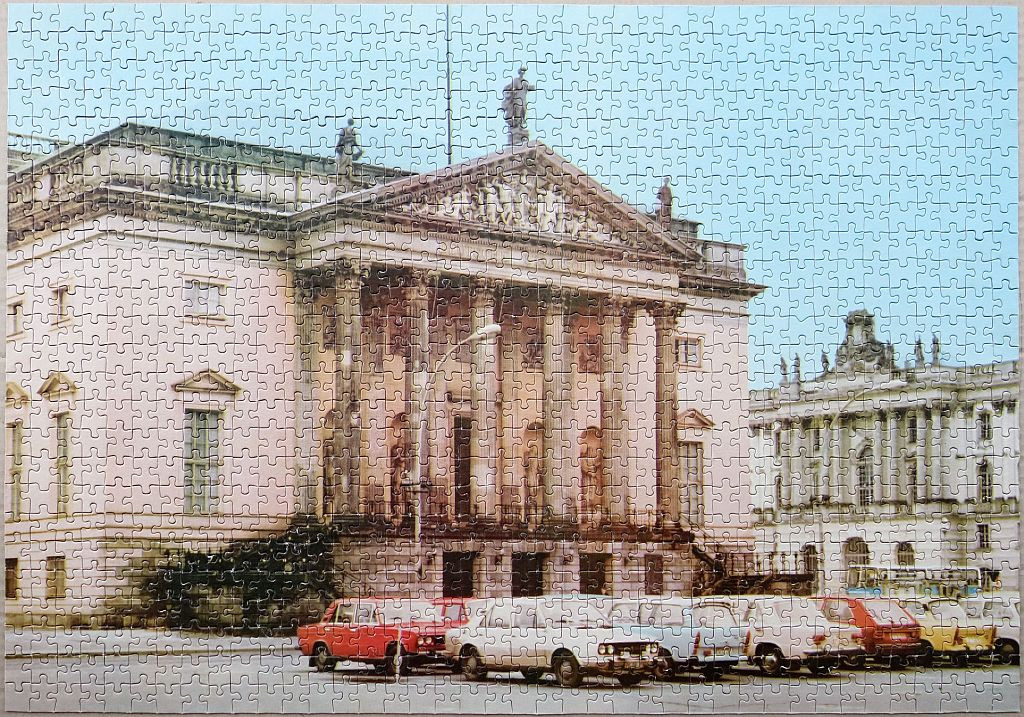
The image depicts a grand neo-classical building featuring a prominent portico supported by tall, dark columns and a triangular pediment decorated with intricate sculptural reliefs. Statues stand atop the roofline, adding to the architectural formality of the facade. The structure is constructed from light-toned stone that shows hints of weathering, casting a warm, slightly aged aesthetic against the bright, cloudless light blue sky.
In the foreground, a row of vintage automobiles is parked along the street. These vehicles, including boxy sedans and smaller compact cars, are painted in a variety of nostalgic hues such as red, white, pale blue, and yellow. To the right, a second, similarly ornate stone building is partially visible, creating a sense of urban depth and historical scale. The composition is balanced and grounded by the horizontal line of the parked cars, which provides a stark contrast to the verticality and classical proportions of the architecture behind them. The overall scene captures a quiet, sunlit moment in a city square, with a photographic style that emphasizes the texture of the masonry and the classic design of the vehicles.



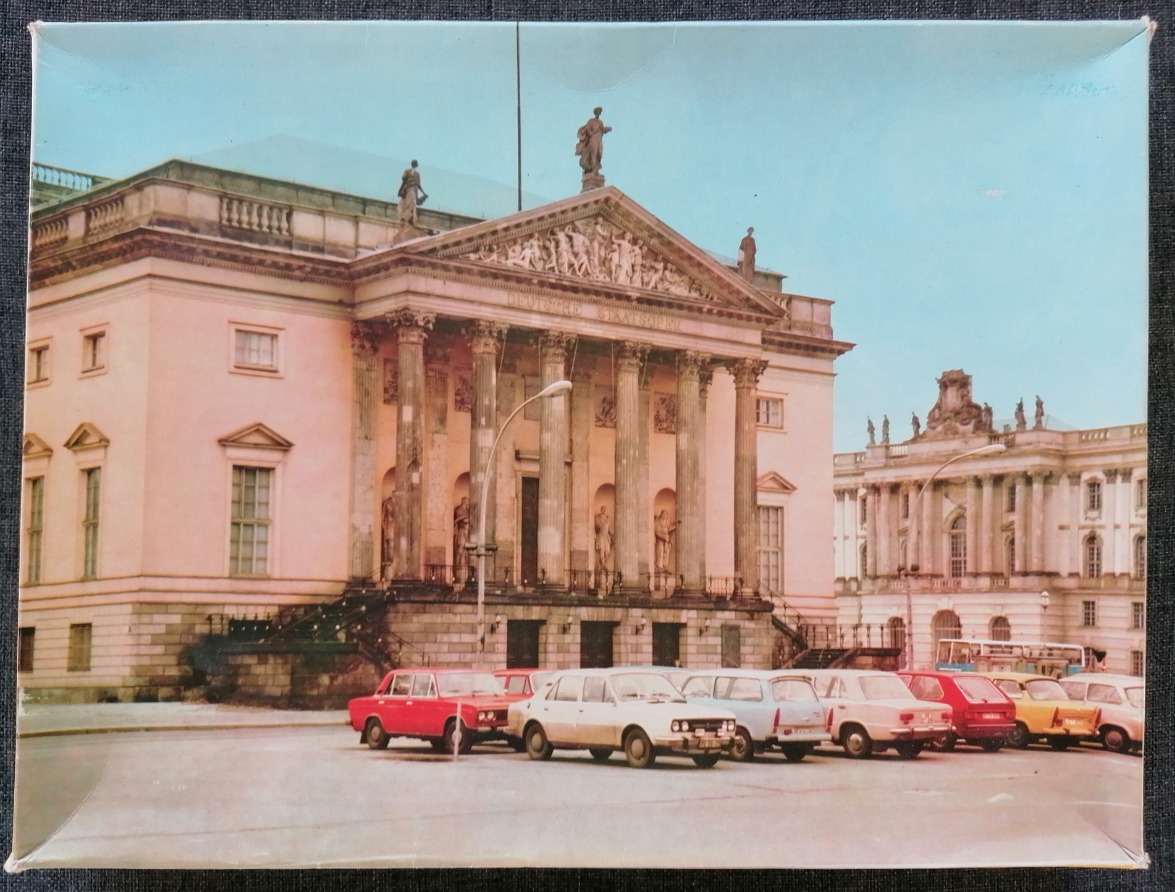
This vintage photograph depicts the grand Neoclassical facade of the Berlin State Opera, or Deutsche Staatsoper, characterized by its pale, salmon-pink exterior and towering columns. The building features an ornate pediment filled with classical sculpture, while statues stand atop the roofline, silhouetted against a clear, pale blue sky. The architecture represents a classic example of 18th-century design, with repetitive tall windows and a stone staircase leading up to the main entrance.
In the foreground, a row of period automobiles is parked along the street. These include boxy, Eastern-Bloc style cars in a variety of faded hues like red, white, pale blue, and yellow. The perspective is slightly angled, showing both the front and the side of the opera house. To the right, another similar historical building with classical detailing is partially visible, suggesting a dense urban square or boulevard setting.
The overall colour palette is soft and muted, typical of 1970s or 1980s film photography, with the warm peach tones of the building contrasting against the cool, unsaturated blue of the sky and the neutral grey of the asphalt street. The lighting is bright and even, suggesting a clear day, though the image possesses the slightly grainy texture and soft focus characteristic of archival prints.
This image captures a grand, classical-style European building with a heavy architectural focus on its triangular pediment and stately columns. The structure is rendered in pale, light-reflecting stone and is topped with several prominent statues positioned along its roofline. A second, similar building is visible to the right, suggesting a historic city square or cultural center. The architecture reflects a formal, symmetrical style typical of neoclassical or late baroque civic design, featuring detailed carvings in the pediment and recessed windows along its expansive facade.
In the foreground, a line of vintage automobiles is parked along the street. These vehicles, including red, white, and pale yellow models, date the photograph to a mid-20th-century aesthetic. Their presence creates a striking contrast between the modern, utilitarian transport of the era and the timeless, ornate weight of the stone architecture behind them. A thin, modern street lamp post stands in front of the primary building, intersecting the columns and adding a layer of contemporary urban utility.
The overall colour palette is soft and sun-bleached, with the warm, pale yellow and off-white tones of the buildings set against a clear, light blue sky. The lighting suggests a bright, sunny day, creating long, subtle shadows across the building's recessed entrance and the pavement. The scene is presented as a realistic, medium-format photograph that emphasizes the juxtaposition of historic grandeur and everyday urban life.
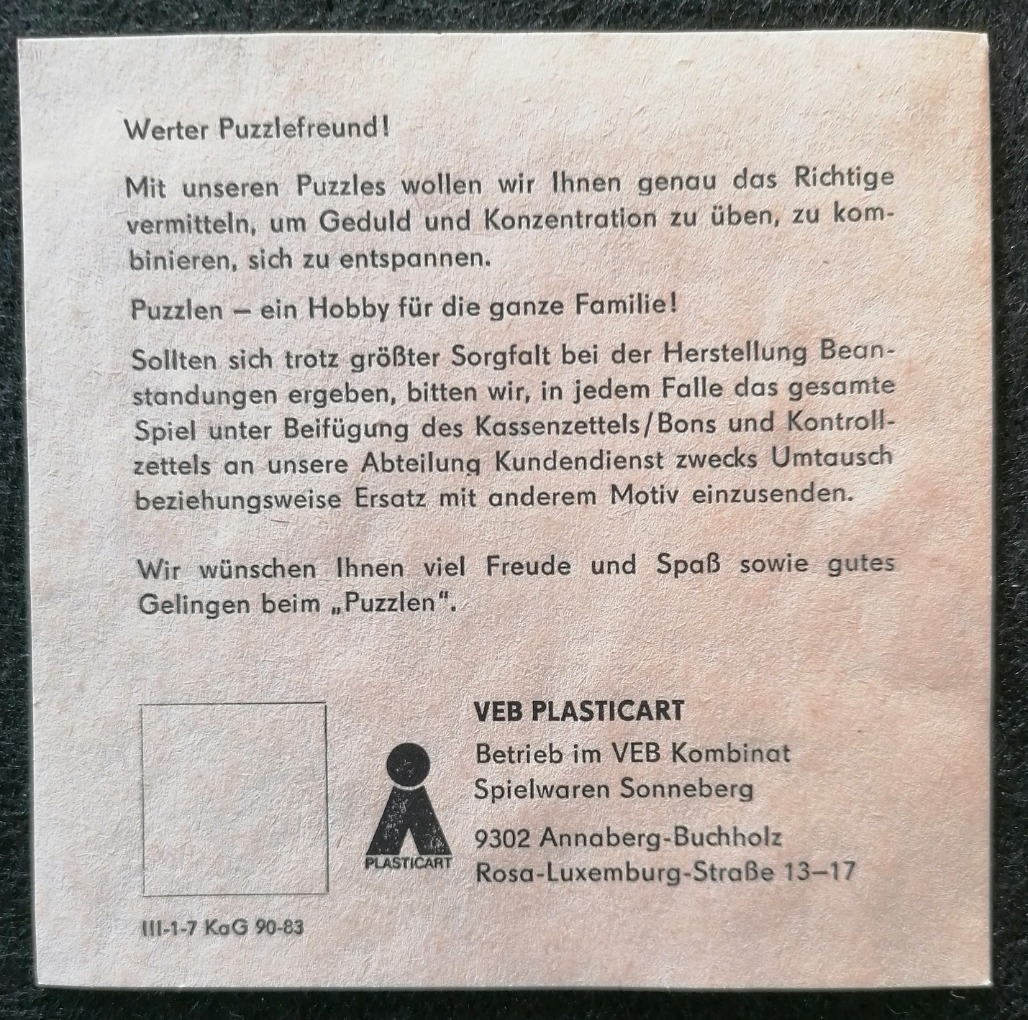
When I bought this second hand, first thing for me was to sit down with a cutting knife and finish the cut because production wasn't able to fully cut the last layer of the cardboard in many places. I wanted to assemble 1,000 pieces and not 900 plus some large patches. Obviously, the previous owners of this puzzle didn't care enough to do this. Funny side note is that the company obviously knew that they f****d up a bit because there is a message in the box giving you instructions on how to return / replace the product, despite the great care(!) that went into production. Never seen that anywhere else.
But once I started puzzling I realized that the cut is actually quite well done for the time. The cardboard is thick enough, the piece variety is top and the pieces fit well into each other, so you usually know exactly if two pieces fit together or not. The pieces are not fully interlocking, though, which was standard for a 1980s G.D.R. puzzle and means that the assembled product is quite fragile. But the print is good for the time, and I like the motif.
I forced myself to start with the sky area because I knew that this would be real work and no fun. The sky part is quite large and has next-to-no gradient, so you sit there for painful hours doing try and error. On the other hand, the building and cars are real fun to assemble with nice colors, many lines to follow, and constant admiration for the architecture.
So overall, I cannot recommend this puzzle because there was too much pain involved for me despite the good things.
by MZ per X 2026-01-25