Ship in Distress
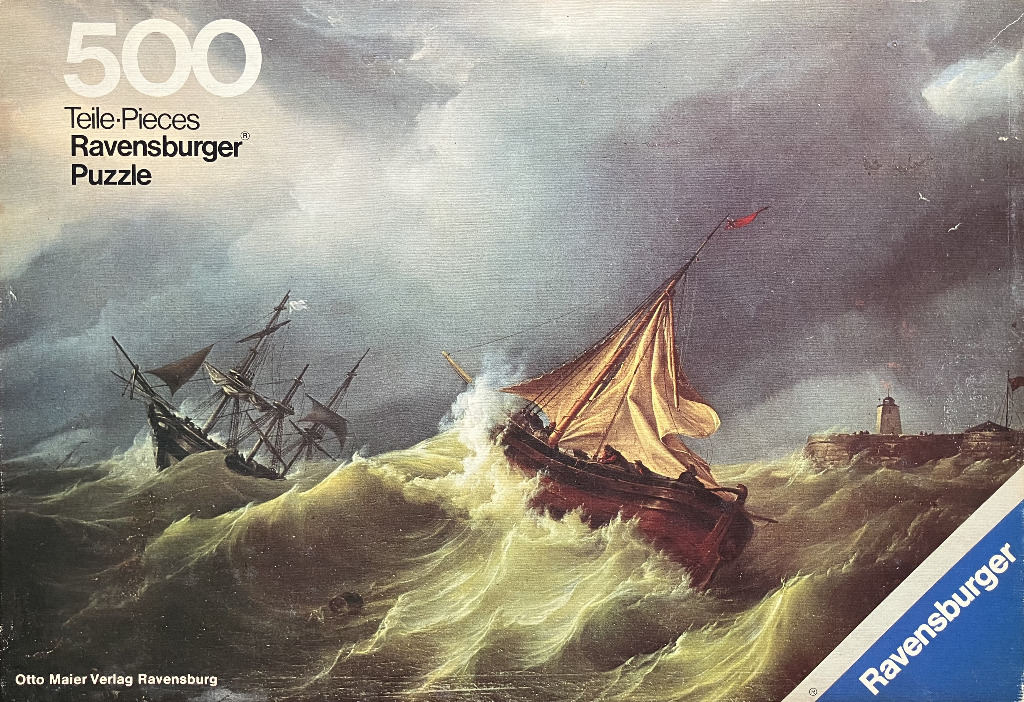
This classical oil painting depicts a dramatic maritime scene featuring two wooden sailing ships navigating a turbulent, storm-tossed sea. In the foreground, a vessel with a prominent tan sail leans heavily into the rolling waves, its hull painted a deep, rich red. Further back to the left, a larger, darker-toned ship is caught in the swell, its masts and rigging silhouetted against the overcast horizon.
To the right of the scene, a sturdy stone lighthouse stands on a rocky pier or breakwater, grounding the composition against the vast, restless ocean. The sky is filled with thick, brooding clouds, suggesting an impending tempest. Small white birds circle in the distant gloom, adding a sense of scale and life to the otherwise oppressive atmosphere.
The colour palette is dominated by muted, earthy tones—deep indigos, slate greys, olive greens, and ochres—that reflect the mood of a stormy day at sea. The light is diffuse and moody, catching the frothy white crests of the breaking waves and highlighting the canvas of the closer sail. The brushwork has a textured, painterly quality typical of 19th-century maritime art, emphasizing the raw power and motion of the churning water.

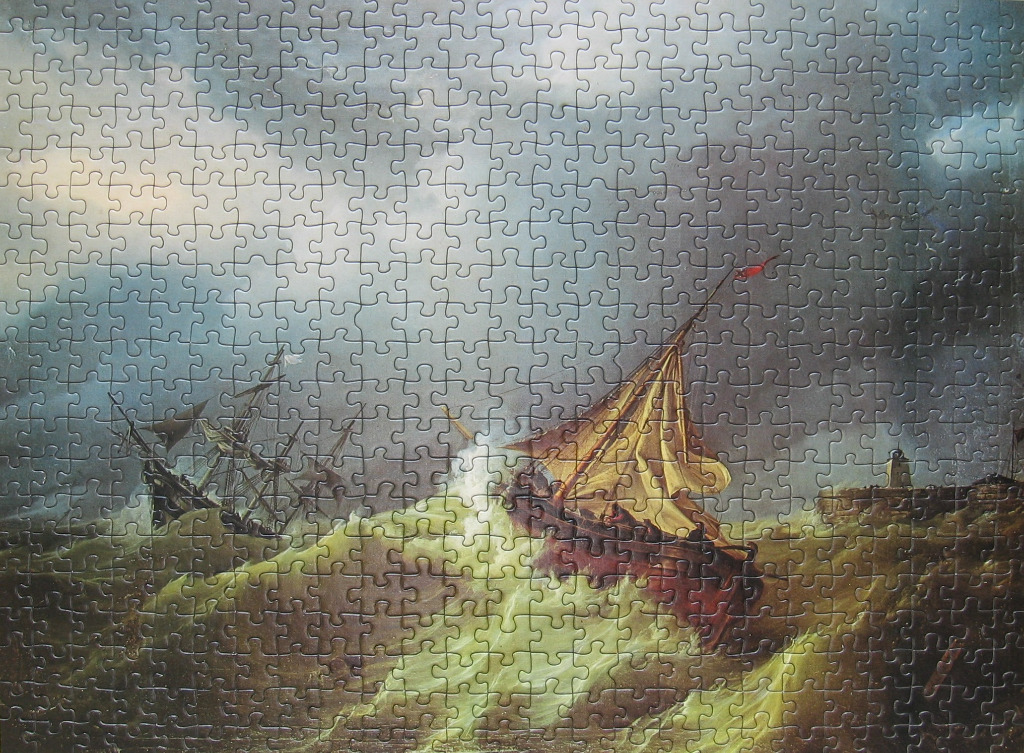
This atmospheric oil painting depicts two sailing vessels caught in a tumultuous, storm-lashed sea. In the foreground, a ship with a large, billowing golden-yellow sail heels sharply as it navigates through cresting, foam-tipped waves. Its dark hull is partially obscured by the turbulent water. Further in the distance to the left, a second, more distressed ship with tattered rigging appears to struggle against the heavy swells, leaning precariously under the pressure of the gale.
To the right, a rocky coastline features a small stone structure, possibly a lighthouse or a fortification, perched above the crashing surf. The scene is dominated by a dramatic, moody sky filled with heavy, dark grey storm clouds that suggest an impending tempest. The overall composition emphasizes the scale and violence of nature, with the small human crafts dwarfed by the roiling, greenish-grey ocean.
The colour palette is primarily composed of muted earthy tones, including deep browns, slate greys, and olive greens, punctuated by the vibrant, warm gold of the primary sail and a tiny, stark red flag at the masthead. The light is diffuse and dramatic, casting an ominous shadow over the water while catching the white spray of the waves and the luminous quality of the golden sail. The painterly style creates a sense of fluid movement and high-stakes drama, characteristic of traditional maritime art.
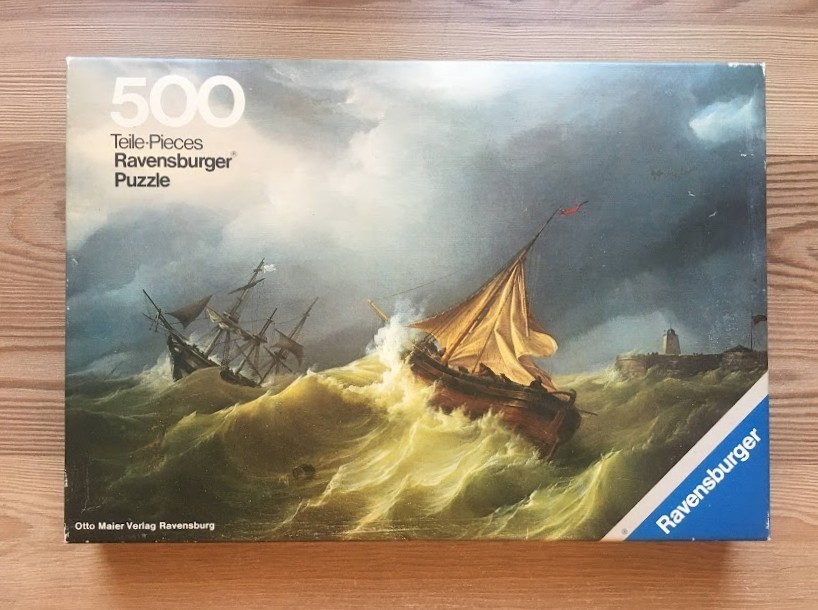
This classical oil painting depicts a dramatic maritime scene featuring a sailboat battling choppy, turbulent waters. In the foreground, a vessel with a prominent yellow-brown sail leans heavily into a large, crested wave. To the left, a larger sailing ship is visible further in the distance, seemingly caught in the same stormy conditions, with its masts and rigging silhouetted against the tumultuous sky.
The composition is dominated by a sense of movement and instability, with the waves captured in shades of olive green, ochre, and creamy white foam. The sky is filled with heavy, dark grey storm clouds that suggest an impending tempest. On the far right, a faint, fortress-like structure or lighthouse sits on the horizon, adding a touch of isolation to the vast, dangerous expanse of the sea.
The artistic style is representative of 19th-century maritime realism, utilizing thick, expressive brushstrokes to convey the power of the water and the wind. The lighting is moody and atmospheric, with a pale, indirect glow illuminating the crests of the waves and highlighting the canvas of the central sailboat. The overall colour palette is muted and earthy, relying on deep greens, browns, and stormy greys to evoke a sense of high drama and nautical peril.