The Fighting 'Temeraire' Tugged to Her Last Berth to Be Broken Up
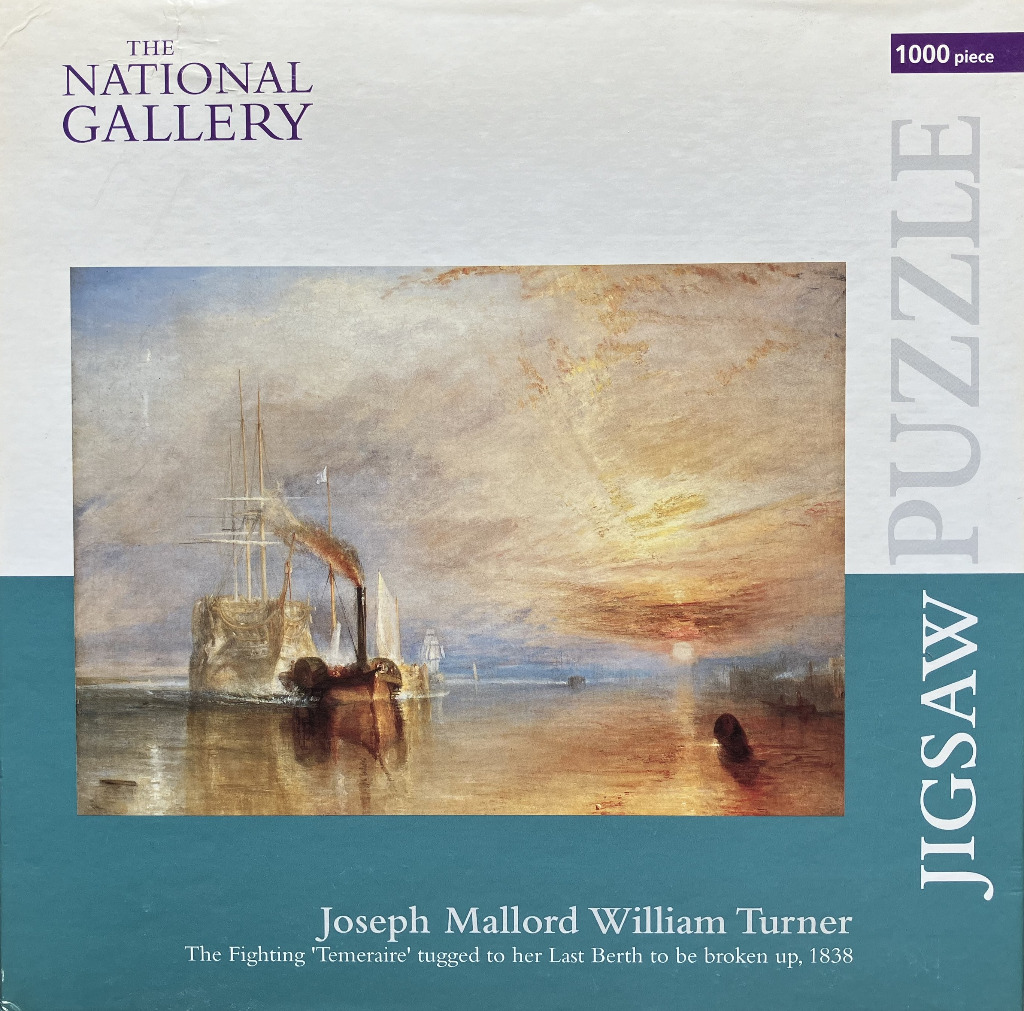
This oil painting depicts the final voyage of a majestic, ghostly white ship of the line, the Fighting Temeraire, as it is towed toward its final berth for dismantling. The ship, with its towering, partially rigged masts, is being pulled by a small, dark, and powerful steam tugboat. A thick plume of black and ochre smoke billows from the tugboat's funnel, trailing horizontally across the mid-ground, creating a striking contrast between the old age of sail and the new industrial era of steam.
Set on a calm, reflective river, the scene is dominated by a dramatic sunset. The sky is filled with sweeping, painterly clouds in hues of pale pink, soft orange, and muted violet, which reflect shimmering light onto the surface of the water. The horizon line is low, emphasizing the vastness of the sky and the atmospheric perspective. The composition is balanced between the structural weight of the vessels on the left and the luminous, glowing intensity of the setting sun on the right.
Created by J.M.W. Turner, the artwork is characterized by his signature Romantic style, featuring loose brushwork and a focus on light and atmosphere. The overall mood is one of nostalgic melancholy and transition. The palette is warm, relying heavily on golds, ambers, and deep browns, punctuated by the stark white of the warship and the deep shadow cast by the tugboat, capturing a poignant moment of maritime history.
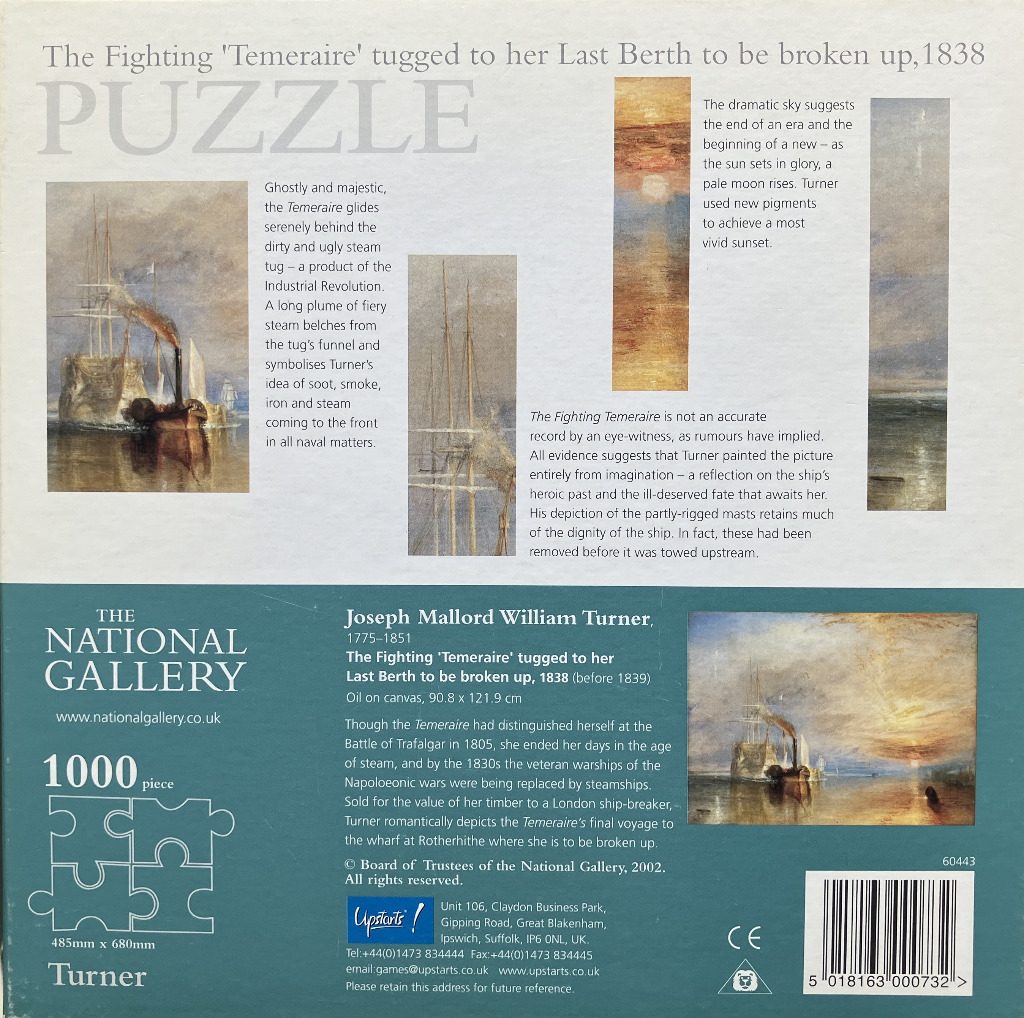
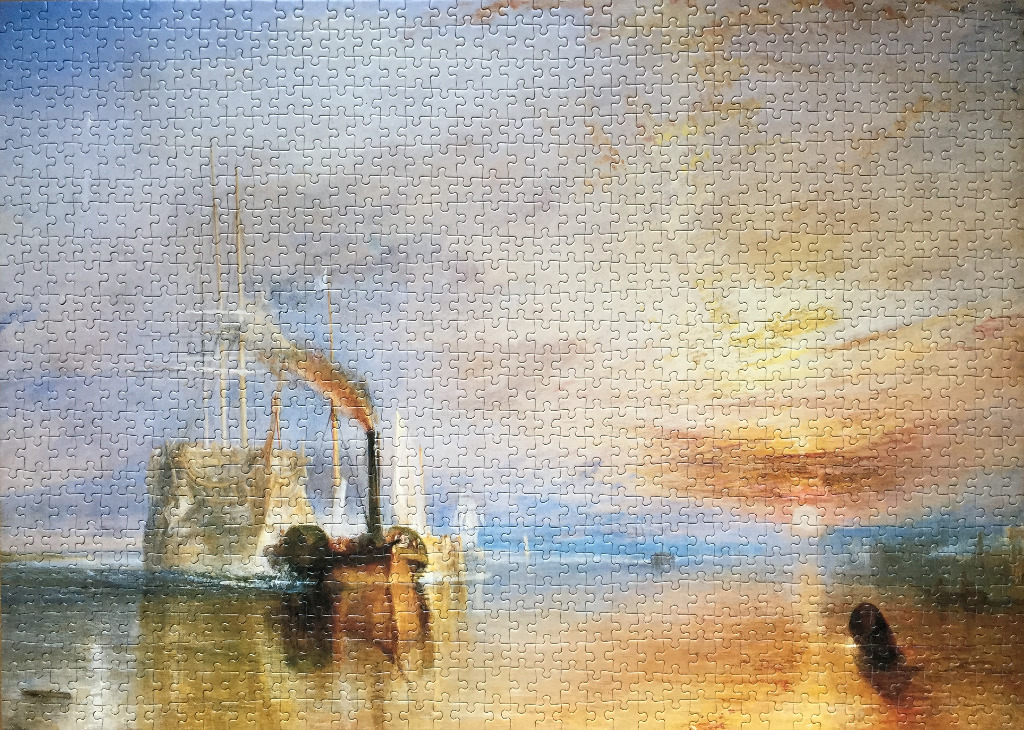
This atmospheric oil painting depicts the final journey of an old, weathered warship being towed by a smaller steam tugboat across a tranquil body of water. The warship, looming in the left mid-ground, appears ghostly and spectral with its decaying hull and tall, skeletal masts reaching toward the sky. In front of it, the smaller, dark-hulled tugboat belches a thick plume of smoke, its presence stark against the glowing horizon.
The composition is dominated by a dramatic sunset, with the sun casting a golden, ethereal path across the water. The light is diffused, blending soft oranges, hazy yellows, and gentle blues that suggest the transition between day and evening. The sky is filled with swirling, impressionistic clouds that mirror the colours of the horizon, creating a sense of serene yet melancholic beauty.
The overall aesthetic is that of a nineteenth-century maritime masterpiece, characterized by loose brushwork and a focus on light and atmosphere rather than sharp detail. The horizon line is low, emphasizing the vastness of the sky and the reflective quality of the water below. A few distant, indistinct silhouettes of other vessels or landmasses are visible on the far right, adding depth to the scene while keeping the focus on the rhythmic, solemn progress of the two central ships.