Carnation
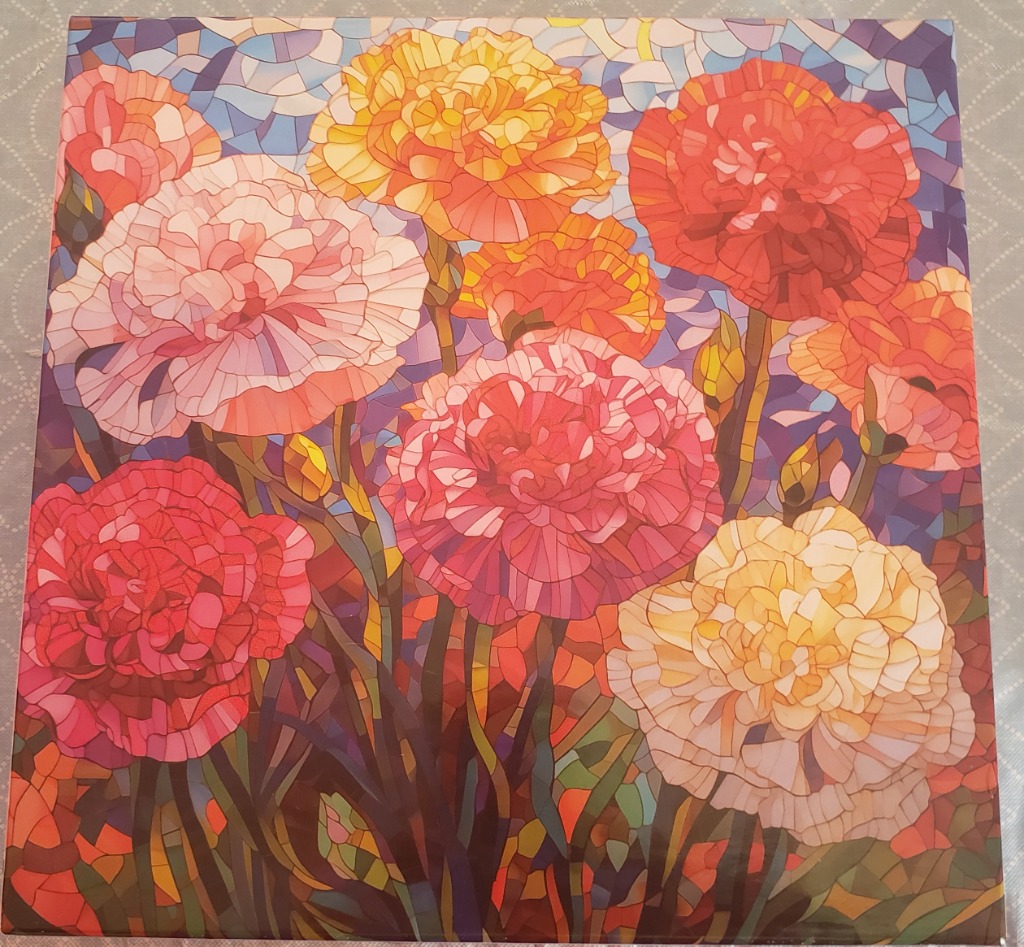
This illustration features a vibrant cluster of carnations rendered in a distinct mosaic or stained-glass style. The composition is densely packed, with multiple full-bloom flowers overlapping in the foreground and center, their ruffled petals intricately segmented into small geometric shapes. Tall, thin stems rise from the bottom, creating a vertical orientation that draws the eye upward through the blossoms.
The color palette is warm and saturated, dominated by shades of pink, coral, orange, sunny yellow, and cream. The background is a cooler, contrasting field of soft blues and purples, which mimics the effect of light shining through faceted glass panes. This contrast helps the warm-toned flowers pop forward against the cool backdrop.
The artwork uses thick, dark outlines between the segments to emphasize the mosaic aesthetic, giving the image a structured, graphic appearance. Light and shadow are suggested not through gradients, but through the strategic placement of varying shades within each flower head, creating a sense of volume and depth. The overall mood is cheerful and decorative, emphasizing the organic beauty of the flowers through a highly stylized, abstract lens.
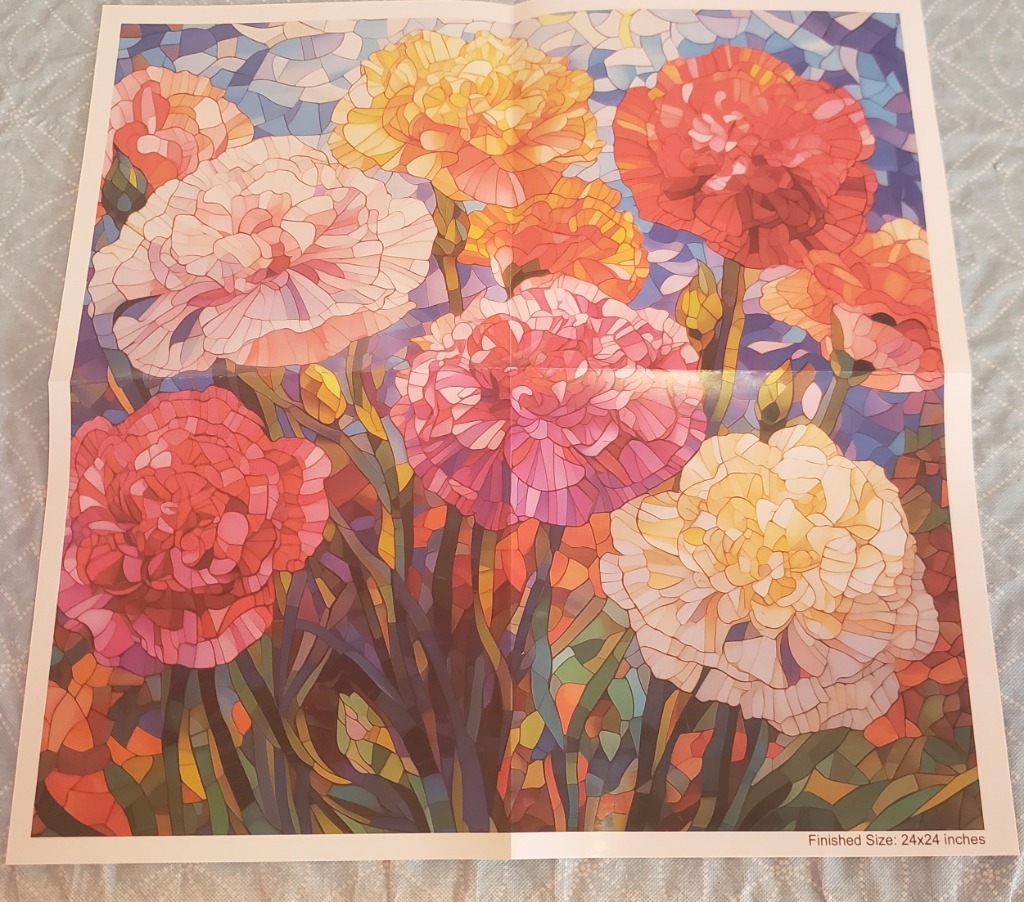
This illustration depicts a vibrant collection of carnations rendered in a stained glass aesthetic. Multiple large, ruffled blooms dominate the composition, layered in varying depths to create a sense of fullness. The petals are segmented by dark outlines, giving each flower a complex, multifaceted appearance. The flowers are colored in rich, warm hues including shades of deep coral, pale pink, vibrant yellow, and sunset orange.
The background and the areas between the stems are filled with a mosaic of irregular, puzzle-like shapes. These pieces feature a cool, contrasting palette of blues, violets, and deep greens, which makes the warm tones of the flowers pop. Thin, vertical stems stretch downward, disappearing into the chaotic, colorful mosaic of the lower foreground.
The artwork uses light and shadow to imply depth within each blossom. Brighter tones are concentrated toward the centers or edges of the petals, while deeper, saturated shades define the folds and recesses of the ruffled blooms. The overall effect is reminiscent of a traditional leaded glass window, with a strong focus on texture, geometric fragmentation, and color harmony.