At the Market
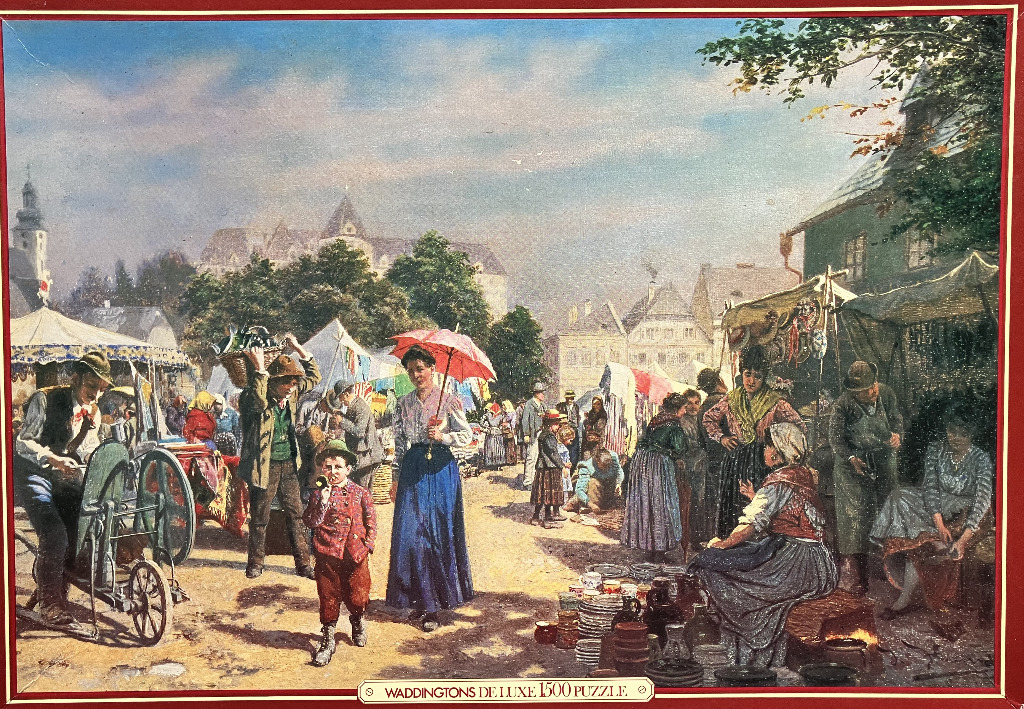
This detailed 19th-century style painting depicts a vibrant, historic market scene set in a European town square. In the foreground, a variety of people are engaged in daily activities; a man works a portable sharpening wheel on the left, while a young boy walks alongside a woman carrying a bright red parasol. To the right, various shoppers examine pottery and wares laid out on the ground, creating a sense of busy commerce and community life.
The background reveals a town square dotted with canvas stalls and tents, leading the eye toward traditional stone buildings, gabled roofs, and a distant church tower. Lush green trees frame the top right of the composition, casting soft, dappled shadows across the dirt-covered ground. The layout is expansive and deep, successfully capturing the scale of an outdoor market.
The colour palette is composed of natural, earthy tones—ochres, browns, and muted greens—punctuated by the vivid red of the woman's parasol and the colourful fabrics of the market stalls. The lighting suggests a warm, hazy afternoon, with soft, diffused sunshine highlighting the figures and the texture of the stone buildings. The artwork is executed in a realistic, impressionistic oil painting style, focusing on rich textures in the clothing and the cluttered, authentic details of a traditional open-air market.


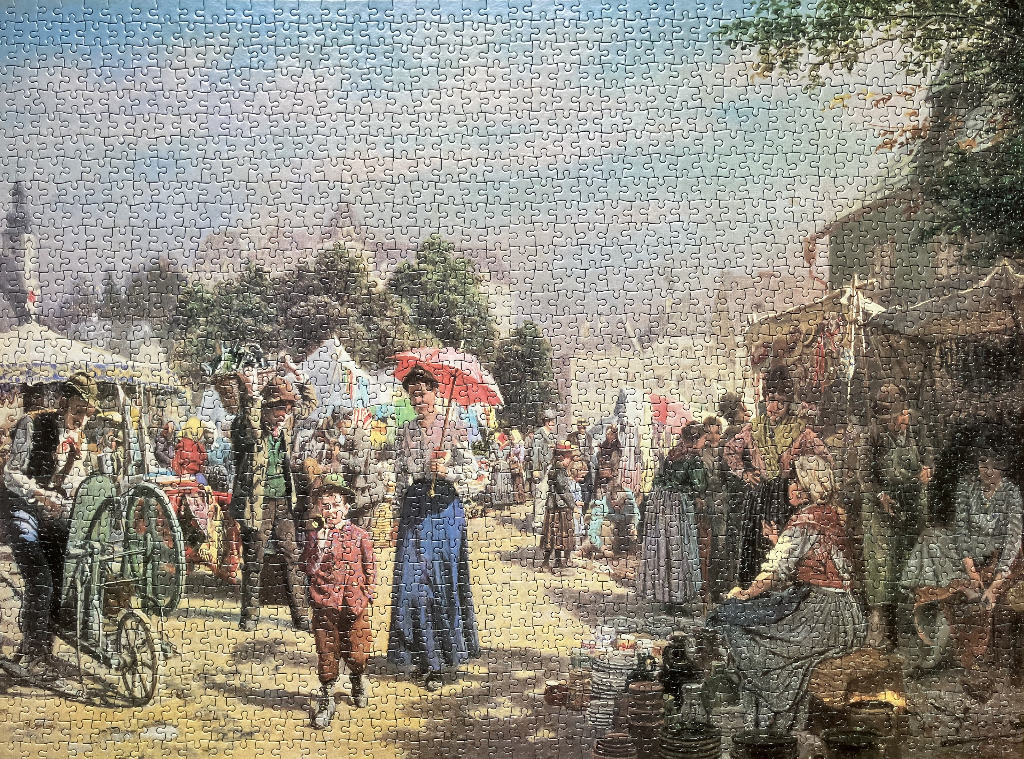
This detailed historical painting depicts a lively outdoor market scene set in a 19th-century village. In the foreground, a woman in a long blue skirt carries a vibrant red parasol while walking alongside a young boy. To their left, a man operates a portable grinding machine, while to the right, other figures are gathered around various stalls and piles of ceramic pots and wares. The scene is filled with a sense of daily life, featuring numerous figures in period attire engaged in trading or socializing.
The composition is anchored by the figures in the foreground, with the market stalls and booths receding into the background towards rows of village buildings and soft, leafy trees. The atmosphere is hazy and warm, suggesting a sunny day with a gentle, filtered light that bathes the dusty market square. The background architecture is muted, allowing the activity of the townspeople to remain the clear focus of the scene.
The style is reminiscent of a classic oil painting, utilizing a palette of earth tones including browns, ochres, and dusty greens, punctuated by the striking red of the parasol. The brushwork captures the texture of period clothing, the rough surface of the dirt road, and the intricate goods displayed by the vendors. The overall mood is nostalgic and observant, providing a window into a bygone era of rural community gathering.