Pepsi
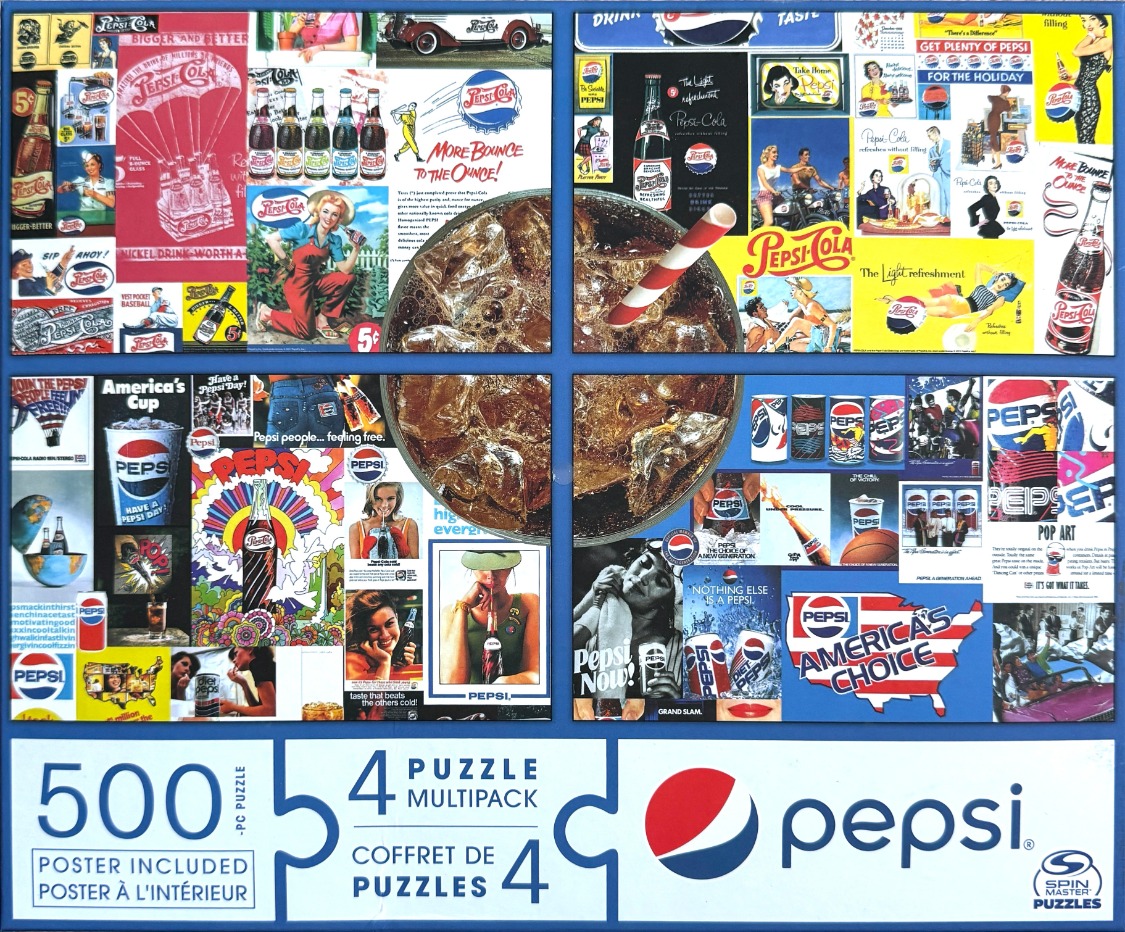
This image is a large collage made up of four distinct rectangular sections, each packed with various vintage and modern soda-related advertisements and graphic elements. The overall visual style is reminiscent of a retro scrapbook or marketing montage, featuring a mix of mid-century illustrative advertisements, classic photography, and colorful pop-art motifs. The collage is framed by a solid dark blue border and anchored by a clean, minimalist lower section featuring the iconic red, white, and blue logo and brand typography.
Each of the four main panels is dense with imagery, including depictions of glass bottles filled with dark soda, close-up shots of drinks with ice cubes and straws, and lifestyle scenes showing people enjoying beverages at the beach or in social settings. The color palette is dominated by the brand's signature bold red, white, and blue, interspersed with warm, nostalgic tones from the vintage advertisements, such as cream, muted yellows, and deep brown soda hues. There is a high level of visual variety, ranging from stylized pin-up illustrations to crisp, modern photographic compositions.
Throughout the collage, various slogans and logos appear in diverse typefaces, contributing to the busy, textured layout. The composition is deliberately fragmented, creating a mosaic effect that leads the eye across dozens of smaller individual images. The transitions between the panels are marked by white negative space, emphasizing the distinct groupings while maintaining a cohesive thematic focus on the historical evolution of the beverage's visual branding.
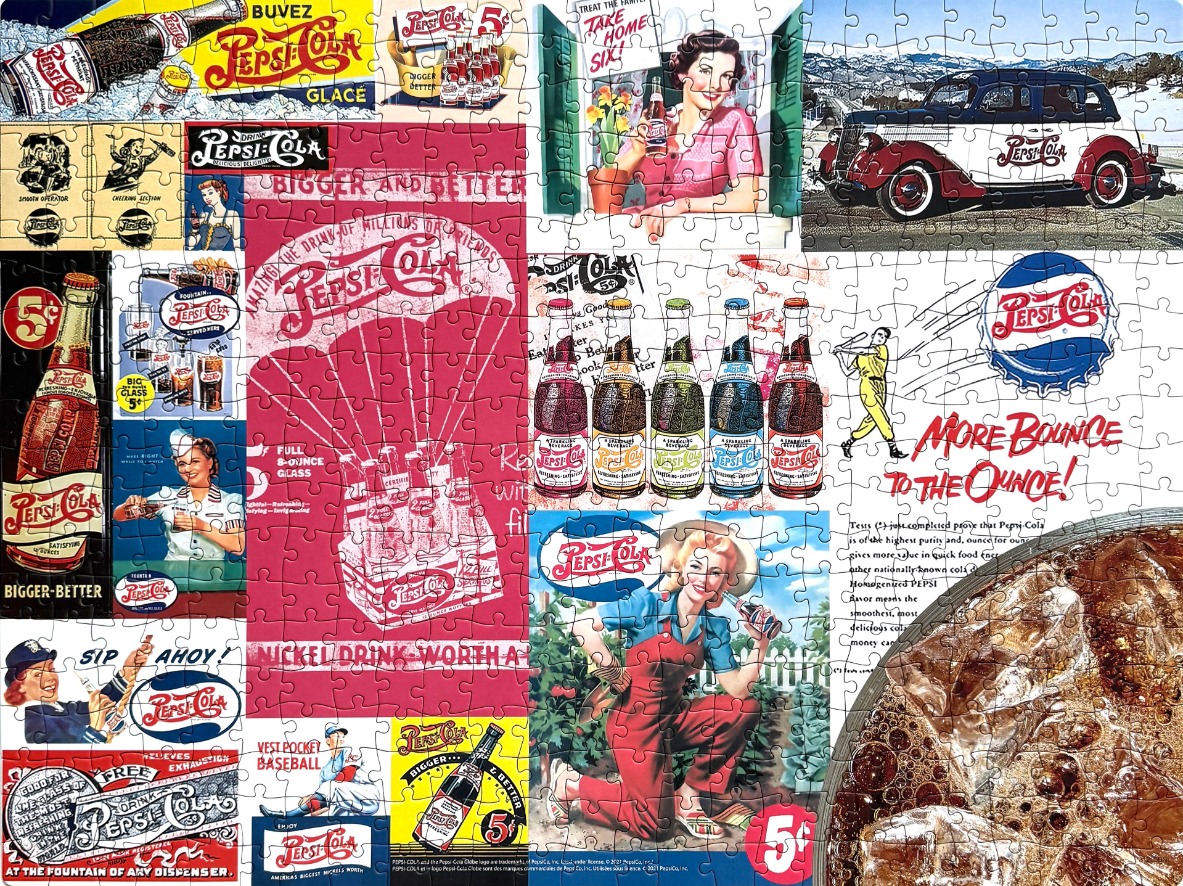
This collage features a collection of vintage advertisements centered on Pepsi-Cola, arranged in a vibrant mosaic of mid-20th-century graphic design. The main subjects include iconic glass bottles, women dressed in 1940s and 50s attire, and classic automobiles, all framed by nostalgic branding and typography. A prominent section shows a woman in red overalls, while other panels depict a woman by a window, a baseball player, and a classic car parked in a snowy landscape.
The layout is a dense arrangement of rectangular, overlapping, and standalone graphics that capture the history of the soft drink. Key visual elements include a large red panel displaying a bottle crate, a close-up of a glass filled with a dark carbonated beverage and ice, and various smaller vignettes showcasing the evolution of the brand's logo and bottle design. The composition is dynamic, using a mix of horizontal and vertical panels to create a busy, energetic aesthetic that draws the eye across the various marketing eras.
The colour palette is heavily dominated by red, white, and deep blues, reflecting the brand's traditional identity, with warm golden and earthy tones appearing in the vintage illustrations. The style is distinctly illustrative, drawing heavily from mid-century print advertising, sign painting, and poster art. The lighting across the various scenes varies from soft, warm indoor vignettes to high-contrast, bold graphic poster designs, maintaining a cohesive, retro, and optimistic mood throughout the entire display.
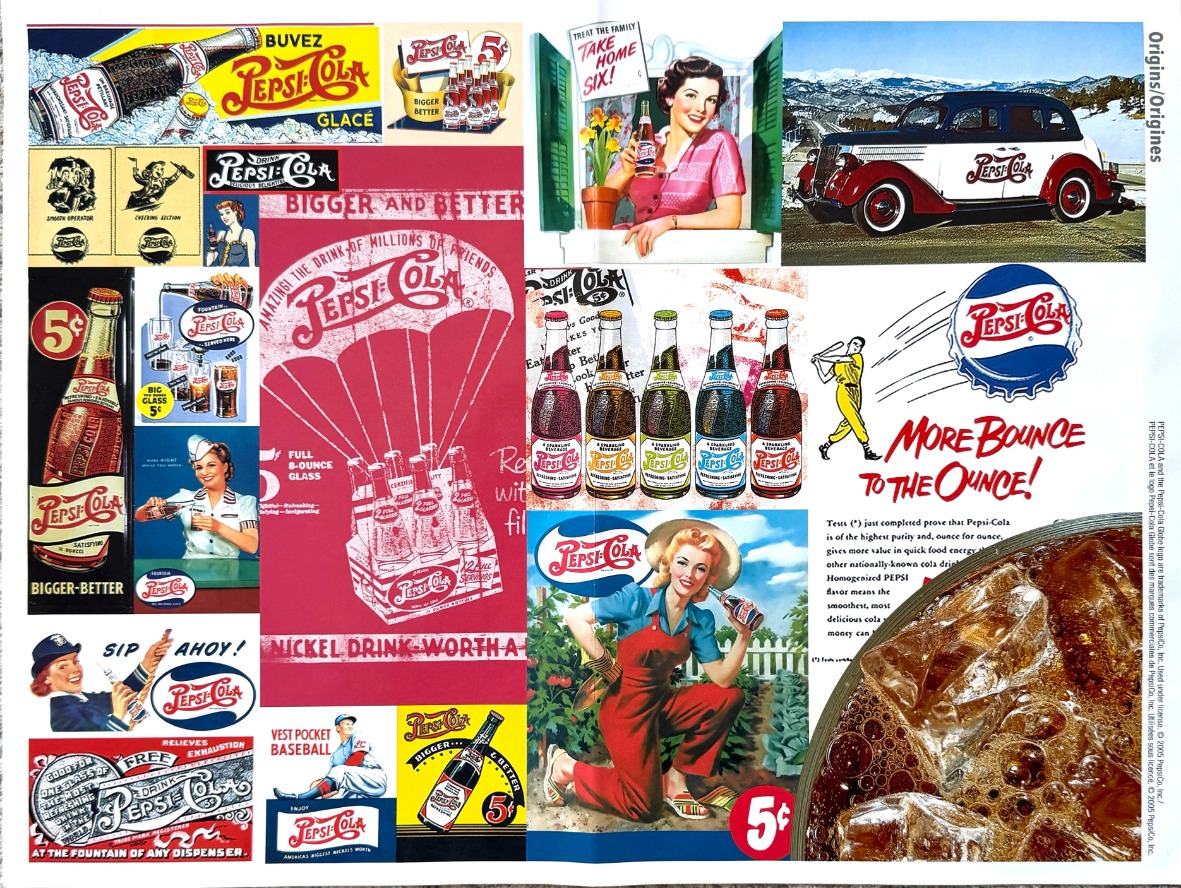
This collage is a vibrant collection of vintage advertising imagery centered on a classic cola brand. The composition is a busy, multi-layered assembly of distinct advertisements, illustrations, and photographic snippets that evoke mid-20th-century American nostalgia. Notable elements include a woman leaning out of a window with a bottle, a classic two-tone red and white car, a baseball player, and various colorful depictions of glass bottles filled with carbonated beverages. The layout is dense, utilizing overlapping frames and varied graphic styles to create an energetic, promotional atmosphere.
The color palette is dominated by bold reds, deep blues, and crisp whites, consistently mirroring the brand's iconic identity. The imagery oscillates between realistic photography, such as the ice-filled close-up of a drink in the lower right corner, and stylized, hand-drawn illustrations that characterize many of the smaller panels. Light and shadow are used dramatically in the photographs to emphasize the condensation on glass or the sheen on the car, while the illustrations favor flat, high-contrast colors and optimistic character expressions, lending the entire arrangement a cheerful and spirited mood.
Secondary details include scattered text snippets such as "Bigger and Better" and "More Bounce to the Ounce," which anchor the various advertisements. The arrangement includes elements like a parachute descending with bottles, nautical themes with a sailor girl, and agricultural scenes with a woman in overalls, showcasing the diverse advertising campaigns of a bygone era. These pieces are seamlessly integrated through varied scales, creating a rhythmic visual history of the product's marketing evolution.

This image presents a vibrant collage of vintage Pepsi-Cola advertisements, capturing the aesthetic of mid-century marketing. The composition is a busy, multi-paneled display showcasing classic illustrations of people enjoying the soda alongside iconic branding. The upper left features a large bottle cap logo against a deep blue background, while the remaining areas are segmented into various smaller posters, calendar pages, and lifestyle scenes depicting men and women in 1950s attire.
Technically, the image is a mosaic of different visual styles ranging from bold graphic typography to detailed illustrative realism. One prominent panel in the lower left shows a close-up of a carbonated soda in a glass with a candy straw, providing a tactile, dark-toned contrast to the surrounding bright yellow, white, and blue panels. On the far right, a large illustration of a woman in a black dress holding a bottle draws the eye, balanced by a similarly sized bottle illustration in the bottom right corner.
The color palette is dominated by high-contrast primary colors: bright yellows for the backgrounds of the advertising posters, deep blues for the branding, and bold reds used in the iconic script logos. The overall mood is nostalgic and energetic, reflecting the idealized domestic and leisure lifestyles of the post-war era. The medium consists of reproduced vintage print advertisements, each maintaining the typography and illustrative techniques typical of mid-20th-century commercial art.
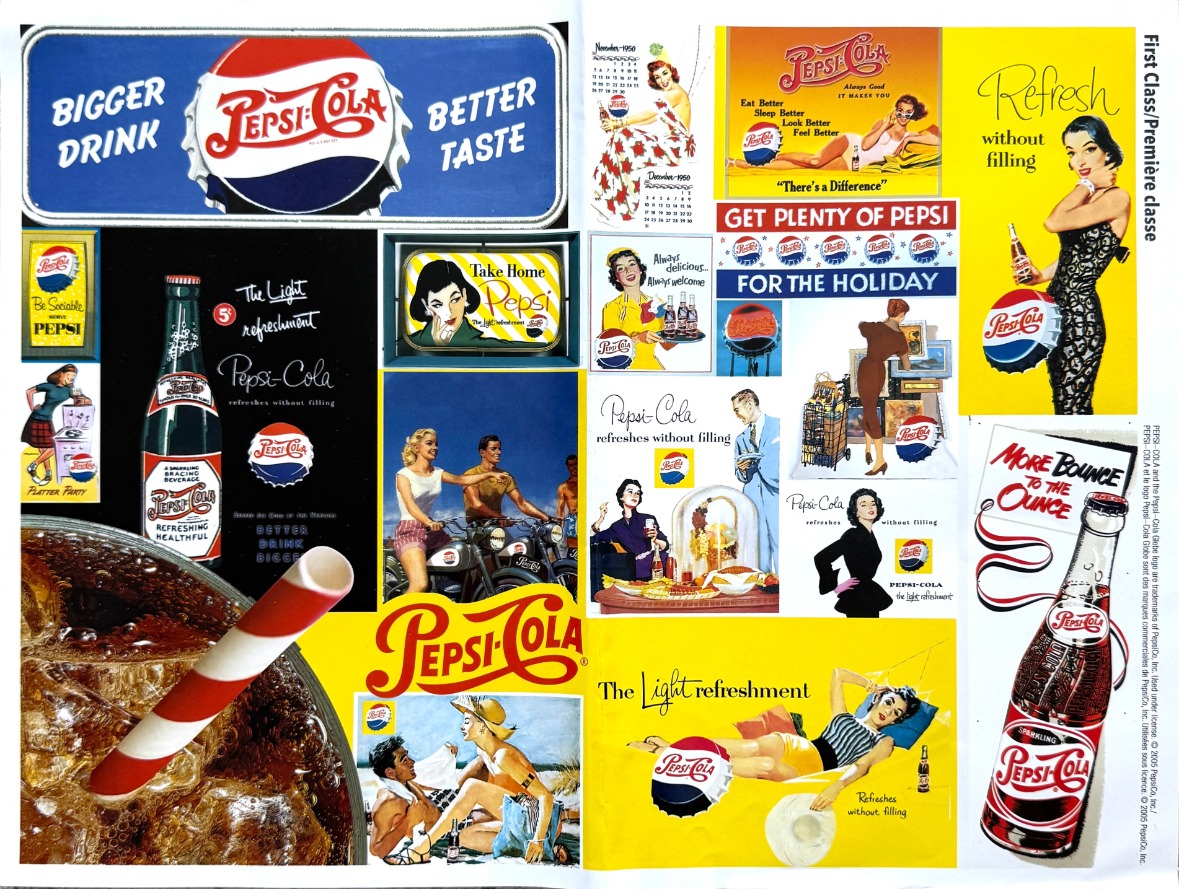
This collage showcases a collection of mid-century advertisements, each featuring the same classic soda brand. The layout is dense and vibrant, dominated by bold yellows, deep blues, and crisp whites. In the top-left, a large graphic features the brand's iconic circular cap logo, flanked by the words "Bigger Drink" and "Better Taste." The rest of the collage is filled with smaller, framed vignettes, including calendar pages from 1950, illustrations of women in elegant evening wear, and scenes of people enjoying the beverage on motorcycles or at the beach.
In the lower-left corner, a close-up, high-contrast image shows a glass filled with dark, bubbly soda and ice, with a red-and-white striped straw resting against the rim. The right side of the collection features vertical advertisements, including a full-length portrait of a woman in a black lace dress holding a bottle, and a prominent illustration of a bottle with red-and-white swirling ribbons and the text "More Bounce to the Ounce."
The overall mood is nostalgic, optimistic, and energetic, characteristic of 1950s commercial art. The composition uses a mix of flat, bright yellow backgrounds and contrasting dark imagery to draw the eye across the various scenes. The artistic style varies slightly between painterly illustrations and crisp, graphic logo treatments, capturing the classic aesthetic of postwar American advertising.
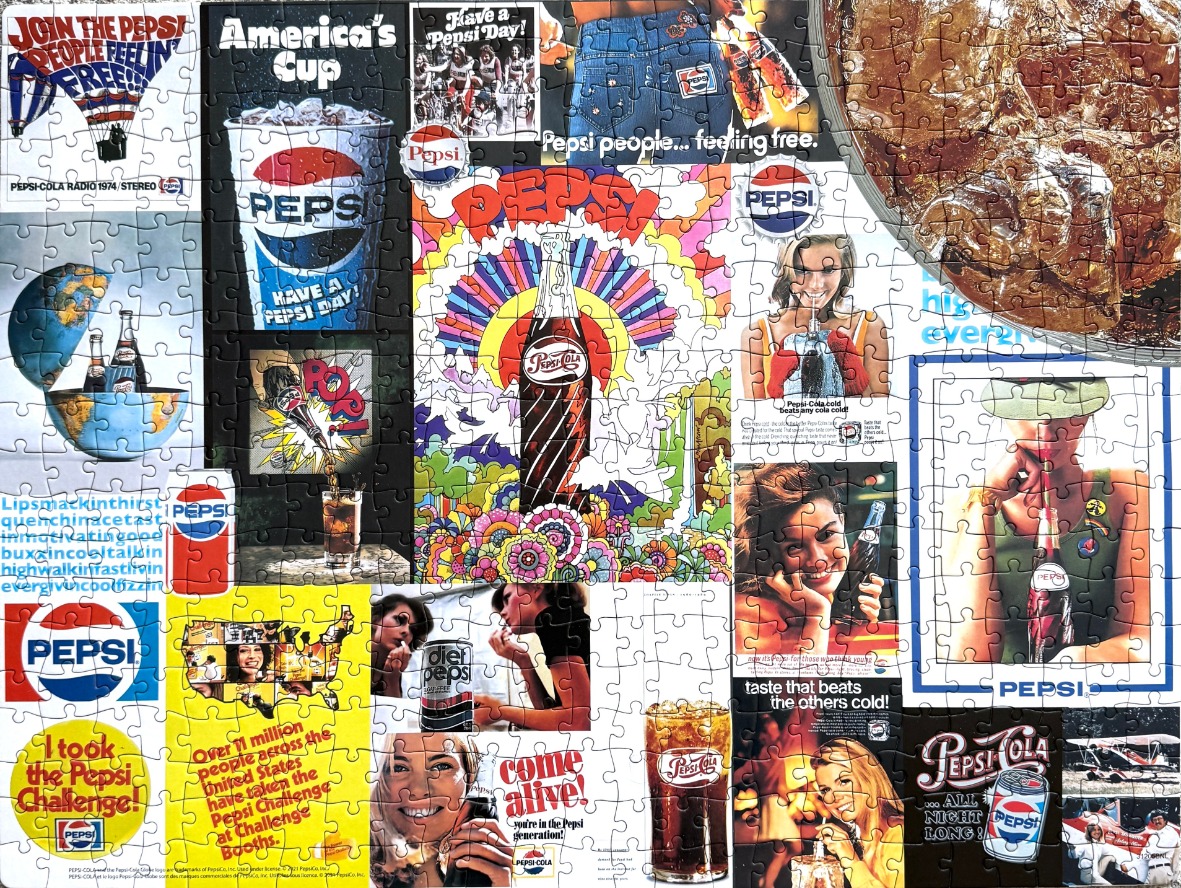
This image is a vibrant collage of vintage advertising materials focusing on a specific cola brand. It features a chaotic and layered arrangement of posters, photographs, and graphic art spanning several decades. The composition is packed with iconic imagery, including close-ups of people drinking from glass bottles, stylized psychedelic illustrations, and various snapshots of historical marketing campaigns. A large, circular, dark brown liquid texture occupies the upper right corner, acting as a visual anchor among the many rectangular panels of advertisements.
The colour palette is exceptionally diverse, reflecting the shifting styles of 20th-century graphic design. There are high-contrast black and white photographs, bold primary colours, and neon-hued psychedelic patterns featuring radiating sunbursts and flower motifs. The typography is equally varied, ranging from clean, modern sans-serif fonts to playful, hand-drawn lettering and classic, ornate script logos. Text overlays appear throughout, including slogans like "Have a Pepsi Day," "Join the Pepsi People," and "Come Alive," creating a dense, layered typographic experience.
Technically, the artwork presents as a mix of scanned archival paper advertisements and stylized graphic designs. The lighting varies from bright, studio-lit commercial photography of smiling people and refreshing glassware to flat, saturated illustrations. The overall mood is nostalgic and energetic, celebrating a long history of commercial visual culture through a fragmented, scrapbook-style lens.
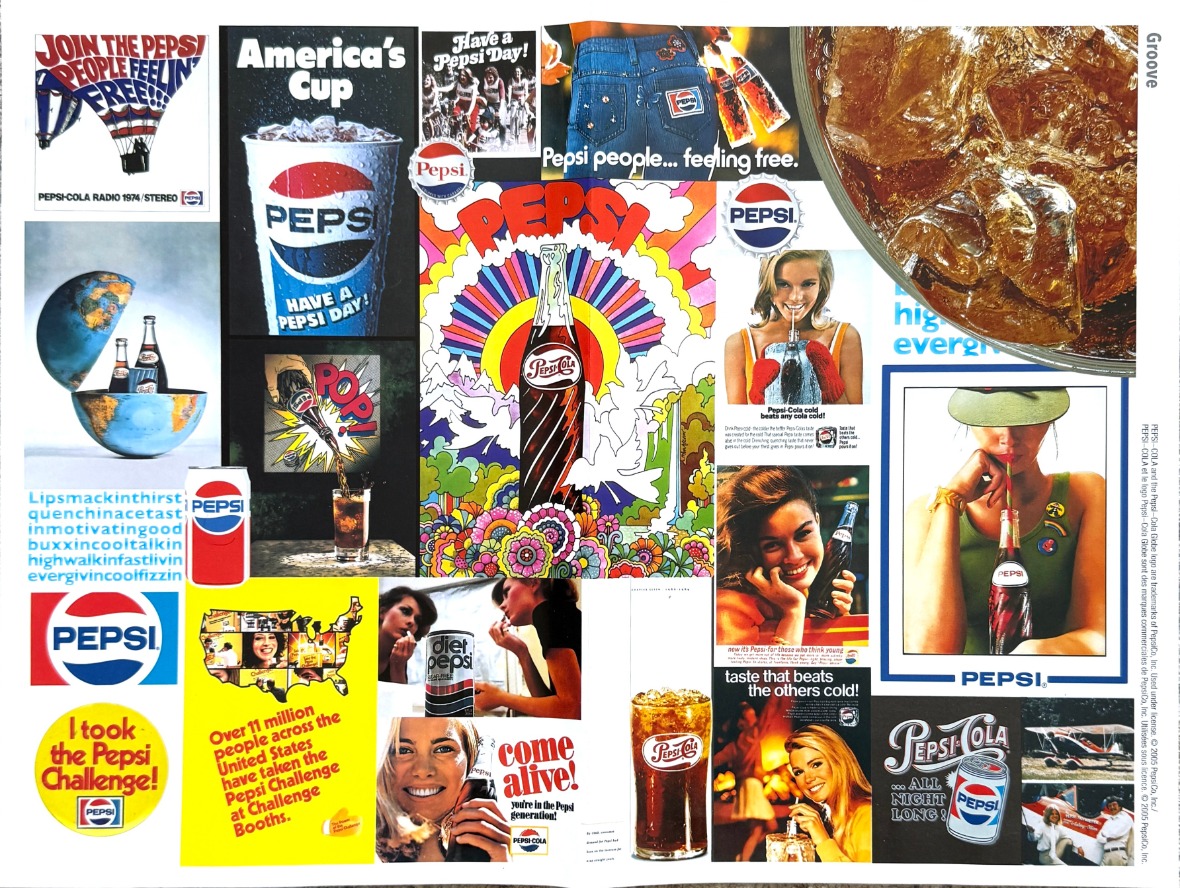
This collage is a dense, multi-faceted collection of vintage imagery celebrating the history of a popular soda brand. The composition is a chaotic but cohesive mosaic, featuring dozens of smaller vignettes, including close-ups of condensation-covered glasses filled with dark soda and ice, and artistic, psychedelic-inspired illustrations. Recurring visual elements include prominent brand logos, bright color palettes ranging from bold yellows and reds to soft, natural tones, and various text-based slogans that evoke a sense of mid-to-late 20th-century American culture.
Various photographic scenes show individuals from different eras enjoying the product, including smiling women in sunny settings and a woman in a green hat sipping through a straw. There are graphic elements like a globe opening like a shell to reveal bottles, a hot air balloon, and stylized line art of mountains and flowers. The juxtaposition of high-energy pop art graphics with intimate, candid-style photography creates a layered, nostalgic atmosphere, capturing the evolution of the brand’s marketing style over several decades.
The layout occupies the entire rectangular space, using a mix of horizontal and vertical frames to segment the scenes. Some areas focus on the physicality of the product, such as the texture of carbonation and glass, while others emphasize the lifestyle associated with the drink. The varying textures, from flat graphic design to realistic photography, contribute to a lively, bustling visual experience that reflects a rich, multifaceted history of branding and design.
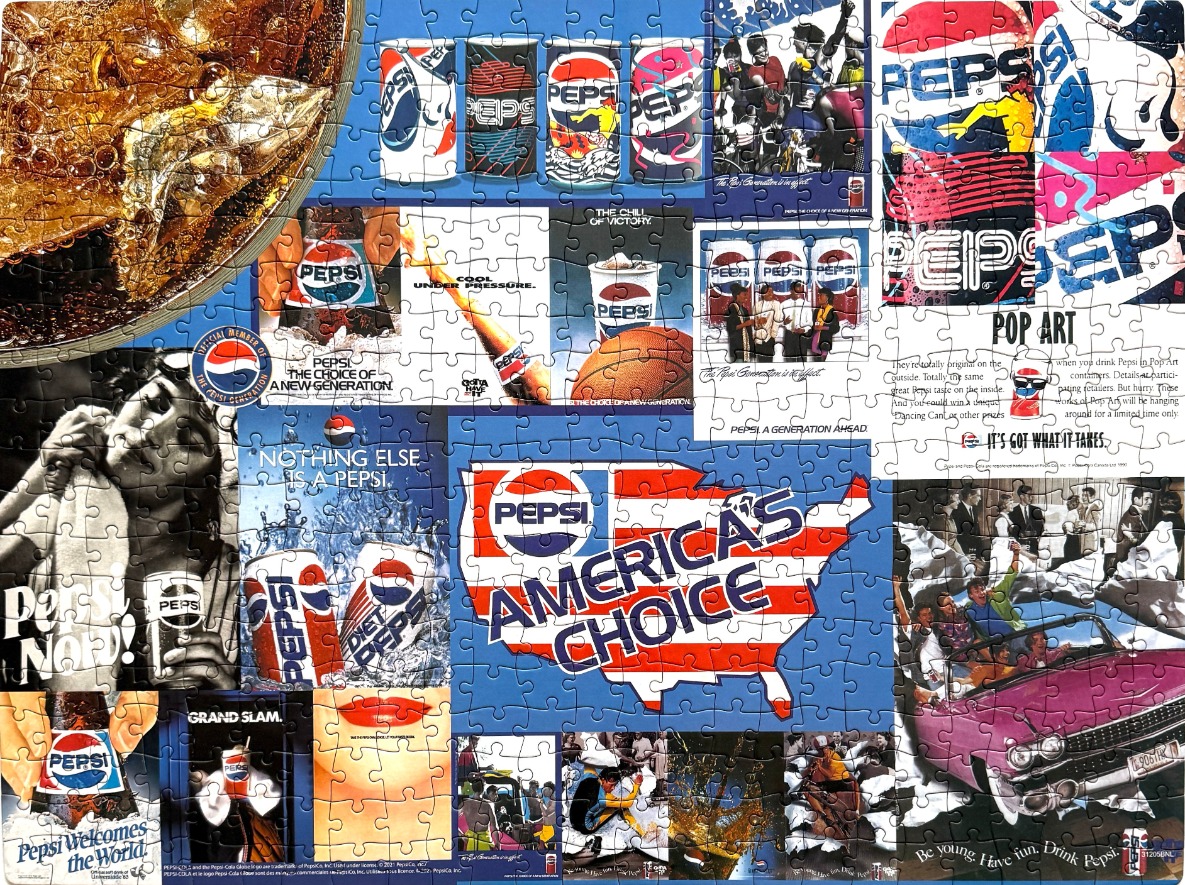
This collage serves as a nostalgic retrospective of Pepsi marketing, featuring a diverse array of vintage advertisements and promotional imagery. A prominent circular close-up of a fizzy, dark cola drink occupies the top left corner. Across the center and bottom, the composition incorporates stylized maps, sports-themed graphics featuring basketballs and convertibles, and various iterations of the brand’s iconic logo designs from different decades. The entire layout is structured as a mosaic of individual rectangular panels, creating a busy and textured visual narrative.
The colour palette is dominated by the brand's signature bold red, white, and blue, providing a patriotic undertone that ties the disparate elements together. The setting ranges from grainy, black-and-white promotional photography to vibrant, high-contrast pop art styles. The lighting varies significantly between the different segments, moving from the reflective, golden-brown sheen of carbonated liquid to the stark, clean studio lighting found in the product advertisements.
Interspersed throughout the grid are various slogans and phrases that anchor the imagery in specific marketing campaigns. The medium leans toward a mixture of vintage print advertising and graphic illustration, evoking a distinct mid-to-late 20th-century aesthetic. The overall mood is energetic and celebratory, capturing the youth-oriented branding and cultural significance associated with the drink over several generations.
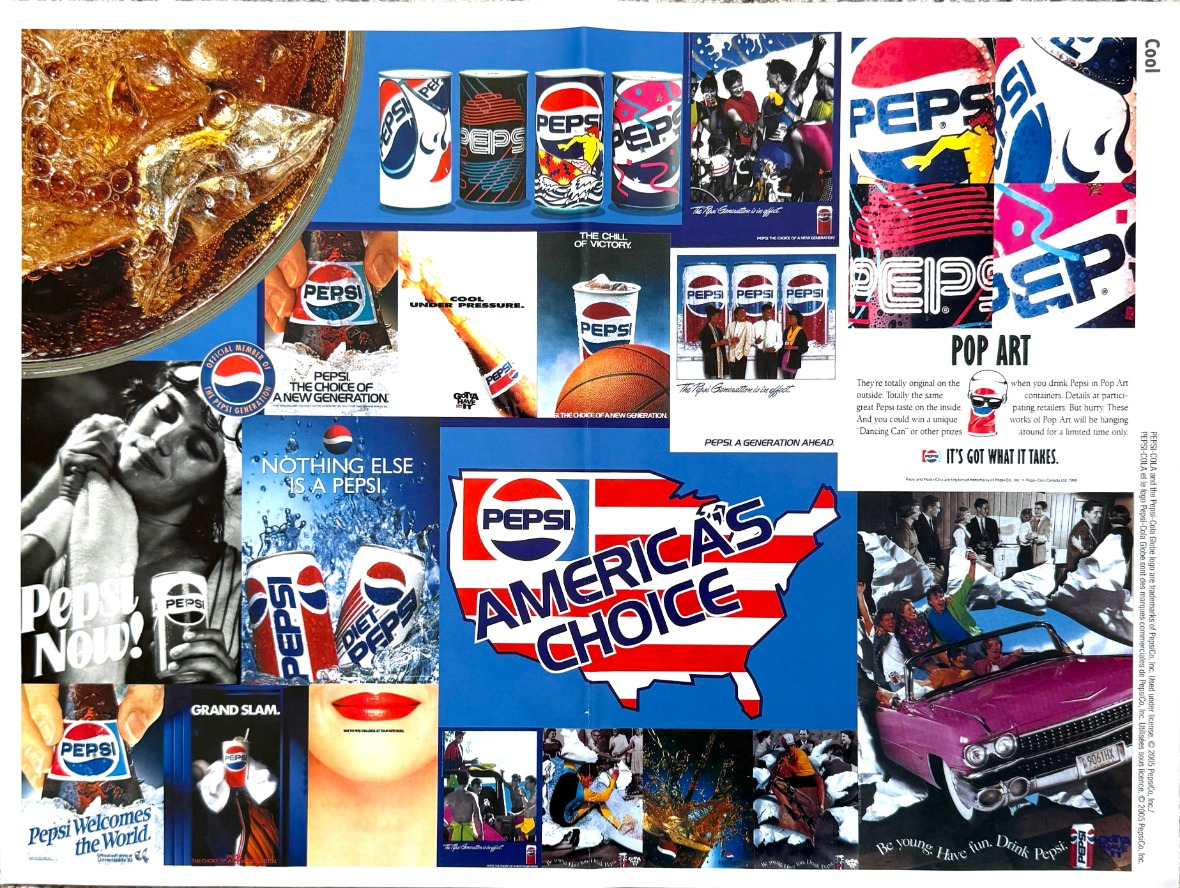
This collage is a vibrant collection of marketing imagery and graphic designs focused on a popular soda brand. The arrangement is chaotic and overlapping, featuring numerous stylized photographs and illustrations. A large, close-up view of dark, bubbly liquid in a glass occupies the top-left corner, providing a textural anchor. Throughout the composition, various aluminum cans are displayed, sometimes in rows, sometimes submerged in water or being held by people. The overall aesthetic is highly commercial and high-energy, utilizing bold blues, whites, and reds to create a cohesive brand identity across disparate scenes.
Central to the layout is a stylized graphic of the United States map filled with red and white stripes, overlaid with text identifying it as "America's Choice." Surrounding this central graphic are various lifestyle vignettes: a woman holding a towel, a vintage pink convertible, basketball imagery, and group shots of young people in social settings. These images evoke themes of youth, leisure, and national pride. The typography varies from bold, modern sans-serif fonts to elegant, classic lettering, all centered on themes of generational identity and refreshing indulgence.
The mood is nostalgic and energetic, reflecting the varied visual advertising styles from different decades. The composition is dense, with nearly every inch of space filled with imagery or promotional text. The colors are punchy and high-contrast, particularly the recurring primary color palette. The medium appears to be a composite of vintage advertisements and promotional materials, creating a busy, multi-layered visual archive of brand history.
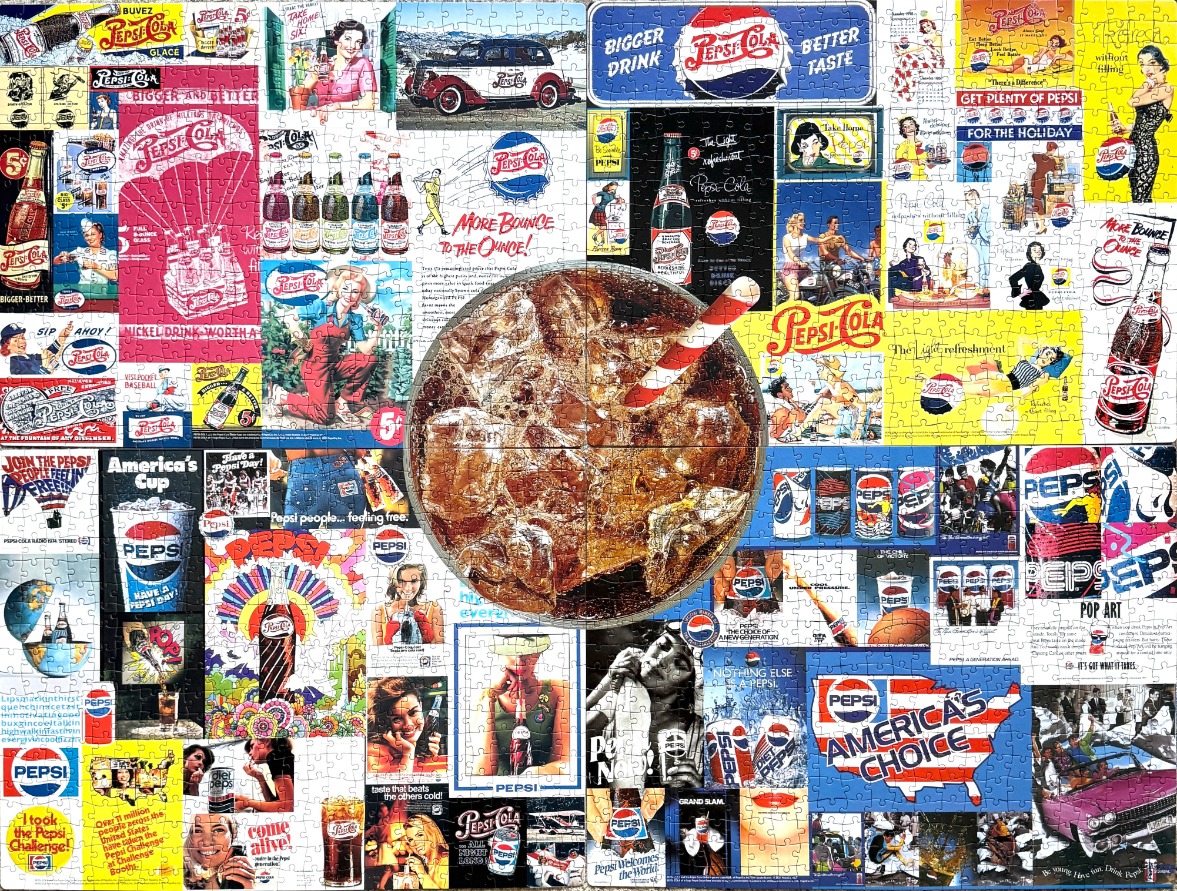
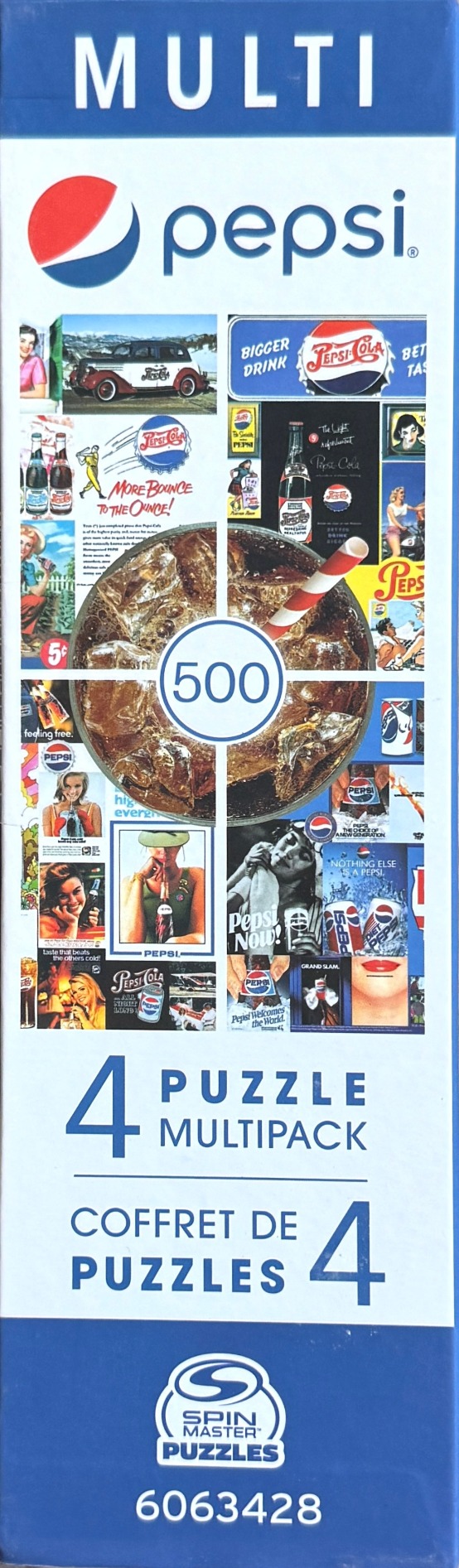
This collage is a vibrant collection of vintage advertising imagery and graphic designs, centered around a large, realistic illustration of a glass filled with ice cubes and a dark carbonated beverage. The glass, adorned with a red and white striped straw, acts as a circular focal point that breaks up the grid-like arrangement of the smaller, rectangular advertisements surrounding it.
The surrounding images are a nostalgic montage of mid-20th-century marketing. The composition includes a mix of retro illustrations, black-and-white photography, and stylized product shots. These panels depict cheerful people, classic cars, and iconic branding, reflecting decades of evolving advertising styles ranging from post-war illustration to 1970s and 80s graphic design. The color palette is dominated by bold reds, deep blues, and crisp whites, interspersed with flashes of yellow and vintage sepia tones.
Textual elements, including slogans like "Bigger Drink Better Taste," "America’s Choice," and "More Bounce to the Ounce," are integrated throughout the design, reinforcing the theme of classic Americana. The overall visual style is eclectic and dense, functioning as a retrospective of consumer culture. The varying artistic techniques, from hand-painted posters to stark commercial photographs, provide a sense of historical depth and diverse artistic expression typical of classic brand advertising.
by LakeBird 2026-02-04