The Mill at Wijk Bij Duurstede
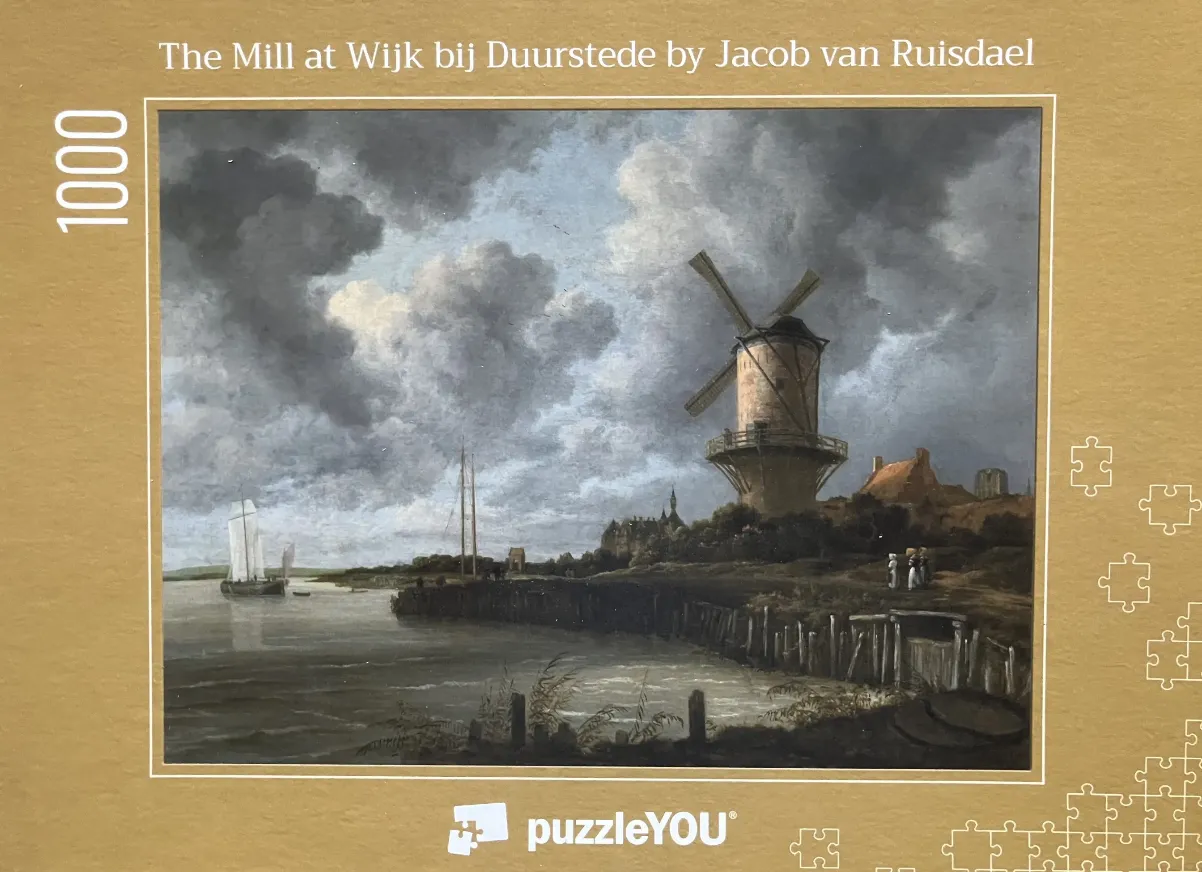
This oil painting depicts a tranquil yet dramatic Dutch river landscape dominated by a prominent windmill. The windmill sits on a slightly elevated bank to the right, its sails angled against a vast, tumultuous sky filled with heavy, rolling grey and white clouds. Below the windmill, the landscape includes small houses and figures walking along the grassy shoreline, connecting the mill to the broader riverbank.
To the left, a calm river flows through the scene, reflecting the muted light from above. A single sailing vessel with its mast upright floats near the shore, providing a sense of scale to the expansive horizon. The composition uses a low horizon line, emphasizing the immense, turbulent sky that takes up more than half of the canvas, characteristic of the 17th-century Dutch Golden Age style.
The colour palette is earthy and subdued, relying on deep browns, ochres, and varied shades of grey to convey a sense of atmosphere and approaching weather. The light is soft and diffused, seemingly filtered through dense cloud cover, creating a moody, contemplative tone throughout the landscape. The brushwork captures the texture of the weathered mill and the rippling water, evoking a profound sense of natural serenity and historic character.

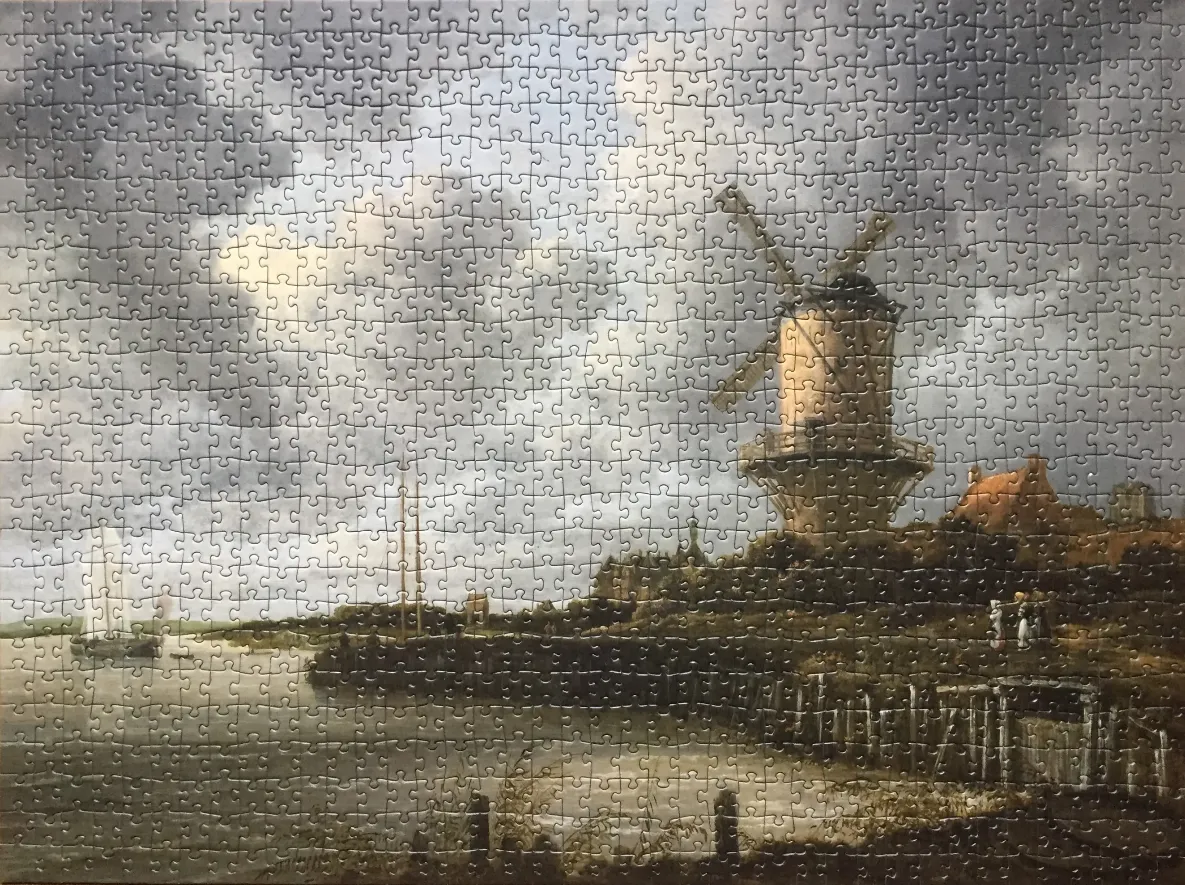
This classical oil painting features a prominent, traditional windmill standing on the banks of a river or wide canal. The windmill is the focal point, positioned on the right side of the composition, with its weathered sails angled diagonally against a dramatic, expansive sky filled with thick, rolling clouds. Beside the windmill, a cluster of small buildings with rustic rooftops is nestled among the foliage, suggesting a quiet riverside village scene.
The foreground showcases a dark, earthy riverbank reinforced with wooden pilings, leading the viewer's eye toward the water. On the left, a solitary sailing vessel drifts peacefully along the water, its tall mast echoing the verticality of the windmill. The composition emphasizes the vastness of the horizon and the serene, timeless quality of the Dutch landscape tradition.
The colour palette is dominated by muted, earthy tones, including deep browns, ochres, and slate greys, reflecting the overcast atmosphere. The light is soft and diffuse, typical of a cloudy day in Northern Europe, creating a mood that is calm, contemplative, and slightly melancholic. The brushwork and overall aesthetic evoke the style of 17th-century Dutch Golden Age landscape paintings, emphasizing natural textures and realistic, atmospheric detail.