History of Golf
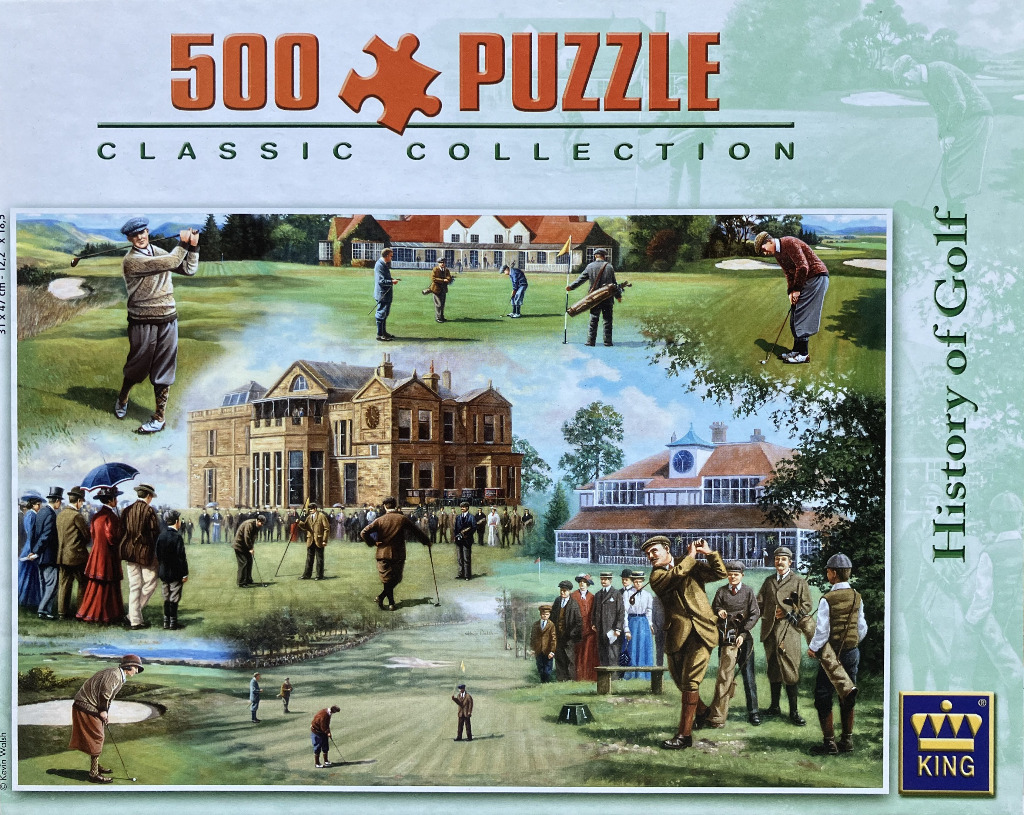
This detailed illustration is a composite montage depicting the history of golf, showcasing various scenes of Victorian and Edwardian-era golfers on lush green courses. In the foreground and middle ground, groups of men and women dressed in period-appropriate attire, such as flat caps, knickerbockers, tweed jackets, and long skirts, are engaged in the sport. Some individuals are captured in mid-swing, while others are lining up putts or observing the game, evoking a sense of classic sporting elegance.
The background and mid-ground are populated by grand stone manor houses and wooden clubhouse structures with clock towers, serving as anchors for the sprawling fairways. The composition uses soft, blended vignettes to transition between different perspectives, shifting from wide, distant views of players on the green to closer, more detailed depictions of people interacting near the clubhouses. The hilly, rolling landscape is punctuated by sand bunkers and well-maintained grass.
The overall colour palette is dominated by earthy, natural tones, with vibrant greens of the grass, warm sandy beiges for the bunkers, and cool blues in the cloudy sky. The artistic style is reminiscent of classic oil painting, with visible, gentle brushstrokes that capture light and shadow on the clothing and building facades. The mood is nostalgic and refined, celebrating the storied heritage of the game.

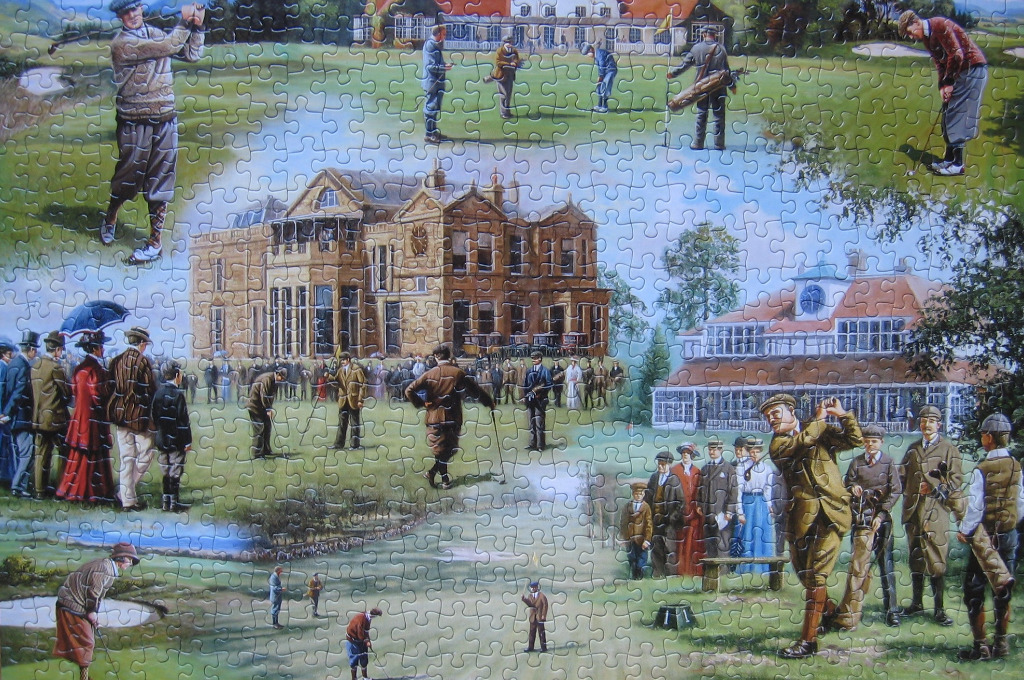
This illustration depicts a vibrant, historic golf scene set against the backdrop of a grand manor house. The composition is layered with vignettes of golfers dressed in early 20th-century attire—wearing knickerbockers, caps, and vests—engaged in various stages of play. A large, ornate stone mansion serves as the central focal point, while a sprawling green landscape provides ample space for crowds of spectators and individual players.
The artwork utilizes a classic, painterly style with a warm, naturalistic colour palette dominated by grassy greens, earthy stone tones, and soft blue sky hues. The lighting suggests a bright, pleasant afternoon, casting gentle shadows and highlighting the detailed period clothing of the figures. The scene is busy and narrative, capturing the formal elegance of traditional golf culture through wide-angle perspective and thoughtful placement of figures across the course.
Various secondary elements enhance the atmosphere, including sand traps, well-manicured putting greens, and a smaller, white clubhouse structure to the right. The inclusion of onlookers in period dress adds a sense of event and history to the image, evoking a nostalgic, leisurely mood typical of historical sporting art.