Hoffman House Rug
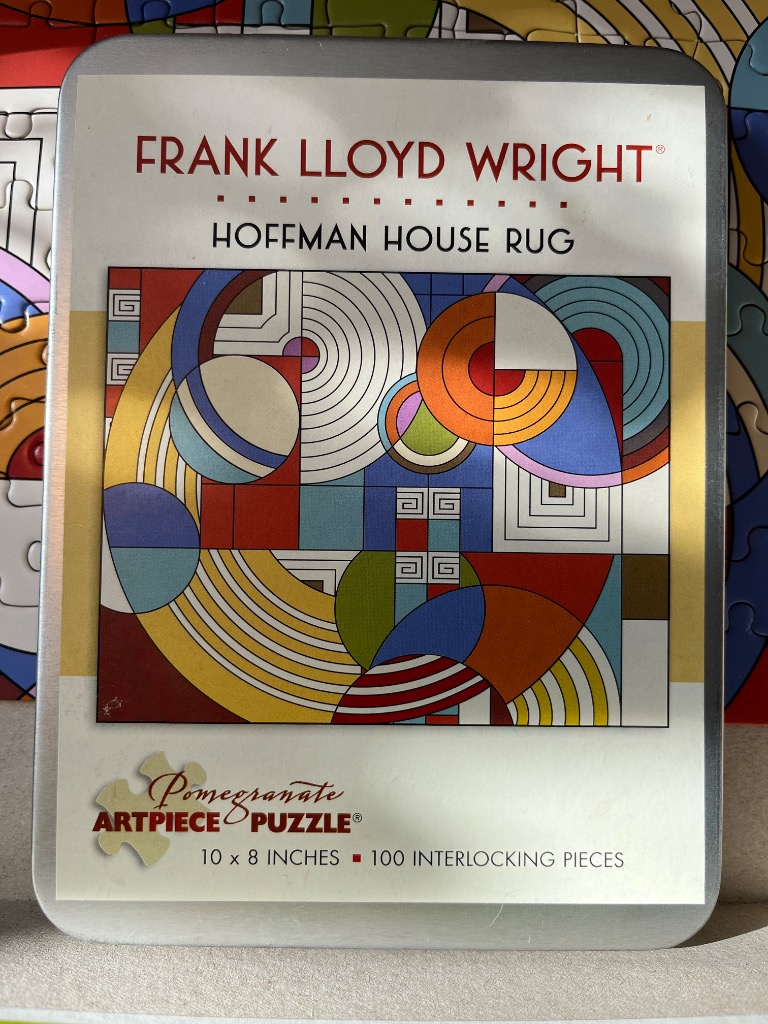
The central artwork is an abstract geometric composition inspired by a textile design. It features a sophisticated interplay of overlapping circles, concentric arcs, and crisp rectangular grids. The composition feels balanced yet dynamic, with the circular motifs creating a sense of movement that contrasts against the rigid linearity of the squared sections.
The colour palette is vibrant and structured, relying on a mix of warm and cool tones. Deep reds, bright oranges, and soft yellows are set against cooling shades of sky blue, teal, and slate grey. These hues are separated by distinct, bold lines that give the design a stained-glass or architectural drafting appearance. Small, intricate square-within-square details add a layer of complexity and texture to the otherwise fluid shapes.
In terms of style, the design reflects the principles of early 20th-century geometric abstraction. The aesthetic is clean and precise, emphasizing orderly proportions and rhythmic patterns. It is clearly a graphic interpretation of modern design, characterized by flat fields of colour and a deliberate, intentional arrangement that prioritizes architectural harmony over representational imagery.
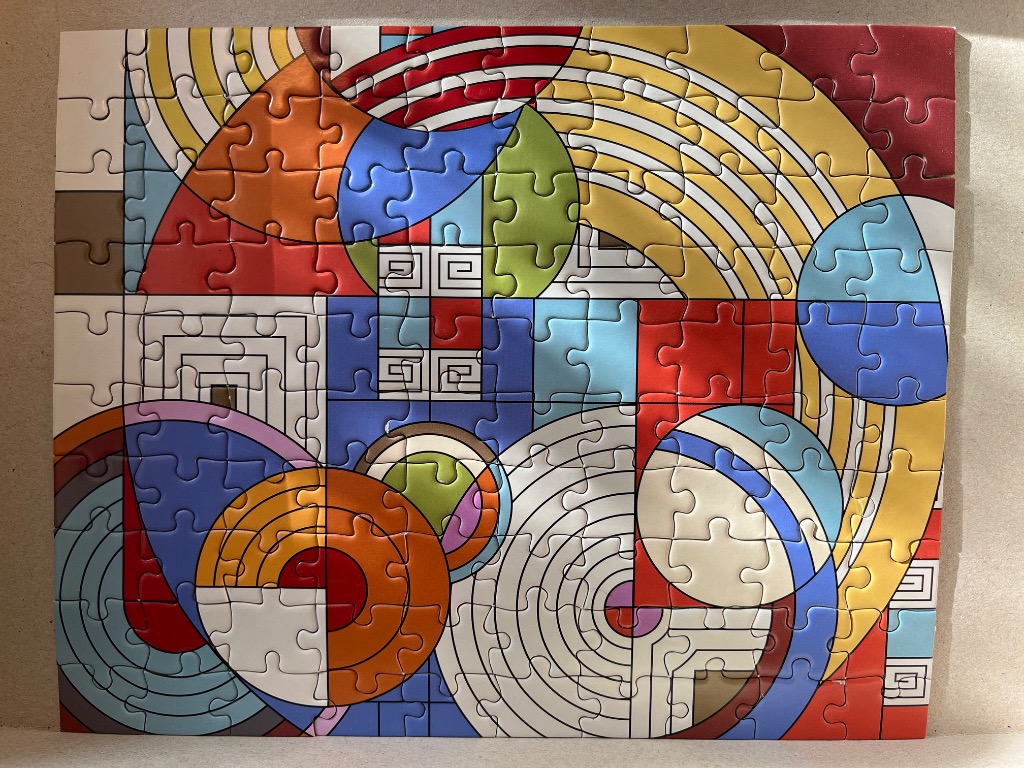
This image is a vibrant, abstract composition defined by bold geometric shapes and structured patterns. The design features a complex arrangement of circles, semi-circles, and intersecting arcs that create a sense of movement and depth. Integrated into this curvature are several squared, maze-like patterns, adding a sense of architectural structure and contrast against the organic, flowing lines of the arcs. The overall aesthetic is reminiscent of mid-century modern graphic art, utilizing clean lines and flat fields of saturated colour to guide the viewer’s eye across the frame.
The colour palette is intentionally high-contrast, dominated by primary reds, yellows, and deep blues, balanced by softer olive greens, light blues, and creams. The repetition of concentric rings in yellow and white creates a rhythmic, oscillating effect, while solid blocks of red and blue ground the busier sections of the composition. Light and shadow are uniform across the image, emphasizing the precise, illustrative nature of the artwork. The composition is highly balanced, with a distribution of forms that keeps the visual weight evenly spread from the corners to the center, creating a harmonious yet dynamic abstract display.
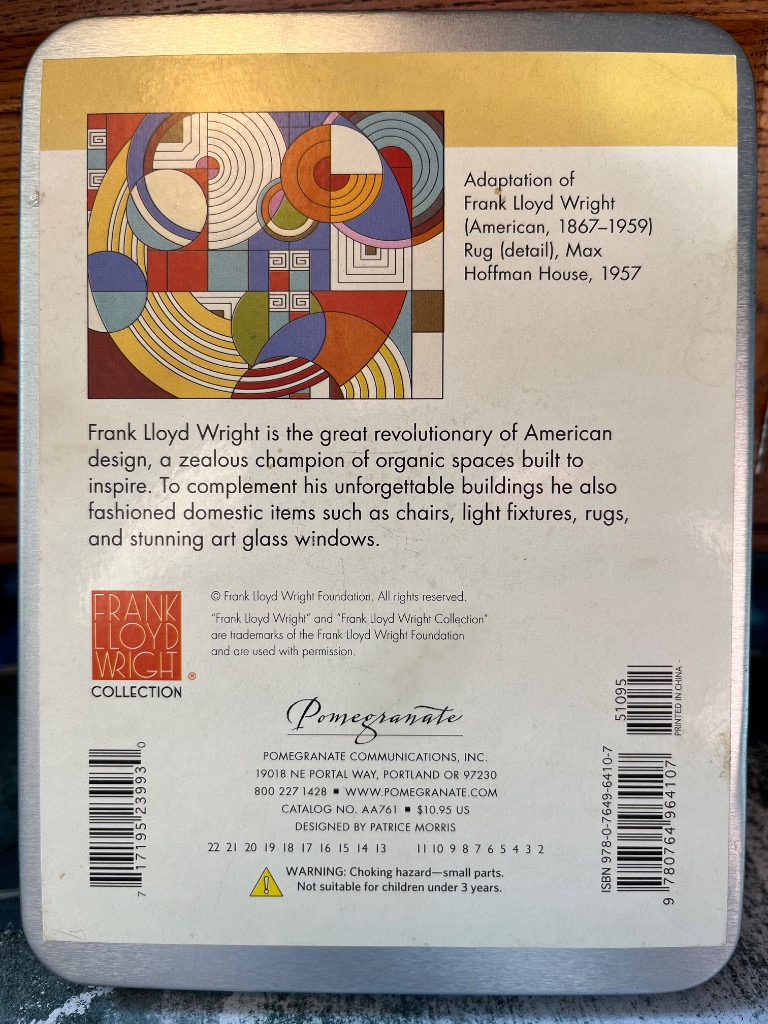
This artwork is a graphic representation of the Hoffman House Rug, characterized by a complex, modernist geometric pattern. The composition is a balanced arrangement of nested circles, semi-circles, and rectangular blocks that create a sense of organized rhythm. Thin black outlines define each shape, providing structure against the flat, matte blocks of color that fill the geometric fields.
The color palette is vibrant and varied, featuring deep reds, terracotta oranges, and bright lime greens, contrasted against cooler tones of sky blue, periwinkle, and muted cream. Some areas feature fine, concentric line work that adds texture and depth to the circular motifs, while other sections are filled with solid color or small-scale repeating patterns like meanders or squares. The layout feels architectural, reflecting the style of early 20th-century geometric abstraction.
The overall aesthetic is that of a textile design or decorative art piece, emphasizing clean lines and precise symmetry within an abstract frame. The interplay between soft curves and rigid rectilinear forms creates a dynamic visual tension, typical of the designer's celebrated approach to geometric ornamentation. The artwork maintains a clear, intentional structure, where every shape and hue occupies a calculated space within the rectangular grid.
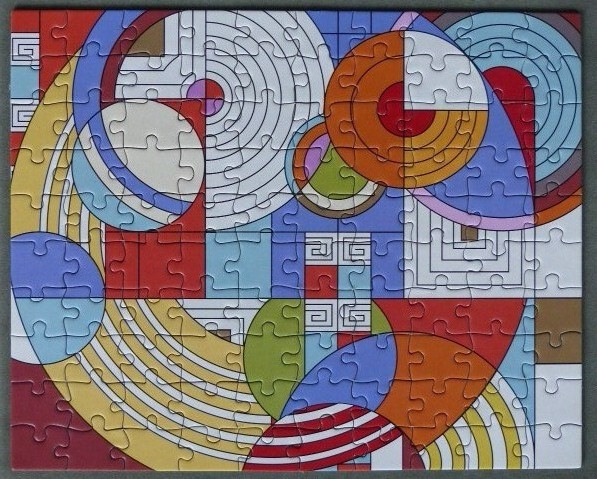
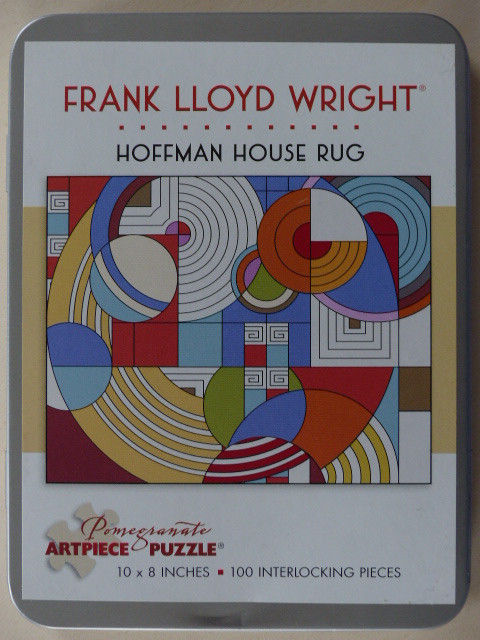
This artwork is a vibrant abstract composition characterized by geometric precision and a mid-century modern aesthetic. The design is dominated by a complex interplay of overlapping circles, concentric arcs, and stark rectangular motifs. Large, bold circular shapes act as focal points, some filled with tight, concentric line patterns while others serve as solid blocks of color, creating a sense of depth and rhythmic movement across the rectangular field.
The composition is highly structured, utilizing hard-edged lines and distinct color fields to segment the space. Several areas feature intricate, repeating Greek-key style patterns that add a layer of historical ornamentation to the modern design. These linear details contrast with the smooth, curved surfaces of the larger circular elements, balancing complexity with clean, architectural lines.
The color palette is rich and saturated, leaning into a retro-inspired mix of burnt orange, deep red, muted olive green, and various shades of cool blue, all grounded by expansive areas of cream and stark white. The lighting is uniform and flat, emphasizing the graphic, illustrative nature of the work rather than simulating realistic texture or dimension. The overall mood is orderly and energetic, reminiscent of 20th-century avant-garde design and decorative wall art.
by archandrea 2025-03-14