The Collector of Pictures at the Time of Augustus
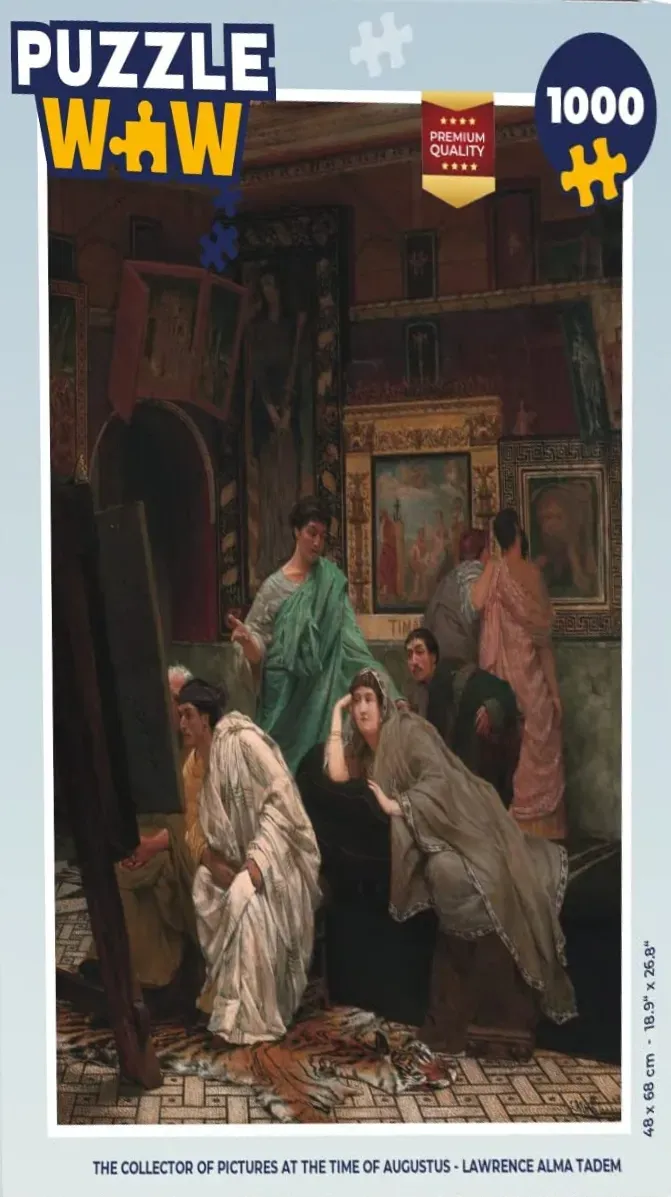
This classical oil painting, titled 'The Collector of Pictures at the Time of Augustus' by Lawrence Alma-Tadema, captures an intimate scene within a Roman art gallery. A small group of figures draped in traditional togas and pallas are gathered around a wooden easel that holds a painting, which remains obscured from the viewer. One woman in the foreground leans against a dark, cushioned seat, her hand resting against her chin in a pensive posture, while a man in a white toga stands nearby looking closely at the artwork. A second man, dressed in a striking teal-green robe, gestures toward the frame as if offering an explanation or critique.
The gallery setting is rich with historical detail, reflecting the aesthetic of Roman antiquity. The walls are adorned with various framed paintings and ornate decor, creating a sense of a private collection or studio space. Beneath the figures, a tiled floor is partially covered by a decorative animal skin rug, adding texture and warmth to the composition. The lighting is soft and subdued, casting gentle highlights on the drapery of the figures' garments and the architectural elements.
The colour palette is dominated by deep, earthy tones, including charcoal greys, terracotta reds, and muted ochres, punctuated by the vibrant teal robe of the central figure. The style is quintessentially academic, marked by precise brushwork and a careful attention to the textures of fabric, skin, and stone. The composition draws the eye toward the center of the group, emphasizing a shared intellectual and aesthetic
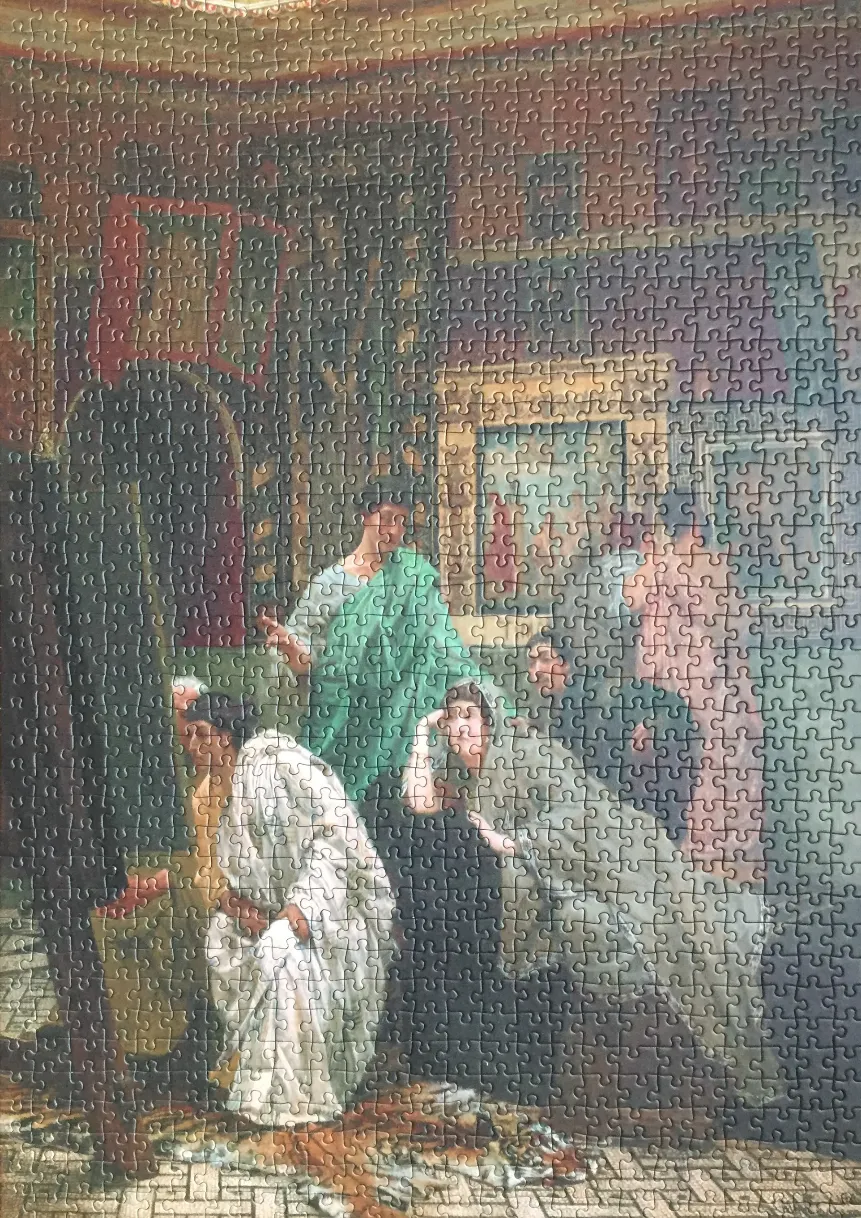
This classical-style oil painting depicts a gathering of figures in an ancient Roman interior. A central woman, dressed in a vibrant turquoise-green pallium, stands as the focal point, gesturing with her hand. Beside her, a woman wearing a white robe is seated or kneeling, engaged in a conversation or inspection of an object. A third woman sits nearby, leaning her head on her hand in a contemplative or weary posture, while other figures, including one draped in soft pink, observe the scene from the background.
The setting is an ornate room, characterized by decorative wall panels and classical architectural elements. The floor features a intricate geometric tile pattern that adds a sense of depth and perspective. The lighting is soft and subdued, creating a somber, intimate atmosphere consistent with historical genre painting. The palette is dominated by muted earth tones, warm reds, and deep shadows, punctuated by the bright, striking green of the central figure's garment.
The artistic style is academic and narrative, focusing on the human figures and their interplay. The composition is balanced but dense, with the figures clustered together in a way that suggests a private, perhaps scholarly or domestic, moment. The brushwork is smooth, typical of nineteenth-century Neoclassical or academic historical paintings, emphasizing detail in the draping of the garments and the expressions of the figures.