Mysterious Atlantis
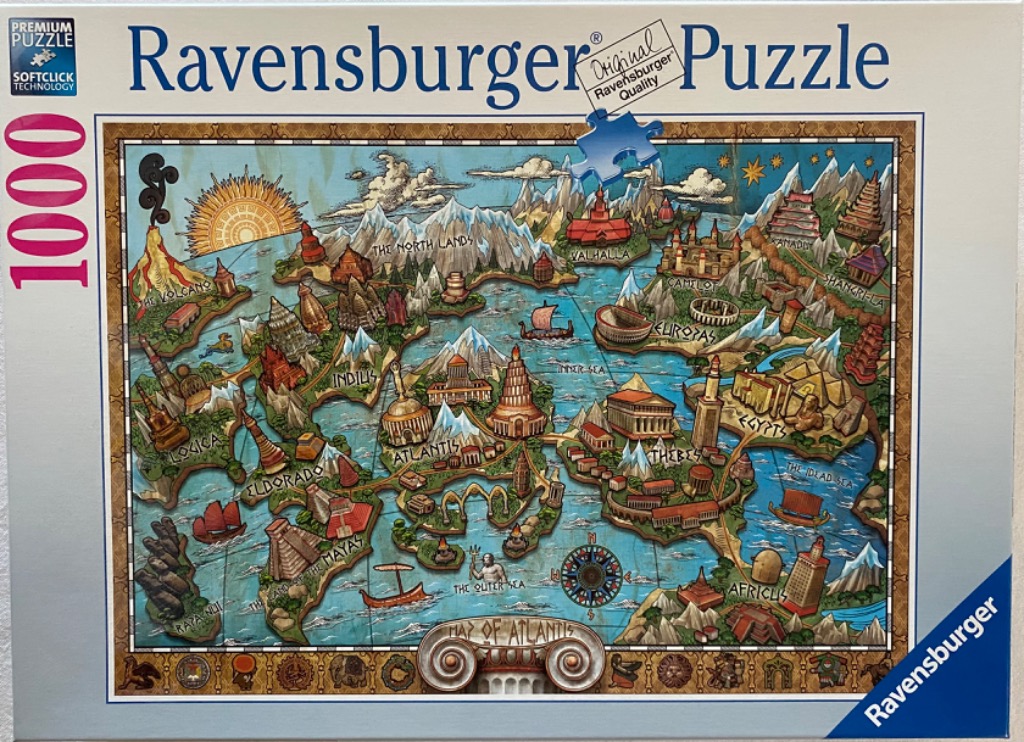
This illustration depicts a whimsical, fantasy-style map of the world, highlighting various legendary locations and historical landmarks. The central focus is the continent of Atlantis, surrounded by smaller landmasses featuring iconic sites such as the pyramids of Egypt, the Mayan temples, the Parthenon in Thebes, Camelot, and the volcanic landscape of The North Lands. The map is rendered with a textured, painterly style that evokes the aesthetic of an ancient parchment or explorer's chart.
Compositionally, the map is organized around a central oceanic expanse labeled as the Inner Sea, with various mythical ships sailing its waters. A decorative compass rose sits in the southern quadrant, near a figure of Neptune holding a trident. The borders of the map are encased in a brown, ornamental frame featuring small, circular vignettes depicting various symbols or artifacts. A large, classical scroll-like structure at the bottom center bears the inscription "Map of Atlantis."
The color palette is rich and earthy, dominated by deep blues for the water and warm browns, ochres, and terra-cotta tones for the landmasses and architectural structures. Bright highlights, such as the glowing yellow sun in the upper left and the snow-capped white peaks of the mountains, add depth and contrast. The overall mood is adventurous and mythic, reminiscent of a storybook illustration detailing an ancient, legendary world.

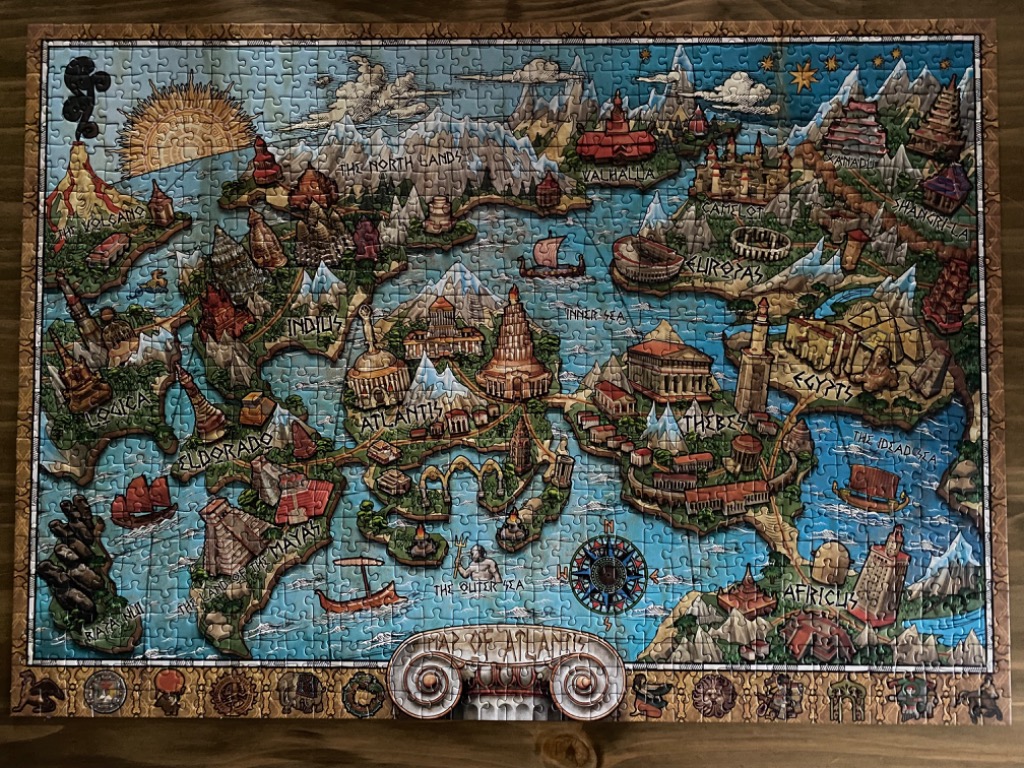
This detailed illustration presents an elaborate fantasy map titled "Map of Atlantis" at the bottom center. The composition displays a fictional world teeming with legendary locations, including Atlantis, Thebes, Egypts, Valhalla, Camelot, Shangrila, Indius, and Eldorado. Each region is distinct, featuring iconic structures like pyramids, ziggurats, mountain ranges, and classical architecture, all scattered across a vibrant landscape of green landmasses surrounded by deep blue seas.
Sailing ships and mythical vessels traverse the waters, while a compass rose is prominently placed in the southern portion of the map. The artistic style is reminiscent of a classic storybook or cartographic treasure map, utilizing rich, earthy tones for the continents—browns, ochres, and forest greens—that contrast sharply against the bright, swirling blue ocean. A decorative border frames the entire image, punctuated by small circular emblems containing various icons and historical symbols.
The overall lighting creates a warm, timeless atmosphere, suggesting a world of adventure and ancient mystery. The illustration uses fine line work and layered shading to provide depth to the terrain and buildings, making the geography feel tactile. The visual language is that of a historical fantasy, blending diverse cultural architectural references into a cohesive, imaginative realm that invites exploration of its hidden, mythical territories.