Album Covers
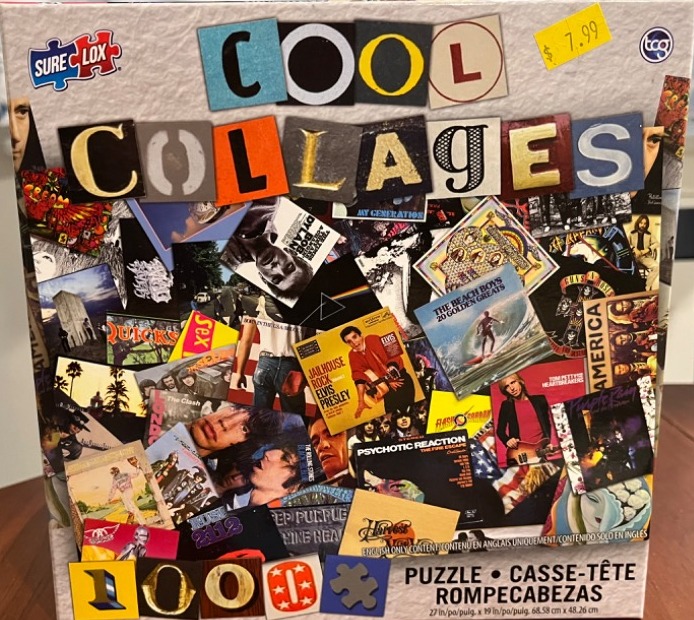
This artwork features a densely layered collage of classic music album covers, spanning various genres and eras of rock and pop history. The design is anchored by the word "COOL COLLAGES" spelled out in large, cut-out style letters at the top, each piece appearing like a ransom-note style snippet of paper with varied fonts and colors. Beneath this header, the surface is filled with an overlapping chaotic assembly of iconic album sleeves, creating a vibrant, nostalgic mosaic.
Prominent recognizable imagery includes the classic surf-culture artwork of The Beach Boys, the iconic red-shirted portrait of Elvis Presley, and the stark, minimal aesthetic of Pink Floyd’s prism cover. Other visual elements include silhouettes of bands, close-up portraits of famous musicians, and abstract graphic designs typical of late 20th-century vinyl art. The background behind the collage is a clean, off-white, slightly textured paper surface that helps the multicolored album art stand out.
The overall composition is busy and asymmetrical, with album covers tilted at various angles to create a sense of depth and movement. The color palette is eclectic, featuring a mix of saturated primary colors, high-contrast black-and-white photography, and muted vintage tones inherent to aged album jackets. The arrangement feels like a curated fan collection, celebrating the graphic legacy of recorded music.
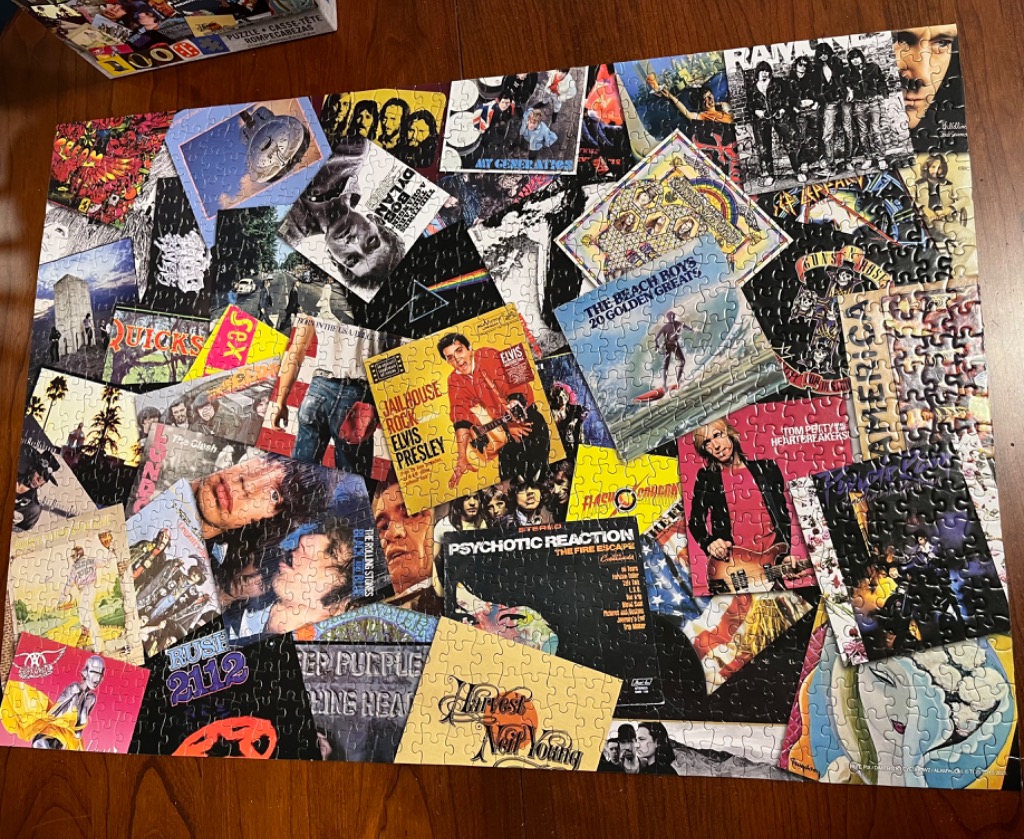
This image is a vibrant collage featuring dozens of iconic classic rock and roll album covers. The artwork is densely packed, with the square and rectangular covers layered at various angles, creating a sense of depth and overlapping stacks. The subjects range from legendary musicians like Elvis Presley, Tom Petty, and Neil Young, to famous band portraits and artistic, surreal graphic designs. Notable covers include Elvis Presley’s 'Jailhouse Rock', The Beach Boys' '20 Golden Greats', and Rush's '2112'.
The composition is highly chaotic yet structured, filling every inch of the rectangular frame. The layout avoids a grid, instead allowing the covers to fan out, tilt, and overlap in a way that suggests a stack of records spread across a floor or table. This layering creates a dynamic visual flow that draws the eye from one iconic graphic to the next.
The color palette is incredibly diverse, reflecting the unique aesthetic of each album’s era. There are bold, saturated primary colors like the bright yellow of the Elvis cover and deep reds, contrasted with muted black-and-white photography, psychedelic neon hues, and stark high-contrast illustrations. The overall mood is nostalgic and energetic, celebrating the visual history of rock music.
The image features a variety of artistic styles, including classic black-and-white portraits, detailed illustrations, abstract graphic designs, and moody photography. Each album cover acts as a snapshot of its specific time, contributing to an overall effect that is both historical and deeply saturated with the cultural iconography of the mid-to-late 20th century.