The Little Blue Horse
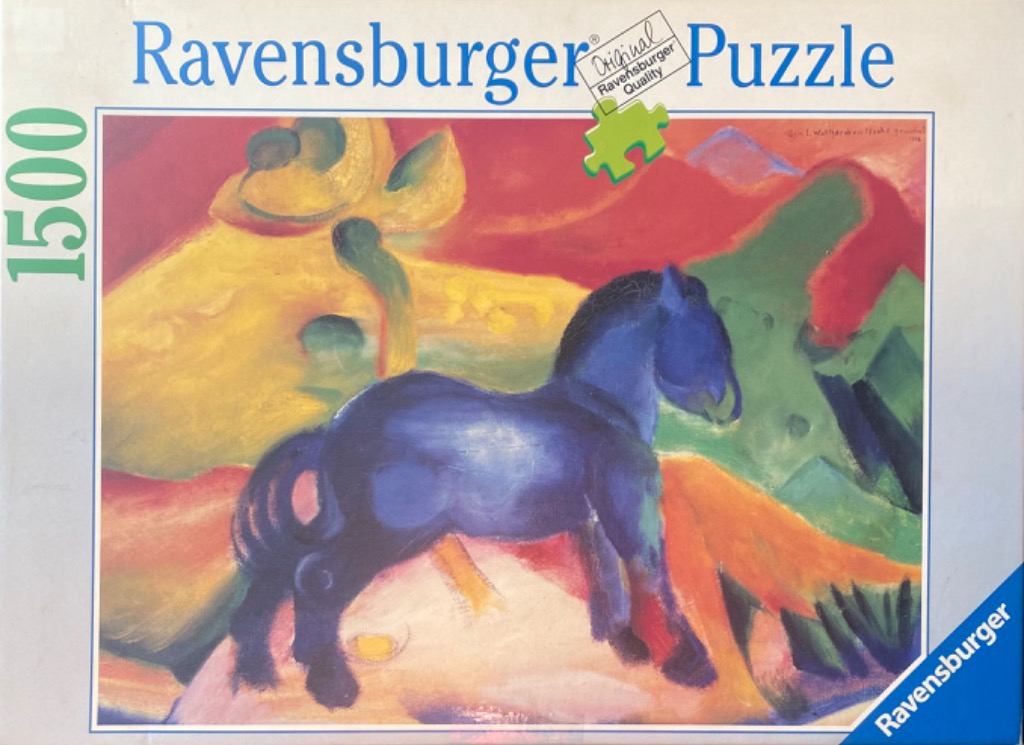
The central subject of this expressionist painting is a singular, deep blue horse standing prominently in the foreground. The animal is rendered with thick, simplified contours and a posture that suggests a calm, steady stance, facing towards the right of the frame. Its coat is painted in varying shades of dark blue, with hints of violet and shadow that provide volume and texture against the vibrant backdrop.
The setting is a non-representational, abstracted landscape composed of bold, sweeping shapes. The background features rolling hills or dunes painted in striking, high-contrast colours, primarily brilliant reds, warm oranges, and intense yellows. To the right, cooler tones of forest green and deep indigo delineate jagged, mountainous forms, creating a dynamic tension between the organic curves of the horse and the sharp, rhythmic planes of the terrain.
The artwork is characterised by a Fauvist-inspired use of intense, saturated pigments that prioritise emotional expression over realistic depiction. The brushwork is expressive and fluid, typical of early 20th-century German Expressionism. Light does not appear to emanate from a single source, but rather radiates from the colours themselves, lending the entire composition an ethereal, dreamlike quality that feels both monumental and intensely intimate.