Sea Battle
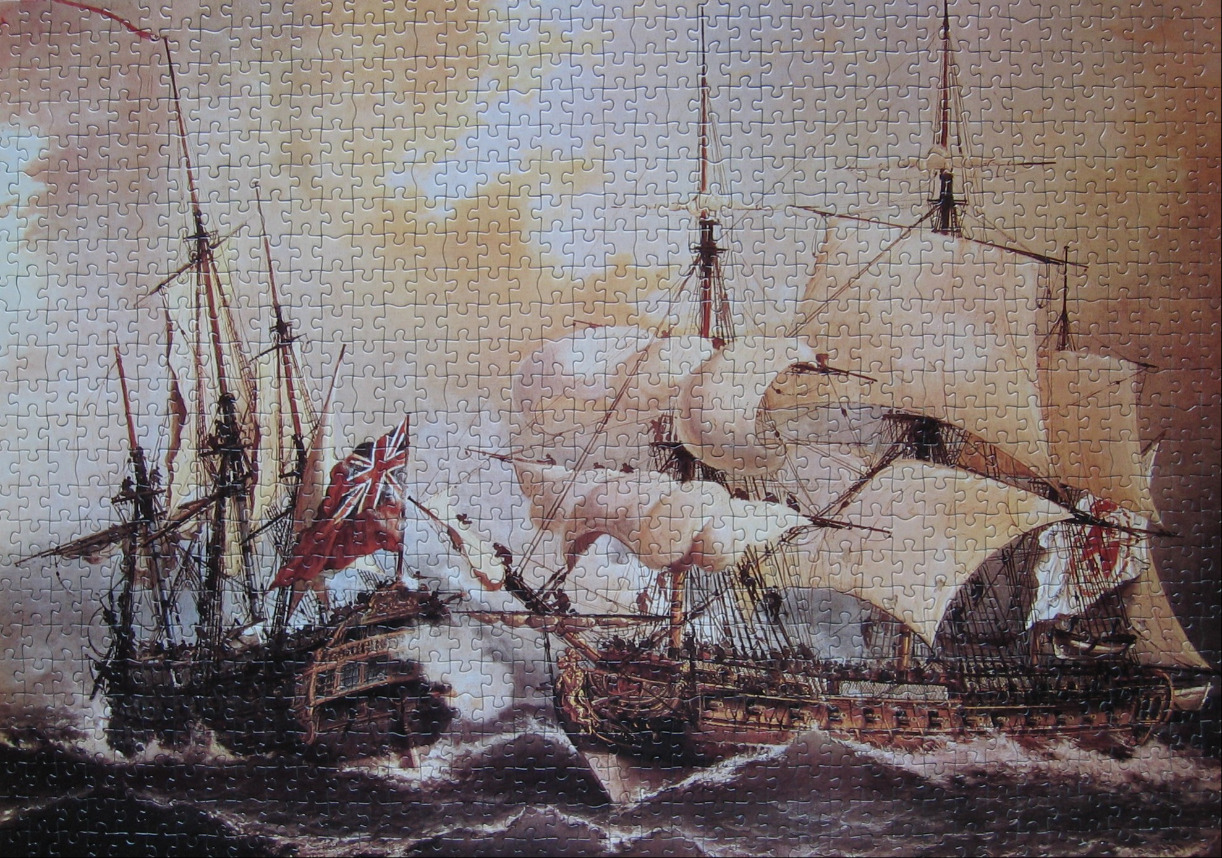
This illustration depicts a dramatic maritime scene featuring two large wooden sailing vessels on a turbulent sea. The ship on the right is shown in profile, fully rigged with expansive, billowing white sails that dominate the right side of the composition. The vessel to the left is angled toward the viewer, its hull darkened by shadows, featuring a prominent red British ensign flag fluttering from its stern. Both ships have intricate networks of masts, spars, and rigging that create a dense, vertical silhouette against the background.
The setting is an open, windswept ocean under a muted, hazy sky that glows with warm, golden-brown hues, suggesting either sunrise or sunset. The water is depicted with choppy, frothy whitecaps that suggest a strong breeze. The overall composition is balanced, with the two primary vessels occupying the foreground, creating a sense of scale and historical maritime grandeur.
The style is that of a classical maritime painting, characterized by realistic proportions and careful attention to the details of 18th or 19th-century naval architecture. The color palette is restricted to earthy tones—deep browns, ochres, and muted whites—which reinforces the vintage, illustrative quality of the work. The atmospheric perspective and soft lighting contribute to a nostalgic and somewhat turbulent mood, emphasizing the power and grace of sailing ships at sea.
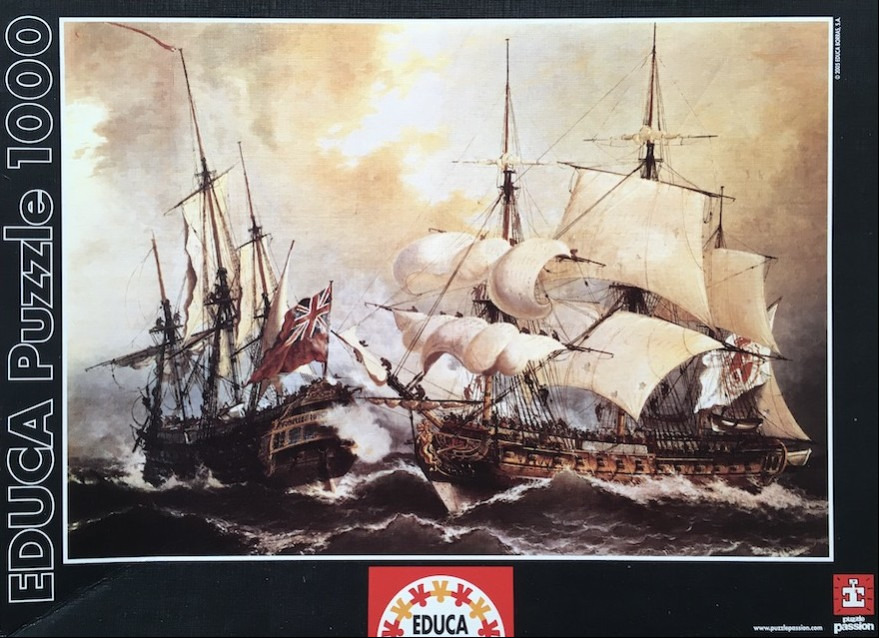
This maritime oil painting depicts a dramatic naval confrontation between two large, multi-masted wooden warships on a turbulent, choppy sea. The vessels, likely 18th-century frigates or ships of the line, are positioned close to one another, suggesting a mid-battle maneuver. The ship on the left, flying a red British ensign, shows signs of recent action, while the ship on the right features expansive, billowing white sails that catch the wind and dominate the composition.
Compositionally, the ships are the primary focus, angled to create a sense of dynamic movement as they cut through the dark, foam-flecked waves. The scene is framed by a dramatic, moody sky transitioning from a soft, golden-yellow glow near the center to more ominous, overcast tones on the periphery. This contrast in lighting adds depth and highlights the intricate rigging and structural details of the tall masts.
Technically, the artwork uses a realistic, classical style typical of 19th-century naval portraiture. Muted earth tones, browns, and slate grays define the hulls and the water, while the sails are rendered in warm, creamy whites. A small puff of cannon smoke is visible near the waterline between the two vessels, adding a focal point of activity to the intense, historical maritime setting.