Tanager
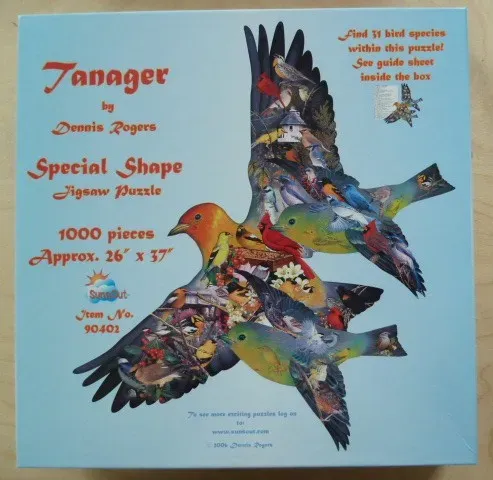
This illustration features a composite image where the outlines of two large tanagers, one positioned higher and slightly behind the other, serve as a frame for a dense collage of thirty-one different bird species. The birds within the shapes are rendered in vibrant detail, showing various species perched in naturalistic settings, surrounded by foliage, branches, and occasional birdhouse structures. The two tanagers themselves are painted in shades of yellow and orange, acting as the structural base for the intricate avian collection contained within their wingspans.
The overall composition is set against a solid, pale sky-blue background, which allows the detailed, multi-colored collage to stand out clearly. The design focuses on the contrast between the clean, negative space of the background and the tightly packed, textured plumage of the birds. The arrangement of the birds is seamless, with the different species overlapping to fill the large bird-shaped silhouettes completely.
The artwork uses a realistic, painterly style that emphasizes the distinct markings and colors of each individual bird. The color palette is rich and varied, spanning from deep reds and blues to bright yellows and earthy browns, ensuring each bird species is distinct even within the crowded collage. Soft lighting and detailed brushwork give the feathers a lifelike quality, creating a harmonious blend of many different habitats and species unified within the grander shape of the tanagers.
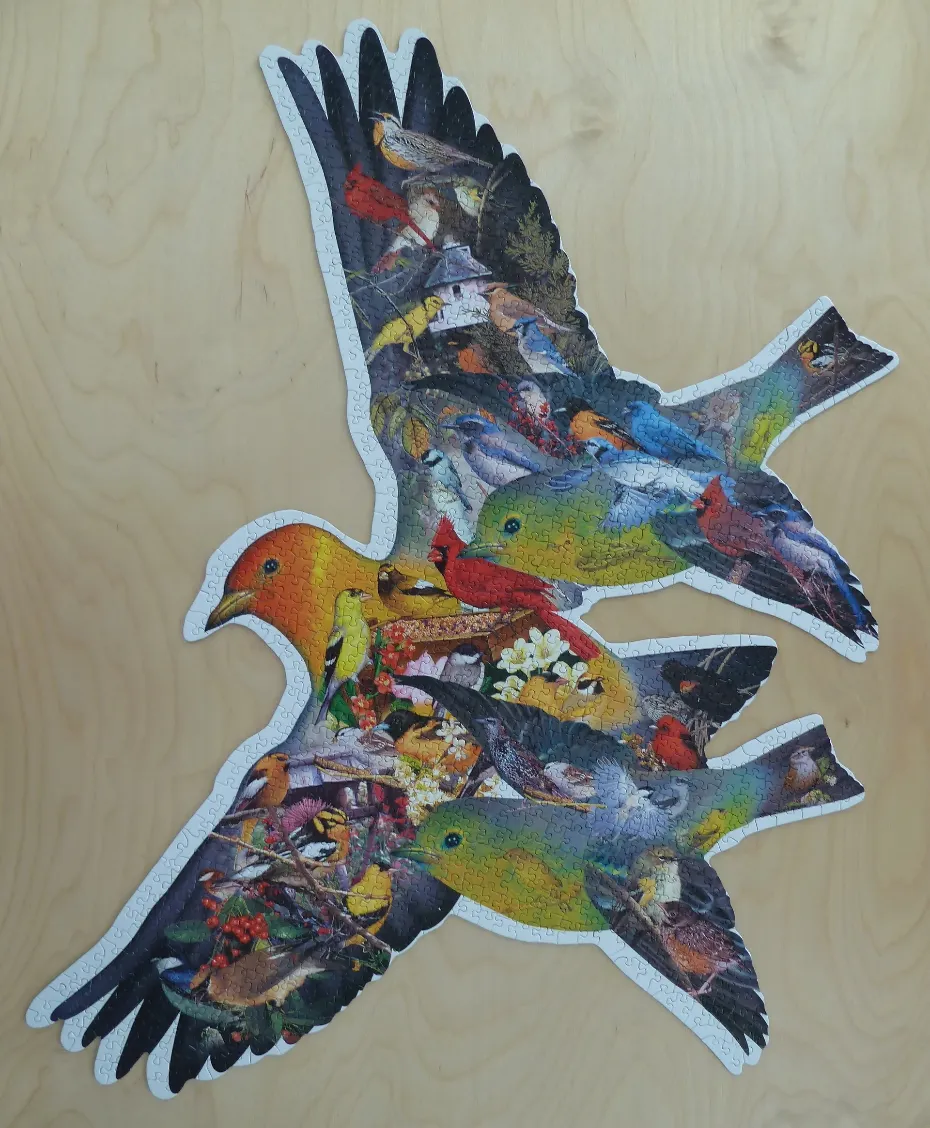
This whimsical image consists of two bird-shaped silhouettes layered over one another. The shapes are densely packed with a collage of smaller, colorful birds and natural elements. The overall effect creates a mosaic-like appearance where the larger bird outlines act as a window into a vibrant avian forest scene.
The interior of the silhouettes features a diverse array of bird species, including cardinals, goldfinches, bluebirds, and sparrows, nestled among branches, birdhouses, and flowering plants. The larger silhouette at the top dominates the upper portion with its wings outstretched, while the smaller, lower silhouette appears to be in a grounded or perching posture. The transitions between the smaller birds and the backgrounds are seamless, blending natural habitats like woodland foliage, berries, and white blossoms into the overall forms.
The color palette is exceptionally rich and varied, showcasing the vibrant reds of cardinals, the bright yellows of goldfinches, and deep blues of various species against a backdrop of muted greens, browns, and dark shadow areas. The lighting is soft and even, suggesting a painterly illustration style with a focus on intricate detail rather than high-contrast realism. This artistic composition celebrates avian biodiversity by using the collective forms of many small birds to define the shape of larger, stylized birds.
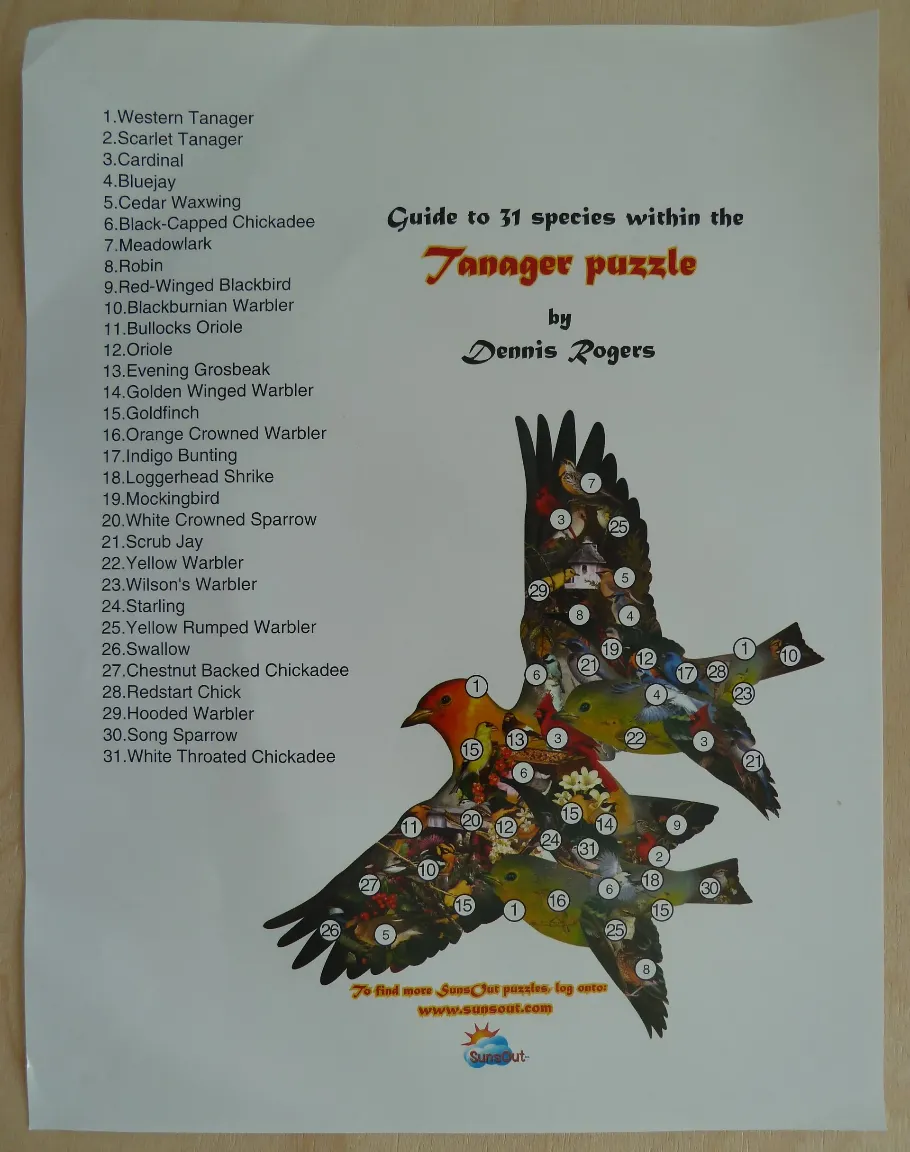
This instructional guide features two large, overlapping silhouettes of birds flying towards the right. The silhouettes themselves are intricately filled with a collage of 31 different North American bird species, depicted in various natural settings like foliage, branches, and birdhouses. Each small bird within the collage is marked with a numbered circle that corresponds to an identification list on the left side of the page.
The layout is clear and educational, with a numbered list provided on the left that corresponds to the names of the birds, ranging from the Western Tanager to the White Throated Chickadee. Above the bird silhouettes, the title "Guide to 31 species within the Tanager puzzle" is written in bold, stylized text, followed by the author's name, Dennis Rogers. The composition is balanced, with the text-heavy left side offsetting the visually dense, colorful bird collage on the right.
The overall aesthetic is clean and minimalist, utilizing a bright white background that allows the vibrant colors of the illustrated birds—ranging from deep reds and blues to bright yellows and earthy tones—to stand out. The lighting is even and flat, typical of a document reproduction, emphasizing clarity and readability. The illustration style of the individual birds is realistic, capturing fine details of plumage and form, creating a visually engaging resource for bird identification.