A Party at Table (1626)
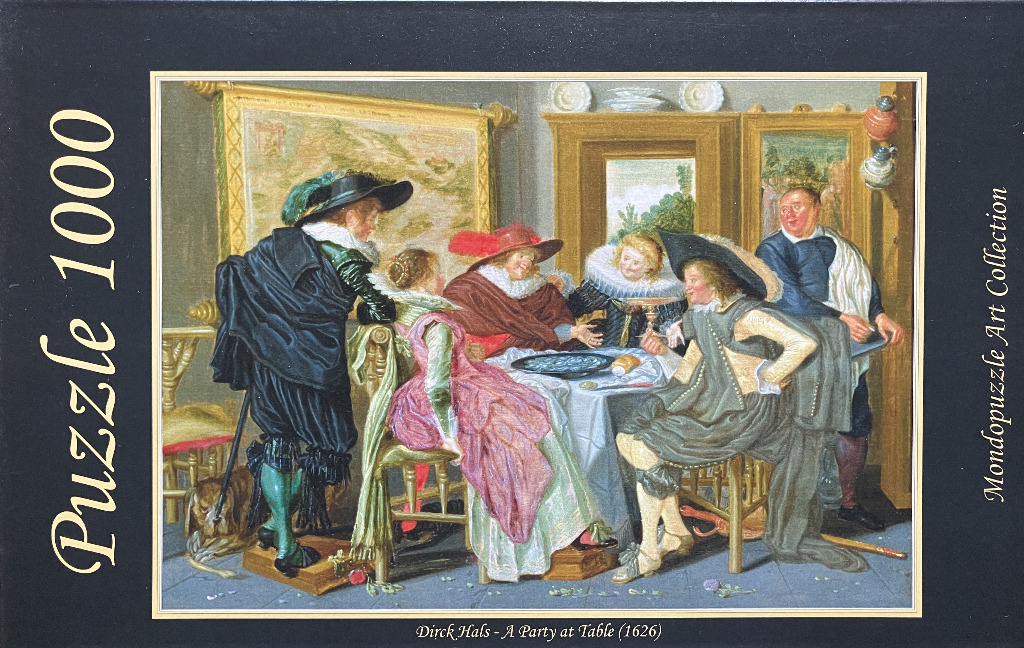
This 17th-century oil painting, titled "A Party at Table" by Dirck Hals, captures an intimate social gathering within a richly furnished interior. A group of five figures, dressed in the elaborate, high-collared fashion of the period, are arranged around a table draped in a white cloth. To the left, a man in a dark hat and black doublet stands, leaning over the table, while a woman in a pink, voluminous dress sits beside him. Opposite them, another gentleman in a wide-brimmed hat engages in conversation, while a second woman and another gentleman complete the central grouping. A sixth figure stands slightly apart on the far right, observing the interaction.
The composition is balanced within a warm, domestic setting, featuring a large map or tapestry hanging on the wall and wooden architectural elements in the background. A small dog rests on the floor near the standing man on the left, adding a naturalistic touch to the scene. The floor is tiled, and the overall space feels cozy and enclosed, typical of Dutch Golden Age genre painting.
The palette is defined by earthy tones, dominated by deep blacks, muted browns, and warm ochres, which contrast with the vibrant pop of the woman's pink dress and the white highlights of the collars and table linens. The lighting is soft and directed, creating gentle shadows that emphasize the textures of the luxurious fabrics and the subtle expressions on the subjects' faces. The painting style is characterized by precise detail, reflecting the meticulous artistic techniques


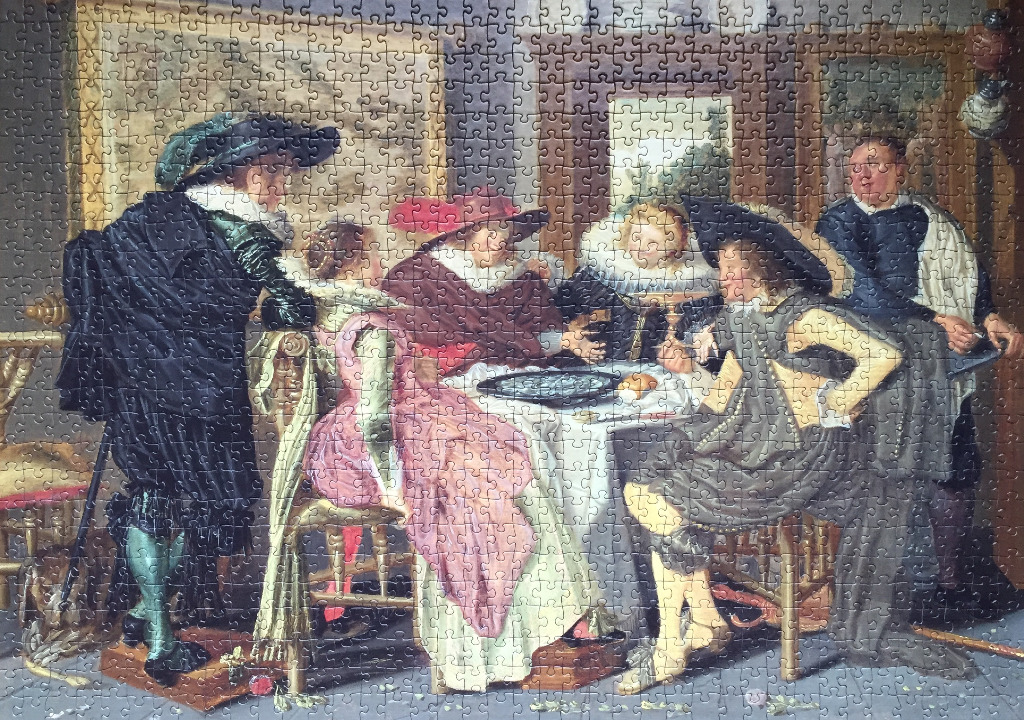
This classical oil painting depicts a group of five figures in 17th-century Dutch or Flemish-style attire gathered around a small circular table. A man stands on the left wearing a dark, wide-brimmed hat, a dark coat, and light-coloured hose. Across from him, a woman in a large pink dress sits with her back to the viewer, while another woman with a prominent reddish hat and a man with a white ruffled collar sit further back at the table. A final man stands on the right, watching the others while holding a cloth, suggesting he may be an attendant or server.
The scene is set within a warm, moody interior. The composition is centered around a table covered by a white cloth, upon which sit a few simple dining items. The background is shadowy, featuring dark walls and hints of architectural or decorative details like a wall hanging or screen. The lighting is soft and directional, typical of period portraiture, casting subtle shadows that highlight the textures of the rich fabrics—the heavy velvets, the lace collars, and the delicate folds of the women's dresses.
The colour palette is dominated by deep, earthy tones, including browns, blacks, and dark reds, contrasted by the bright white of the ruffs and the soft, dusty pink of the central seated woman's gown. The overall mood is quiet and contemplative, evoking the feeling of a private moment caught in a historical genre scene. The style is highly detailed and realistic, characteristic of traditional European old master