Colors of the Moon
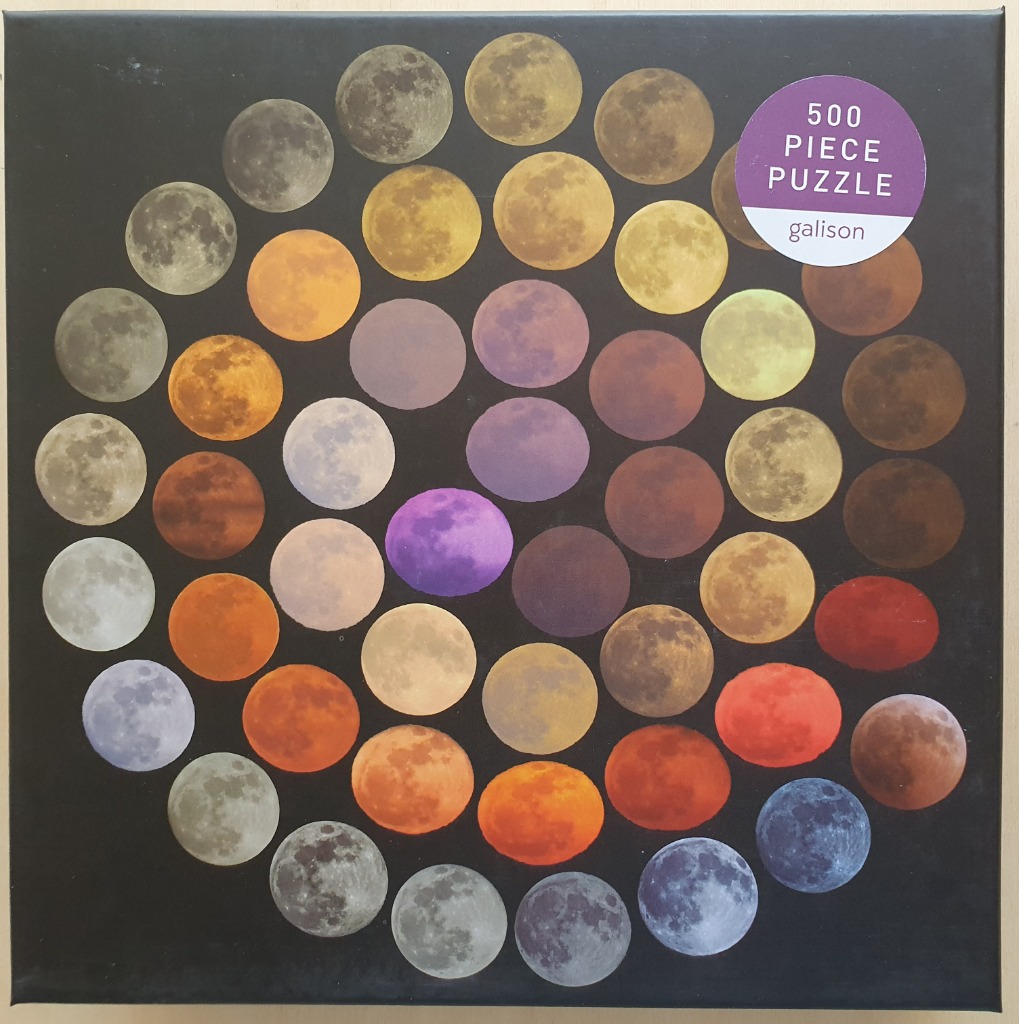
The central imagery consists of a collection of circular, photographic-style depictions of the moon, arranged in a tight, swirling spiral pattern against a solid black background. Each lunar orb shows distinct cratering and surface textures, rendered in a wide spectrum of colours including warm yellows, deep oranges, vibrant reds, cool blues, soft purples, and muted greys. The variation in colour suggests a thematic exploration of light, atmospheric filters, or different phases of lunar eclipses.
Compositionally, the spiral radiates outward from a central focal point, creating a sense of motion that draws the eye across the differing hues. The arrangement is dense, with the individual moons almost touching one another, forming a cohesive, galaxy-like shape that dominates the entire space. The contrast between the stark, dark background and the varied, luminous tones of the moons creates a dramatic, celestial aesthetic.
Technically, the artwork leans toward digital art or high-quality composite photography, utilizing a clear, saturated colour palette to emphasize the differences between each lunar representation. There is no traditional scenery or landscape, as the focus is entirely on the stylized organization of these celestial objects. The overall mood is one of scientific wonder and artistic precision, showcasing the moon as a dynamic subject that changes significantly in appearance depending on its environment.
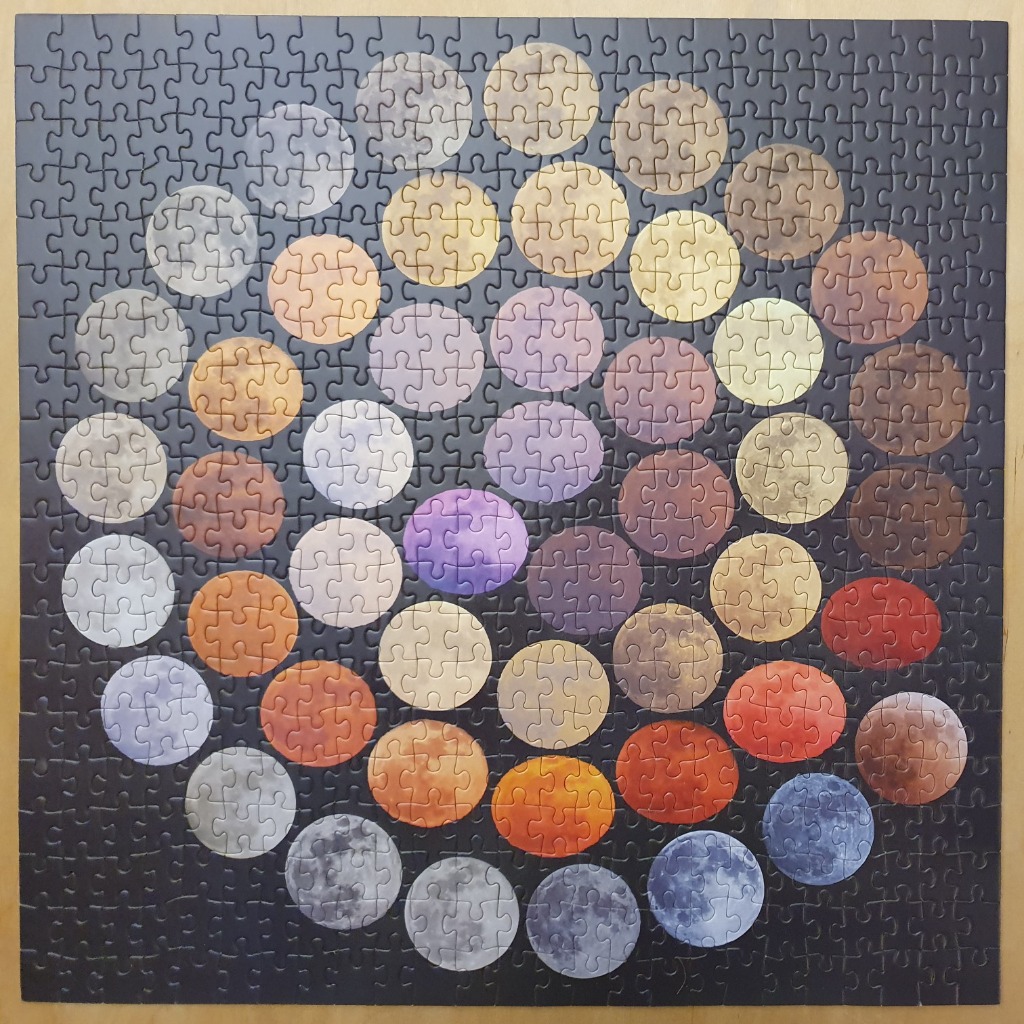
This image features a collection of individual circular illustrations of the moon, arranged in a spiraling, vortex-like pattern against a deep, solid black backdrop. The composition draws the eye toward the center, where the moons seem to rotate outward, creating a sense of movement and celestial rhythm. The placement of the circles is dense and overlapping in density, gradually spreading out as they near the edges of the frame.
The colour palette is a vibrant gradient that shifts systematically across the spiral. The moons transition through a broad spectrum of hues, beginning with cool, pale greys and whites, moving into warm yellows, soft violets and purples, and deepening into rich oranges, fiery reds, and earthy browns. Each individual moon appears to have a unique cratered texture and shading, suggesting a high level of detail in the rendering of the lunar surfaces.
The style is graphic and artistic rather than a realistic photograph of a night sky, utilizing the high-contrast black background to make the colours of the moon discs appear luminous. The overall mood is astronomical and abstract, emphasizing the beauty of planetary cycles through a modern, stylized lens.